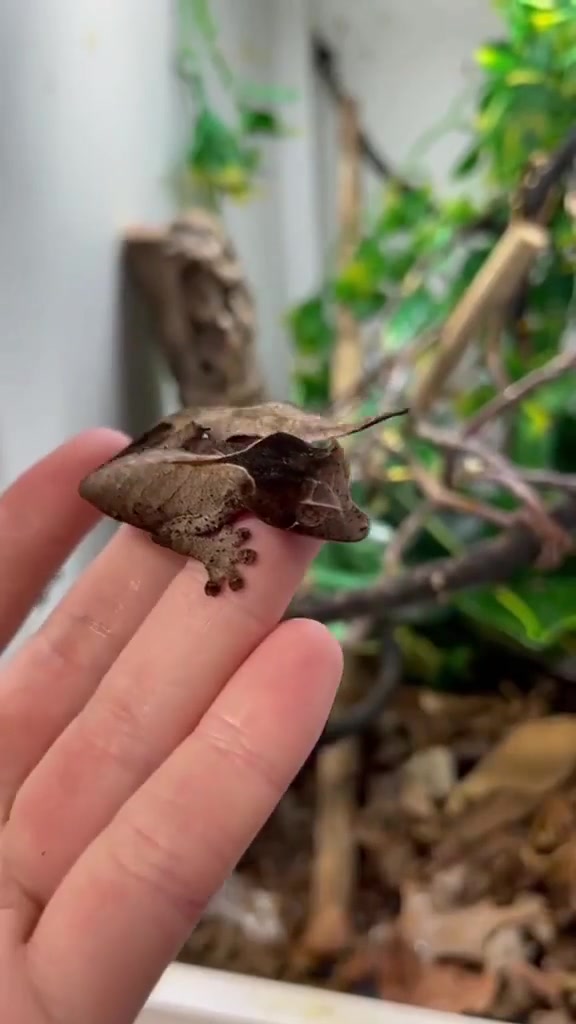
The leaf-mimic moth, a creature that has mastered the art of deception, looks exactly like a dead leaf, down to the veins and brown hues. This moth, showcased in the video, is an insect that blends seamlessly with its surroundings through an ingenious adaptation, demonstrating nature's ingenious and intricate designs.
Foliage in Flight
The leaf-mimic moth is a species of insect renowned for its extraordinary camouflage. It mimics the appearance of a dead or dying leaf, complete with veins and brown coloration. Their distinctive look helps them go unnoticed by predators. This natural mimicry is a survival strategy. This distinctive adaptation is more than a visual trick: their bodies feel like dry leaves, too. The moth’s wings are not just colored to resemble leaves, but they also have the texture of a leaf. This feature helps them stay hidden. The leaf-mimic moth's wings have the pattern of veins and the color tones of a dead leaf. The moth’s camouflage is a trait honed over generations; the moth’s evolutionary strategy relies on deceiving predators, primarily birds, which have keen eyesight. The leaf-mimic moth's wings resemble dead or dried leaves, making it indistinguishable from its background. While insects like this are found in the same habitats, their camouflage is not solely for survival. Their camouflage is so effective that they are almost impossible to see when resting on a tree or bush.
Nature’s Master of Disguise
The leaf-mimic moth thrives in environments where dead leaves are common. This is where we find nature’s clever tricks. The appearance of a dead leaf is a natural disguise, allowing the moth to blend seamlessly with its surroundings. Their camouflage is so effective that it has allowed this species to thrive in diverse habitats. It’s an unexpected reminder of how intricate and adaptive nature can be. The purpose of perfect mimicry is the moth’s defense strategy. They can often deceive even the most vigilant predators by merging with their environment. The leaf-mimic moth’s camouflage is crucial for its survival. The ability to mimic a dead leaf helps them avoid predators and protect themselves from harm. This natural ability allows the moth to stay hidden and survive.
The Beauty Behind the Camouflage
How the moth adapts
When a leaf-mimic moth wraps their wings around its body, it assumes the shape and appearance of a dead leaf. The moth’s wings bear the same coloration and texture as dead leaves, allowing it to blend seamlessly. This adaptation is extraordinary. Many insects have similar camouflage, but the leaf-mimic moth achieves this in an intricate way. Their wings not only look like dead leaves but also have the texture and shape of one.
How does this mimicry help the moth thrive?
The leaf-mimic moth’s survival strategy is unique. They camouflage themselves as dead leaves, allowing them to hide from predators. Dead leaves on the ground or on trees provide perfect camouflage for the moths. The leaf-mimic moth stays still and blends in perfectly with its surrounding leaf litter. This helps them stay hidden from predators. Natural mimicry is an incredible example of how animals adapt. Every aspect of the moth’s appearance—from their color to their shape—contributes to their camouflage. Their long, thin, egg-shaped bodies closely resemble dried leaves. This strategy allows them to hide perfectly from predators. The leaf-mimic moth’s ability to adapt is remarkable.
The Role of Camouflage
Nature's perfect disguise
The leaf-mimic moth demonstrates nature’s ingenious adaptations to avoid predators. This incredible camouflage allows the moth to hide effortlessly. Predators, such as birds, often overlook the moth because it blends seamlessly with its surroundings. The ability to mimic a dead leaf perfectly is one of the most effective camouflage strategies in the natural world. In this way, the leaf-mimic moth exemplifies the importance of camouflage in the animal kingdom. The leaf-mimic moth’s adaptation is remarkably similar to other animals that use camouflage to hide from predators. The only time you might spot them is if you’re looking closely, in which case, it’s not hard to imagine how a predator might be fooled.
Evolutionary advantages
The leaf-mimic moth’s ability to fool predators illustrates the evolutionary advantages of camouflage. The mimetics of many animals are a testament to nature’s ability to adapt. Their ability to mimic a dead leaf offers better chances for survival. It’s a rigorous survival mechanism that has allowed the moth to thrive. The leaf-mimic moth isn’t just about physical survival. Such unnoticed survival strategies in nature are evidence that natural selection has given the leaf-mimic moth an evolutionary advantage.
What to Look for in a Nature Walk
On your next nature walk, take a moment to observe the leaves around you.
- Look closely to observes the leaves—moths might be nearby: When you're out in nature, it’s easy to miss the intricate details of your surroundings. Take the time to notice the leaves around you—they might be more than just leaves.
- Patience is key: Spend some time observing the leaves and the vegetation around you. The leaf-mimic moth is an expert at blending in, so it might take a keen eye to spot one.
- Understand nature’s mimicry: The ability to mimic a dead leaf is a fascinating example of natural mimicry. It’s a testament to nature’s intricacy and complexity. It’s not just about spotting the moth; it’s about understanding the delicate balance of nature and the incredible adaptations that allow species to thrive. The beauty and complexity of nature’s designs are worth appreciating. The leaf-mimic moth’s camouflage isn’t a ruse but an intricate dance with the environment, one that has allowed the moth to flourish.
Watch the Reel
Questions readers ask
What specific features of the leaf-mimic moth make it look like a dead leaf?
The leaf-mimic moth has wings that not only mimic the color and veins of a dead leaf but also replicate the texture. The wings are designed to feel like dry leaves, making the moth indistinguishable from actual foliage when at rest. This is a result of the moth’s evolution and adaptation to its environment.
How does the leaf-mimic moth’s camouflage benefit its survival?
The leaf-mimic moth’s camouflage is a crucial defense mechanism. By looking and feeling exactly like a dead leaf, the moth can avoid detection by predators, particularly birds, which have sharp eyesight. This allows the moth to survive and thrive in environments where dead leaves are common.
Can the leaf-mimic moth’s camouflage fool other insects or just birds?
The leaf-mimic moth’s camouflage is primarily designed to deceive predators with keen eyesight, like birds. While it might also fool other insects, the primary benefit is in avoiding avian predators. This makes it a highly effective defense strategy in its natural habitat.
How does the leaf-mimic moth’s camouflage compare to other insects with similar adaptations?
While many insects have camouflage, the leaf-mimic moth’s adaptation is particularly intricate. Unlike other insects that might just mimic the color of their surroundings, the leaf-mimic moth replicates the texture, shape, and veins of a dead leaf, making it nearly impossible to distinguish from actual foliage.
What happens when a leaf-mimic moth wraps its wings around its body?
When a leaf-mimic moth wraps its wings around its body, it not only changes its shape but also its appearance. The moth assumes the form and texture of a dead leaf, blending seamlessly into its surroundings. This makes it nearly invisible to predators, enhancing its survival chances.
Are there any other environments besides forests where the leaf-mimic moth might thrive?
The leaf-mimic moth thrives in environments where dead leaves are common, such as forests and woodlands. However, it could potentially adapt to other habitats that have similar leaf litter, though these are less likely.
What is the evolutionary advantage of the leaf-mimic moth’s ability to mimic dead leaves?
The evolutionary advantage of the leaf-mimic moth’s ability to mimic dead leaves is significant. Over generations, this adaptation has allowed the moth to survive and reproduce by avoiding predation. This trait has been honed over time, making the leaf-mimic moth a master of disguise in its natural habitat.
Related deep dives
Similar reads based on topic and creator.




Recent articles
Fresh deep dives from the latest Reels we unpacked.




Comments
Be the first to comment.