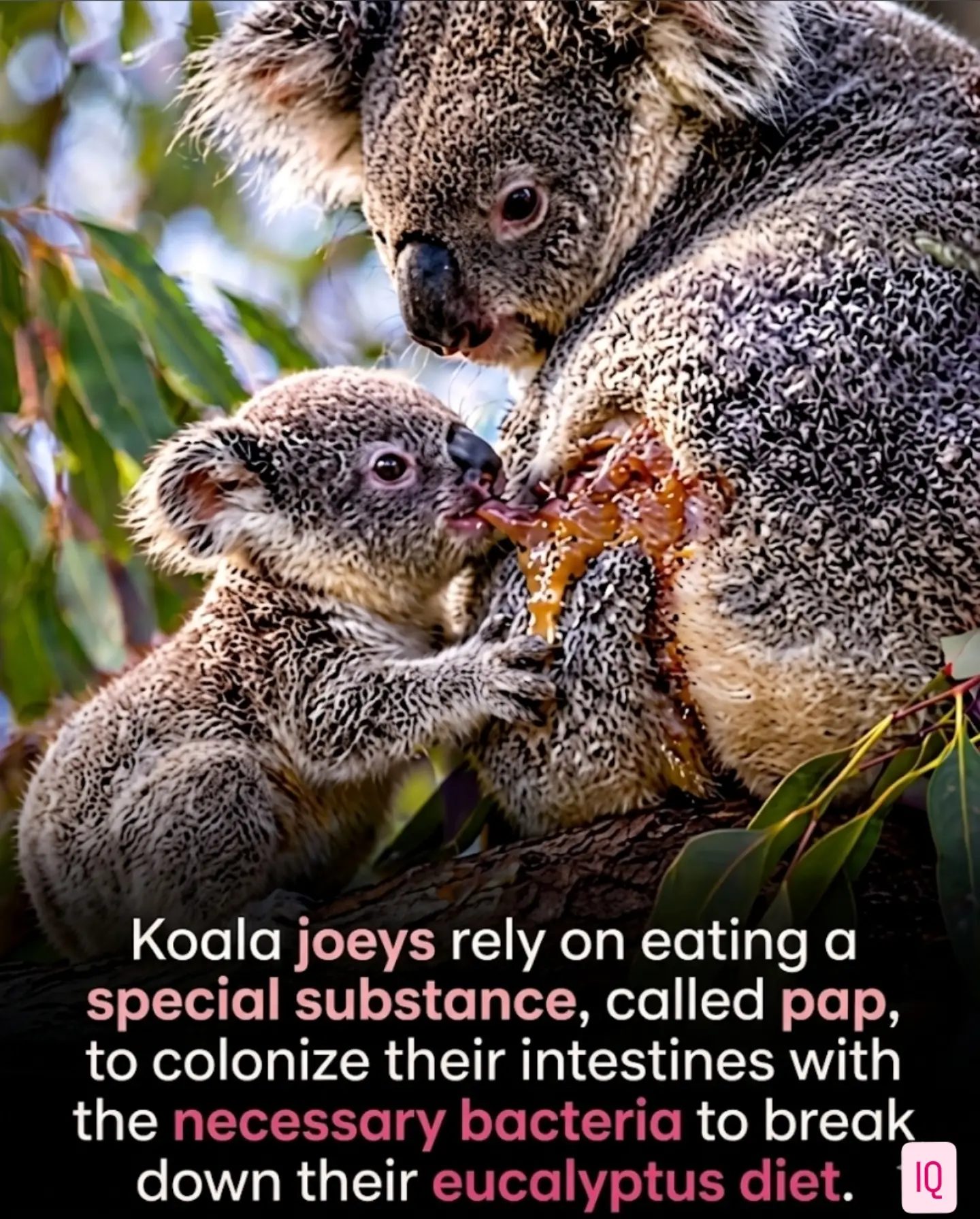
Fecal Pap: The Critical Role in Koala Joey Development
Koalas are known for their distinctive appearance and their love for eucalyptus leaves. However, the intricate biological process that allows their young, known as joeys, to digest this specialized diet is less widely known. This process involves a unique substance called pap, which plays a pivotal role in the development and survival of young koalas.
Context
Koalas are marsupials, meaning they give birth to relatively undeveloped young that continue to develop outside the womb. Koala joeys are born with sterile digestive tracts, which initially make it impossible for them to process the complex polyphenols and tannins present in eucalyptus leaves. This dietary challenge is a defining aspect of koala biology, and the solution lies in a specialized substance known as pap.
Pap is a nutrient- and microbe-rich fluid produced by the mother koala. It is not standard feces but rather a unique excretion derived from the mother's cecum, a pouch located at the beginning of the large intestine. This substance is crucial for the joey's transition from a milk-based diet to a solid diet of eucalyptus leaves.
The Importance of Pap for Koala Joeys
The Weaning Phase
The critical period for this transition typically occurs between 22 and 30 weeks of age. During this time, the joey ingests pap, which colonizes its intestines with the necessary bacteria to break down and detoxify the eucalyptus leaves. Without this process, the joey would not survive, as eucalyptus leaves contain compounds that are lethal to young animals with undeveloped digestive systems.
The Role of Bacteria
Pap is rich in bacteria that are essential for the digestion of eucalyptus. These bacteria help break down the complex polyphenols and tannins, which are otherwise toxic to the joey. By consuming pap, the joey effectively inoculates its own gastrointestinal tract with these beneficial bacteria, allowing it to process the eucalyptus leaves safely.
Evolutionary Adaptation
This biological process is an essential evolutionary adaptation that ensures the survival and dietary independence of koala joeys. The ability to digest eucalyptus leaves is crucial for koalas, as these leaves are their primary food source. Without the bacteria provided by pap, koala joeys would not be able to survive on their mothers' diet.
Practical Tips
While this process is specific to koalas and their unique biology, it underscores the importance of understanding the specialized dietary and digestive needs of young animals. For those who care for koalas in wildlife rescue or rehabilitation settings, it is crucial to recognize the importance of the pap and the joey's successful transition to a eucalyptus-based diet.
Supporting Koala Conservation
For those interested in supporting koala conservation, understanding these biological processes can provide a deeper appreciation for the challenges these animals face. Koalas are increasingly threatened by habitat loss, disease, and climate change, which can disrupt their natural feeding and reproductive patterns.
Rehabilitating Injured Koalas
When rehabilitating injured or orphaned koalas, it is important to ensure that joeys receive adequate nutrition and the necessary bacteria for digestion. Understanding the role of pap and the critical period for its ingestion can significantly improve the chances of successful rehabilitation.
Important Takeaways
The biological process involving fecal pap in koalas underscores the complex and specialized adaptations that ensure the survival of these animals. Pap is not just a byproduct but a vital substance that plays a crucial role in the development and survival of koala joeys. This process highlights the intricate balance between diet, digestion, and the microbial world in the lives of koalas.
Conclusion
Koalas are fascinating creatures with a unique biological adaptation that allows their young to thrive on a diet of eucalyptus leaves. The substance known as pap is a vital part of this process, ensuring that joeys develop the necessary bacteria to digest their food. Understanding this process not only provides insight into the biology of marsupials but also underscores the importance of conservation efforts to protect these animals and their habitats.
Watch the Reel
Questions readers ask
What is pap and why is it crucial for koala joeys?
Pap is a unique, microbe-rich substance produced by adult koalas that helps joeys transition from milk to their mother's eucalyptus leaf diet. It is crucial because young koalas cannot digest the toxic compounds in eucalyptus leaves without the beneficial bacteria and enzymes that pap provides.
How do koala joeys obtain pap?
Koala joeys obtain pap through direct contact with their mother's feces. This process, involving the joeys licking pap directly from their mother's fur, is a critical part of their dietary transition and ensures they acquire the necessary intestinal bacteria for eucalyptus digestion.
What happens if a koala joey does not receive pap?
If a koala joey does not receive pap, it will struggle to digest the complex polyphenols and tannins found in eucalyptus leaves. This could lead to malnutrition, health issues, and potentially even death, as the joey would be unable to extract the necessary nutrients from its mother's diet.
How does pap help koalas digest eucalyptus leaves?
Pap contains a rich mix of bacteria that help break down the toxic compounds in eucalyptus leaves, making them digestible. These bacteria assist in processing the complex polyphenols and tannins, ensuring that koala joeys can develop the necessary intestinal flora to survive on a eucalyptus leaf diet.
At what stage do koala joeys start consuming eucalyptus leaves?
Koala joeys begin to consume eucalyptus leaves around 6-7 months of age, after they have spent several months developing in their mother's pouch. During this time, they rely on milk and gradually introduce pap into their diet to build up the necessary bacteria for digesting eucalyptus leaves.
How long does it take for a joey to fully transition to a eucalyptus leaf diet?
The transition from milk to a eucalyptus leaf diet is gradual. Koala joeys typically start to emerge from their mother’s pouch around 6 months and begin to consume eucalyptus leaves around 7 months. However, the complete transition to a eucalyptus leaf diet, including the development of necessary intestinal bacteria, can take up to a year.
Related deep dives
Similar reads based on topic and creator.




Recent articles
Fresh deep dives from the latest Reels we unpacked.




Comments
Be the first to comment.