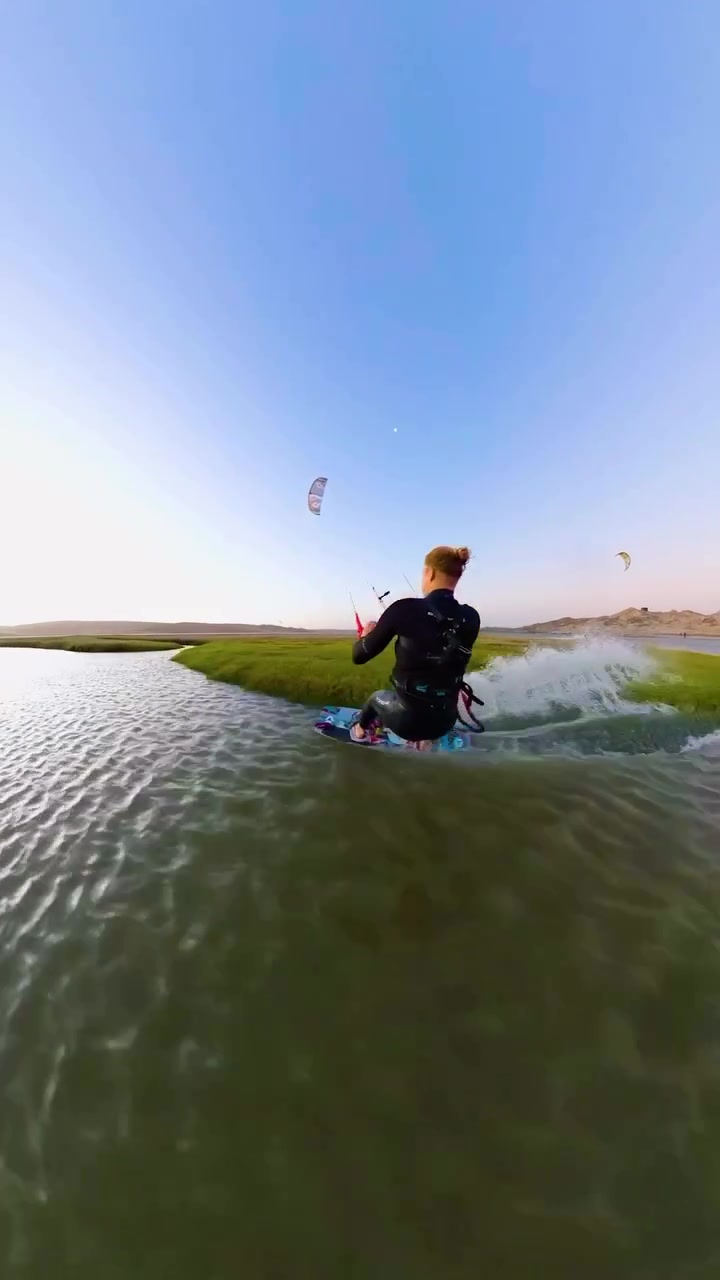
The Grace and Physics of a Kiteboarding Jump
Kiteboarding is an extreme sport that combines surfing and kite flying. The kiteboarder maneuvers over water, propelled by a kite that generates enough lift to lift the rider into the air and perform a jump. The sport is about more than physical prowess; it's a delicate blend of balance, wind power, and aerodynamic mastery. What makes kiteboarding exceptional, is the way it merges the thrill of air and water sports. The kiteboarder catapults above the water, harnessing winds to soar for brief moments, then lands back on the water's surface. It can look like floating through the air.
The Fluid Balance of Kiteboarding
Riding the board requires a deep understanding of wind dynamics and balance. The kiteboarder adjusts the angle and force of the kite to control height and direction. This careful balancing act makes kiteboarding challenging. The rider does moves like "kite loops" and "jump tricks" by commanding the kite and controlling the harness. The craft's design also plays a crucial part in the experience: the board and kite are tailor-made to catch wind efficiently. We can't analyze the physics of the video without understanding the mechanism behind jumps. The board glides over the water, riding a cushion of air beneath. Launching into the air involves tilting the board up by pulling the kite, thus increasing lift. The power of both the wind and the kiteboarder's timing matter. The athlete pushes through the water, then into the air as the kite pulls upward. At the peak of the jump, that power reverses, pulling the rider back down. To avoid injury, it requires mastery of both timing and balance.
The Water Kiteboarding Loam
Kiteboarding isn't just a sport; it's a countercultural movement that connects athletes to the natural world. At its core, it is a blend of board sports and kite flying, set against the backdrop of a coastal environment with a body of water, shoreline, and a clear sky. The sport emphasizes an unconventional attitude toward risk and adventure, drawing practitioners to the water to push through waves and loops with a unique blend of adrenaline and serenity.
Mastering the Lift
Use the kite. The kite is the main component that catches the wind, propelling the board forward. It is similar in shape to a parachute, but it is typically a lighter material. The rider adjusts the kite’s angle to the wind and controls its power. The sling helps the rider control the kite at high speeds and maneuver the board. The Harness Power Hands-free kitesurfing requires a safety release to let go of the kite. The harness is an essential piece of gear that allows the rider to maintain control of the kite. The harness does more than just hold the rider in place. It also allows kiteboarders to release tension from their arms and back and to redirect their energy to the kite. Riders harness themselves to the kiteboard, securing and standing on the board with the harness.
Lessons from the Jump
The first step to learning kiteboarding is familiarizing yourself with the equipment. The kite, harness, and board are the essential components, but there are other parts to consider when starting. For beginners, a lightweight kite is best. However, while a light board will provide greater stability and maneuverability, it won't give the same power or speed. Harnesses should be comfortable and provide a good grip. Since you will spend most of your time in the water, a good wetsuit protects you from the elements and potential injuries. Also, wear a helmet and a life jacket.
- Be guided: Before embarking on any kiteboarding adventure, it's essential to have guidance from experienced professionals. Take a lesson from a qualified instructor to learn the basics of kiteboarding. This will help you understand the sport and the risks involved.
- Learn Safety: Safety must be a priority, as kiteboarding involves severe risks. Ensure you understand all safety protocols and procedures before you mount the board. It's essential to be physically fit and know your limits. Always wear a helmet and wrist guards, and be aware of your surroundings.
- Invest in quality equipment: Get a good quality kite, a board that suits your size and ability, a helmet, and a safety harness. You can rent most of these items when starting, but investing in your own gear is crucial as you progress.
- Pick the right wind: It is essential to choose wind conditions that fit your experience level. Light to moderate winds are ideal for beginners. Strong winds require more skill and experience, while gusty and unstable winds can be very dangerous.
Kiteboarding's Meteorological Riding
The transience of kiteboarding lies in its association with the weather. The sport relies heavily on wind, currents, and waves; improving wind conditions enhance performance and adds versatility to the sport. It is a challenging sport, so a clear mind and steady nerves are essential for kiteboarding. So, be calm, and focus and enjoy the ride.
Watch the Reel
Questions readers ask
How does a kiteboarder control their height and direction while jumping?
The kiteboarder adjusts the angle and force of the kite to control both height and direction. By pulling the kite, the rider can increase lift and tilt the board up, launching into the air. Timing and balance are crucial for a smooth landing.
What role does the board design play in kiteboarding?
The board is designed to glide over the water and catch wind efficiently. It works in tandem with the kite to provide the necessary lift and stability for jumps and tricks. The board's shape and materials are tailored to enhance performance and control.
What makes kiteboarding different from other water sports?
Kiteboarding combines elements of surfing and kite flying, offering a unique blend of air and water sports. It requires a deep understanding of wind dynamics and balance, and the use of a kite to generate lift and propel the rider. It's also known for its countercultural movement and the adrenaline mixed with serenity it provides.
Is kiteboarding only about physical strength?
Not at all. While physical strength is important, kiteboarding also requires a delicate blend of balance, wind power, and aerodynamic mastery. It's as much about mental focus and understanding the physics behind the sport as it is about physical prowess.
What precautions should a kiteboarder take to avoid injury?
Mastery of both timing and balance is crucial to avoid injury. The rider needs to control the kite and board precisely, understanding how to generate lift and when to reverse that power for a safe landing. Proper equipment and safety releases are also essential for safety.
Can anyone learn kiteboarding, or is it too risky?
Anyone can learn kiteboarding with proper instruction and practice. It's important to familiarize yourself with the equipment and understand the risks involved. The sport does have an element of adventure and risk, but with the right training and safety measures, it can be enjoyed by many.
What kind of kite is used in kiteboarding?
The kite used in kiteboarding is similar in shape to a parachute but made of lighter material. It is designed to catch the wind and propel the board forward. The rider adjusts the kite’s angle to the wind and controls its power, using a sling to maneuver the board at high speeds.
Related deep dives
Similar reads based on topic and creator.



Recent articles
Fresh deep dives from the latest Reels we unpacked.

Comments
Be the first to comment.