The Kingdom of Judah: A Deep Dive into Its History and Significance
The southern kingdom of Judah, which emerged after the split of the United Kingdom of Israel, holds profound historical, geographical, and spiritual significance. Understanding the reasons behind its name and the dynamics that led to its formation provides valuable insights into the ancient world.
Context / Why This Matters
Judah's prominence and influence extend far beyond its geographical boundaries. It is essential to explore the kingdom's historical context, the reasons for its name, and its lasting impact on both religious and secular landscapes.
Main Discussion
The Division of the Kingdom
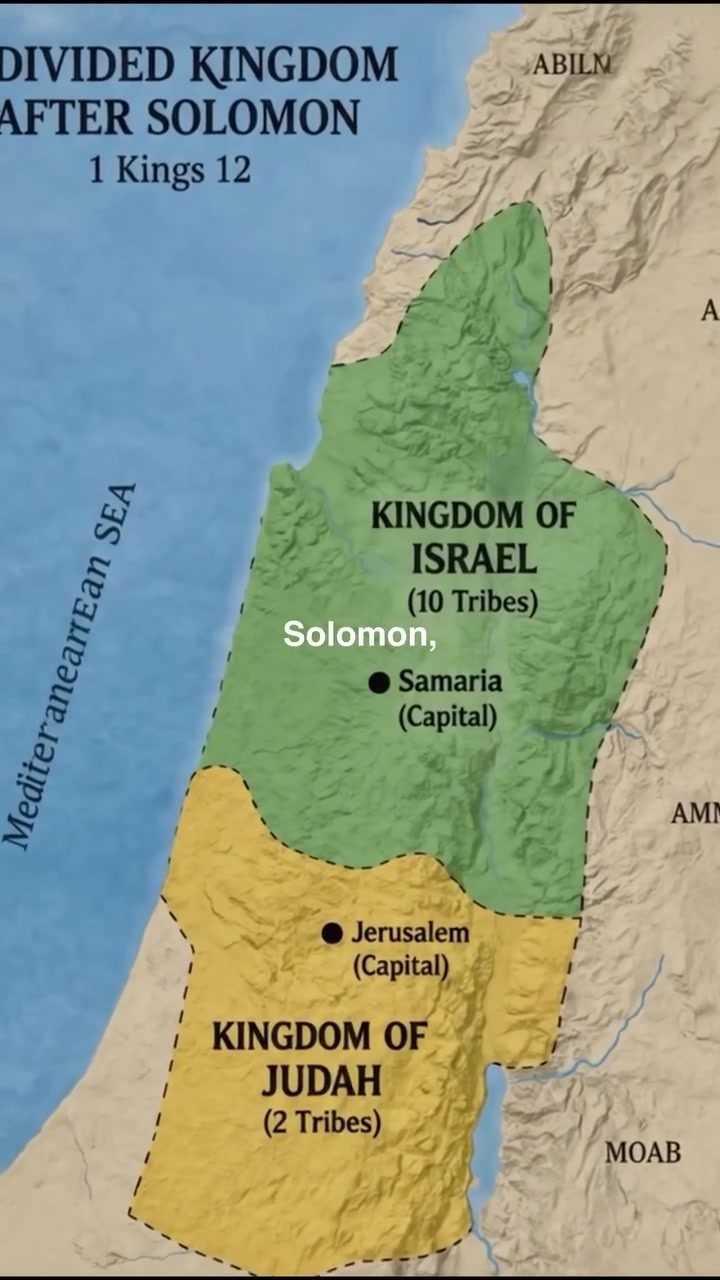
Following the death of King Solomon, the once-unified Kingdom of Israel divided into two distinct regions: the northern Kingdom of Israel and the southern Kingdom of Judah. This division, described in 1 Kings 12, was a pivotal moment in biblical history. The northern kingdom, comprising ten tribes, was known as the Kingdom of Israel, with Samaria as its capital. In contrast, the southern kingdom, consisting of the tribes of Judah and Benjamin, along with the Levites, became known as the Kingdom of Judah and was centered around Jerusalem. This split was not just geographical; it also had profound political, cultural, and spiritual implications.
The Naming of Judah
The Kingdom of Judah derived its name from the tribe of Judah. This tribe was the largest, strongest, and most influential among the twelve tribes of Israel. The capital of Judah, Jerusalem, was strategically located within Judah's territory and served as a political, religious, and cultural center. The kings of Judah descended from the line of David, who himself was from the tribe of Judah. This lineage played a crucial role in the kingdom's identity, as the Davidic monarchy became synonymous with the Kingdom of Judah.
Jerusalem: The Heart of Judah
Jerusalem, the capital of Judah, was more than just a political center. It was the spiritual heart of the kingdom, home to the Temple, the most sacred place in Jewish worship. The Levites, who were responsible for the Temple's services, played a significant role in Judah's religious life. Despite the inclusion of the tribe of Benjamin and the Levites in Judah, the kingdom's name and identity were intrinsically tied to the tribe of Judah.
The Spiritual Significance of Judah
The name Judah holds deep spiritual significance. In Hebrew, Judah means "praise" (יְהוּדָה, Yehudah). This name reflects the tribe's role in preserving the Davidic line, fulfilling God's covenant with David. The tribe of Judah played a central role in God's redemptive plan, as the promised Messiah, Jesus Christ, came from this tribe. This lineage underscores the spiritual importance of Judah in both biblical history and religious teachings.
Important Takeaways
The Kingdom of Judah, with its rich history and spiritual significance, stands as a testament to the enduring legacy of the tribe of Judah. It was named for the tribe that dominated it, and its capital, Jerusalem, became a symbol of both political and spiritual power. The Davidic line, preserved through the tribe of Judah, fulfilled God's covenant and ultimately led to the birth of the Messiah. Understanding the significance of the Kingdom of Judah provides a deeper appreciation of its historical and religious importance.
Conclusion
The Kingdom of Judah, with its unique identity and profound spiritual significance, remains a vital part of ancient history and religious heritage. The reasons behind its name, its geographical division, and its enduring legacy offer a comprehensive understanding of this significant kingdom. Whether through its historical context, geographical significance, or spiritual importance, the Kingdom of Judah continues to captivate and inspire.
Watch the Reel
Questions readers ask
Why did the Kingdom of Israel split into two separate kingdoms?
The Kingdom of Israel divided after the death of King Solomon due to internal conflicts and political tensions. The northern tribes, which included 10 tribes, formed the Kingdom of Israel, while the two southern tribes, Judah and Benjamin, formed the Kingdom of Judah.
How did the Kingdom of Judah get its name?
The Kingdom of Judah is named after the tribe of Judah, which was one of the twelve tribes of Israel. The tribe of Judah was prominent and influential, and its name was chosen to reflect the kingdom's heritage and leadership.
What role did Jerusalem play in the Kingdom of Judah?
Jerusalem served as the capital of the Kingdom of Judah and was a pivotal city in the region. It was the site of the Temple, the spiritual center of the kingdom, and played a crucial role in the political, cultural, and religious life of Judah.
Who were some of the notable kings of the Kingdom of Judah?
The Kingdom of Judah had several notable kings, including David, Solomon, Hezekiah, and Josiah. Each of these kings played a significant role in shaping the kingdom's history, from its establishment to its eventual fall.
What geographical advantages did the Kingdom of Judah have over the Northern Kingdom of Israel?
The Kingdom of Judah had a strategic geographical location, with natural boundaries that included deserts and hills to the east and south, making it easier to defend against invasions. The kingdom also had access to important trade routes and resources, which contributed to its economic and political strength.
How did the Kingdom of Judah's timeline differ from that of the Northern Kingdom of Israel?
The Kingdom of Judah had a longer timeline compared to the Northern Kingdom of Israel. The Northern Kingdom was conquered by the Assyrians in 722 BCE, while the Kingdom of Judah continued to exist until 586 BCE, when it fell to the Babylonians.
What impact did the Kingdom of Judah have on the broader ancient world?
The Kingdom of Judah's significance extends beyond its historical timeline. Its cultural, religious, and historical heritage has had a lasting impact on various aspects of the modern world, including its influence on both biblical narratives and broader ancient history.
Related deep dives
Similar reads based on topic and creator.




Recent articles
Fresh deep dives from the latest Reels we unpacked.




Comments
Be the first to comment.