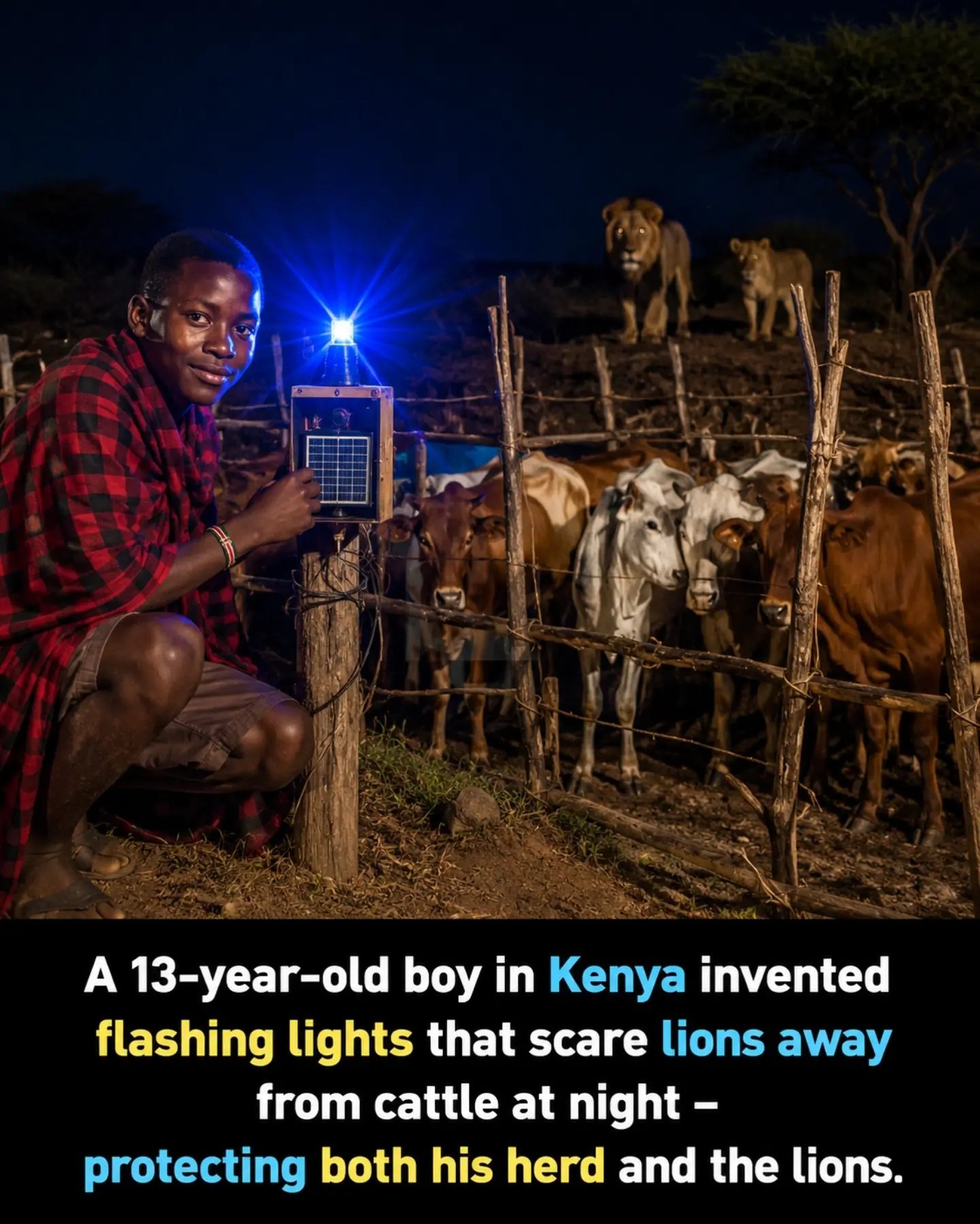
Innovative Lion Deterrent
Lions and humans have long shared a complex relationship, especially in regions where livestock farming is prevalent. In Kenya, a 13-year-old boy has developed an innovative solution to protect both cattle and lions using a solar-powered light device. This invention not only safeguards livestock but also helps conserve lion populations by reducing human-wildlife conflict.
Context / Why this Matters
Human-wildlife conflict is a significant issue in many parts of the world, particularly in Africa where lions and other predators often come into contact with human settlements and livestock. This conflict can lead to the loss of livestock for farmers and the loss of life for predators, which are often killed in retaliation. Innovative solutions like the one developed by this young inventor are crucial for finding a balance that benefits both humans and wildlife.
Main Discussion
The Invention
The solar-powered light device invented by the 13-year-old boy in Kenya is a simple yet effective solution to a complex problem. The device uses flashing lights powered by solar energy to scare lions away from cattle at night. This approach is not only environmentally friendly but also cost-effective, as it relies on renewable energy sources.
How It Works
The flashing lights are designed to mimic the unpredictable movements of human activity, which lions naturally avoid. By placing these lights around cattle herds, farmers can create a deterrent that keeps lions at a safe distance without harming them. This method is particularly effective at night, when lions are most active and livestock is most vulnerable.
Benefits for Livestock
For farmers, the primary benefit of this invention is the protection of their livestock. Cattle are a vital source of income and sustenance for many families in Kenya, and losing them to predators can be devastating. By using the solar-powered light device, farmers can significantly reduce the risk of livestock loss, ensuring their economic stability and food security.
Benefits for Lions
From a conservation perspective, this invention is equally beneficial. Lions are a keystone species, and their presence in the ecosystem is crucial for maintaining ecological balance. By reducing human-wildlife conflict, this invention helps to protect lion populations, ensuring their survival and the health of the ecosystem. This approach promotes coexistence rather than conflict, which is essential for long-term conservation efforts.
Practical Tips
Implementing the Solution
Farmers interested in implementing this solution can follow these practical tips:
-
Installation: Place the solar-powered light devices around the perimeter of the cattle enclosure. Ensure they are positioned at strategic points to maximize visibility.
-
Maintenance: Regularly check the devices to ensure they are functioning correctly. Clean the solar panels to maintain optimal charging.
-
Monitoring: Keep an eye on the effectiveness of the lights. If necessary, adjust the placement or add more devices to cover larger areas.
-
Community Involvement: Encourage other farmers in the area to adopt this solution. Collective effort can amplify the benefits and reduce overall conflict in the region.
Additional Measures
While the solar-powered light device is an effective deterrent, it can be supplemented with other measures:
- Fencing: Install sturdy fencing around the cattle enclosures to provide an additional layer of protection.
- Guard Dogs: Use trained guard dogs to patrol the area and alert farmers to any potential threats.
- Community Patrols: Organize community patrols to monitor and protect livestock, especially during high-risk periods.
Important Takeaways
- Innovative Solutions: Simple, innovative solutions like the solar-powered light device can have a significant impact on human-wildlife conflict.
- Renewable Energy: Utilizing renewable energy sources like solar power is not only environmentally friendly but also cost-effective in the long run.
- Community Effort: Addressing human-wildlife conflict requires collective effort and community involvement.
- Conservation Benefits: Protecting livestock also means protecting wildlife, as both are interconnected in the ecosystem.
Conclusion
The 13-year-old boy's invention in Kenya exemplifies the power of innovation in addressing human-wildlife conflict. By using solar-powered flashing lights, farmers can protect their cattle while also contributing to the conservation of lion populations. This solution highlights the importance of finding balance and coexistence, ensuring that both humans and wildlife can thrive in shared environments.
Watch the Reel
Questions readers ask
How do these solar-powered lights help in Kenya's wildlife conservation efforts?
The solar-powered light devices mimic human activity, which makes lions avoid the areas where livestock are kept. By reducing human-wildlife conflict, these lights help to safeguard both livestock and lion populations in Kenya.
What inspired a 13-year-old boy to create a solar light device to deter lions?
The young inventor from Kenya recognized the serious problem of human-wildlife conflict, particularly between lions and livestock farmers. He saw an opportunity to address this issue by developing a simple, cost-effective solution that could benefit both sides.
How do the solar lights help to protect cattle from lions in Kenya?
The solar-powered light devices work by creating the illusion of human presence. Lions are less likely to approach areas where they perceive human activity, thus reducing the risk of attacks on livestock and protecting cattle from lions.
What makes this solar light invention a significant innovation in Kenyan wildlife conservation efforts?
The solar light invention is a notable innovation because it provides a non-lethal, environmentally friendly, and cost-effective solution to the human-wildlife conflict in Kenya. The fact that it is a simple device powered by solar energy makes it accessible to local communities.
How does the solar-powered light device contribute to reducing human-wildlife conflict in Kenya?
The solar-powered light device deters lions from approaching livestock areas by mimicking human presence. This reduces the likelihood of lions attacking livestock, and subsequently, retaliation killings by farmers, thereby promoting a harmonious coexistence between humans and wildlife.
What are the benefits of using a solar light device for deterring lions in Kenya?
The solar light device offers numerous benefits, including its use of renewable energy, low cost, ease of use, and effectiveness in deterring lions without causing harm to the animals. This makes it a sustainable and practical solution for both livestock farmers and wildlife conservationists.
Related deep dives
Similar reads based on topic and creator.


Recent articles
Fresh deep dives from the latest Reels we unpacked.




Comments
Be the first to comment.