Water Well Innovation
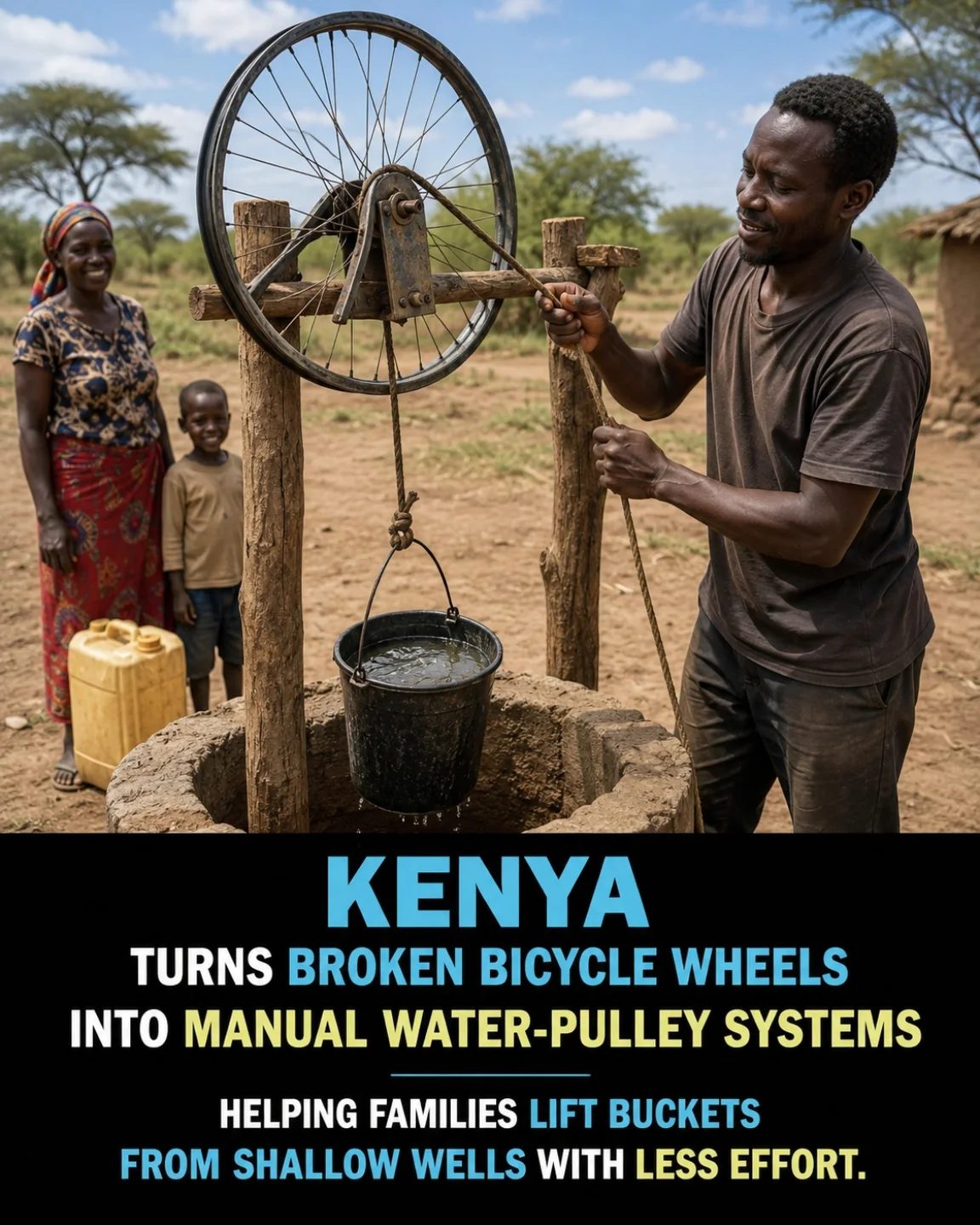
Water pulley systems harness the power of simple machines to make water access easier. For many communities in Kenya, these innovations are a lifeline, providing a way to extract water from shallow wells with much less physical effort. By repurposing broken bicycle wheels, communities have created a sustainable and practical solution to one of their most pressing daily challenges.
Why this Matters
Access to clean water is a fundamental need, yet many communities, particularly in rural areas, face significant challenges in obtaining it. In Kenya, where agriculture and livestock farming are prevalent, access to water is vital. Shallow wells provide a reliable water source, but extracting water from them can be physically demanding, especially for women and children who often bear this responsibility.
Manual water pulley systems constructed from repurposed bicycle wheels represent a significant breakthrough. These systems reduce the physical strain involved in water extraction, making it easier for families to meet their water needs. This innovation not only improves the quality of life for these communities but also promotes sustainability by repurposing waste materials.
Understanding Manual Water Pulley Systems
The Mechanics Behind the System
A manual water pulley system uses a pulley — a wheel with a groove that holds a rope or cable. The basic principle involves using mechanical advantage to lift heavy loads with less force. In this case, the system is designed to lift buckets of water from shallow wells.
The system works by attaching a rope or cable to the pulley, which is fixed to a stable structure, such as a post or a tree. The other end of the rope is attached to a bucket. When the rope is pulled, the pulley reduces the amount of force needed to lift the bucket, making it easier to draw water from the well.
Repurposing Bicycle Wheels
One of the most innovative aspects of this system is the use of repurposed bicycle wheels. Broken or worn-out bicycle wheels, which would otherwise be discarded, are transformed into functional components of the water pulley system. This not only reduces waste but also minimizes the cost of building the system, making it more accessible to resource-constrained communities.
The Impact on Families
Reducing Physical Strain
For families in Kenya, lifting buckets of water from shallow wells can be a daily chore that requires significant physical effort. This task is particularly challenging for women and children, who often have to carry the water over long distances. The manual water pulley system significantly reduces the physical strain involved, making it easier for everyone to access clean water.
Enabling Water Accessibility
The water pulley system ensures that families can access water more easily, which has a broader impact on their daily lives. With less effort required to draw water, families can spend more time on other essential activities, such as farming, education, and community development. This innovation thereby contributes to the overall well-being and productivity of the community.
Practical Tips for Building a Water Pulley System
Material Selection
When building a water pulley system, the selection of materials is crucial. Choose sturdy and durable materials for the pulley and the supporting structure. Repurposed bicycle wheels are an excellent choice for the pulley due to their durability and availability. Ensure that the rope or cable used is strong enough to support the weight of the water buckets.
Installation Steps
- Find a Stable Structure: Identify a stable structure, such as a post or a tree, where the pulley can be securely fixed.
- Attach the Pulley: Secure the bicycle wheel to the structure, ensuring it can rotate freely.
- Attach the Rope: Run the rope or cable through the groove of the pulley and attach one end to the bucket.
- Test the System: Before use, test the system to ensure it works smoothly and safely.
Maintenance and Safety
Regular maintenance is essential to keep the water pulley system in good working condition. Inspect the pulley, rope, and supporting structure periodically for any signs of wear or damage. If necessary, replace worn-out components to ensure the system remains safe and effective.
Important Takeaways
Water pulley systems offer a sustainable and practical solution for accessing water in communities with shallow wells. By repurposing broken bicycle wheels, these systems not only reduce physical strain but also promote sustainability and waste reduction. The innovation provides a lifeline for families, enabling them to access water more easily and spend time on other essential activities.
Conclusion
The manual water pulley system constructed from repurposed bicycle wheels is a testament to human ingenuity and resourcefulness. This innovation has transformed the lives of families in Kenya, providing a sustainable way to access water with less effort. By understanding the mechanics and benefits of this system, other communities facing similar challenges can adopt and adapt this technology to improve their water access and overall quality of life.
Watch the Reel
Questions readers ask
How does the bicycle wheel water pulley system work?
The system uses a repurposed bicycle wheel as a pulley to create a manual water lift system. A rope or cable is wrapped around the wheel, with one end attached to a bucket in the well and the other end used to pull the bucket up, making it easier to extract water from shallow wells.
What are the benefits of using repurposed bicycle wheels for water extraction?
Repurposing bicycle wheels for water extraction offers several benefits. It reduces physical strain, promotes sustainable living, and minimizes waste by giving old bicycle wheels a new purpose. This simple innovation also makes water extraction more efficient and less time-consuming.
Can this manual pulley water system be used in other countries?
Yes, the manual pulley water system can be adapted for use in other countries, particularly in rural areas where access to electricity is limited. Communities with shallow wells and a need for sustainable water extraction methods can benefit from this innovation.
How does this innovation improve daily life in Kenyan communities?
This innovation reduces the physical burden of drawing water, especially for women and children. By making water extraction easier, it allows community members to spend less time on this task and more time on other productive activities, such as farming or caregiving.
What makes the bicycle wheel pulley system a sustainable solution?
The bicycle wheel pulley system is sustainable because it uses readily available materials and does not require electricity. By repurposing old bicycle wheels, it also helps to reduce waste. This makes it an environmentally friendly and practical solution for communities seeking to improve their water access.
Who typically benefits the most from this water extraction method?
Women and children typically benefit the most from this water extraction method. In many Kenyan communities, they are responsible for fetching water, and the manual pulley water system reduces the physical strain and time required for this task, allowing them to focus on other essential activities.
Can this system be used for deep wells as well?
The bicycle wheel water pulley system is specifically designed for shallow wells. For deep wells, a more robust and differently designed system would be required. This is because the force needed to lift water from greater depths increases, making the simple bicycle wheel pulley system less effective.
Recent articles
Fresh deep dives from the latest Reels we unpacked.




Comments
Be the first to comment.