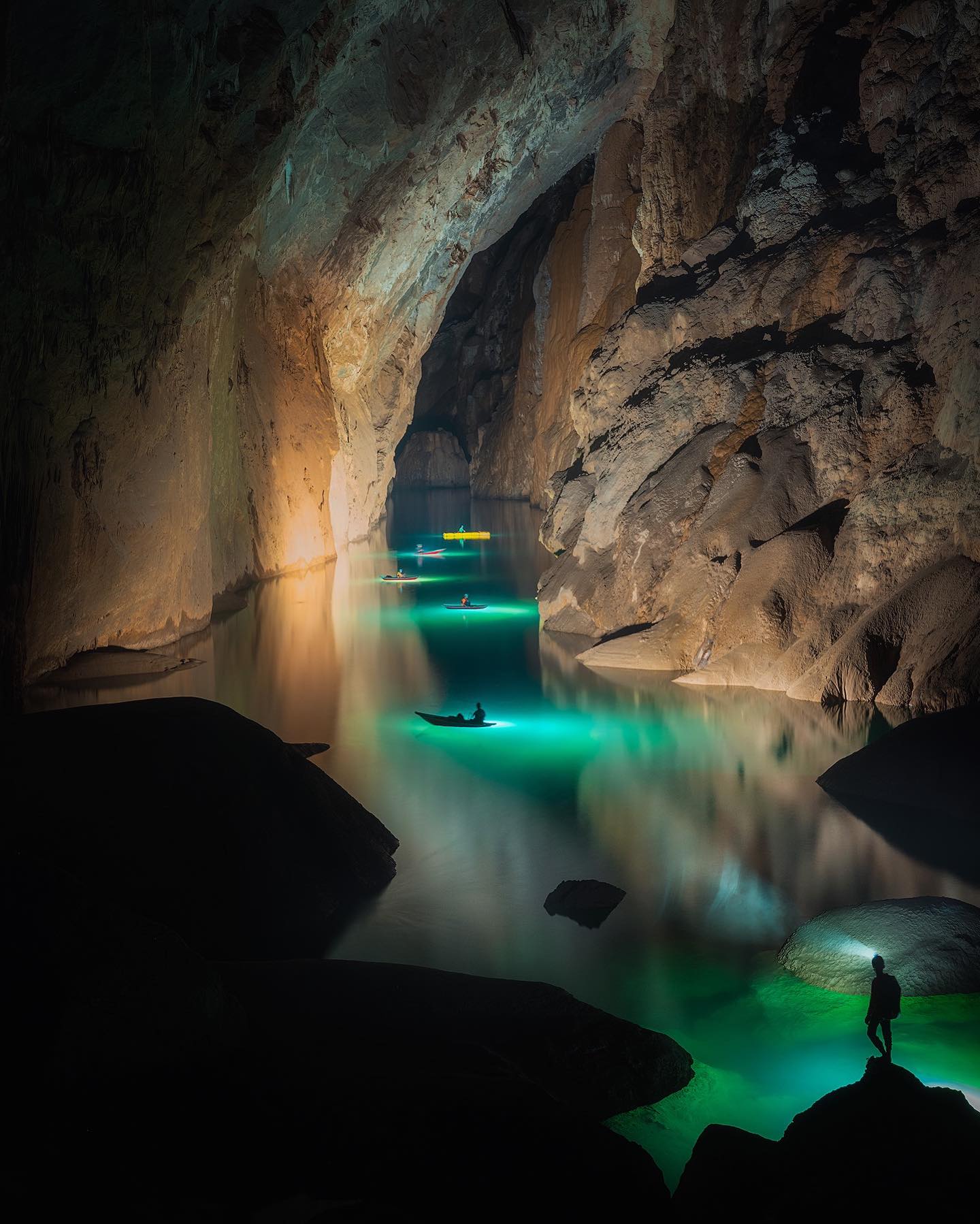
Rock towers rise from a river’s edge, their pointed tips casting dramatic shadows. The water’s surface is an eerie green, lit from above—no sunlight shining through a cave roof, however, but an artificial glow that intensifies vibrant blues and greens. Illumination is key to the cave experience. Underground waterways are dark; in order to see them, you'd need a lot of light. Green lights installed inside the cave that surround the kayakers illuminate the water to the point you can’t see but imagine the stones beneath it. Caves are naturally occurring subterranean voids in the Earth, often characterized by their unique formations, dark environments, and mysterious atmospheres. Their formation is often a result of geological processes like erosion, tectonic activity, and the dissolution of bedrock by water. What sets caves apart is their hidden nature, offering a stark contrast to the world above. Caves usually have a rich system of underground rivers, producing unusual rock formations like stalactites and stalagmites and An underground river can create unique and picturesque landscapes. The ways water creates and alters cave formations make a kayaking trip a very different experience from kayaking in other bodies of water. Kayaking through a cave system allows adventurers to explore these hidden environments, offering a rare glimpse into the Earth’s geological history and structure. The interplay between the natural darkness and the artificial lighting creates a dramatic contrast, enhancing the overall experience of exploring the cave. Since it is a cave, you wouldn't want to miss out on the mysterious beauty. The image of kayaking on an illuminated river in a cave is a stunning contradiction. It provides a unique and thrilling adventure. The turquoise water's color enhances the adventure by making it feel more magical. In this way, the cave system is illuminated in a way the viewer would not. The viewer feels transported to a different world, untouched by earthly conditions.
A Thread of Disconnection
Caves have fascinated humans for millennia. Cave paintings and artifacts in Spain and Indonesia have been dated to over 40,000 years ago. But today, cave exploration is more accessible, thanks to technology. In the 18th and 19th centuries, explorers began to delve deeper into these hidden worlds. The pursuit of knowledge and adventure has driven exploration, leading to the discovery of some of the world’s most remarkable cave systems. But cave exploration has become a popular trend in recent decades. In particular, underground kayaking has seen a rise in popularity, with adventurers seeking unique perspectives and thrilling experiences. Additionally, cave exploration aligns with a broader cultural fascination with the unknown and a desire for novel experiences. Tour groups can kayak through the murky water, showing the rivers beneath the rock.
The Raft of Green Light
Despite the thrill, cave exploration involves significant risks. One of the biggest challenges is the need for cautious navigation. The waters can be treacherous, unpredictable, and difficult to navigate in the dark. It is important for kayakers to ensure they use proper lighting to prevent disorientation or accidents. Rock formations can pose a hazard to navigation, and underwater obstacles are difficult to spot. The darkness creates an increased risk of collisions, falls, and getting lost. This is where artificial lighting plays a crucial role. Adequate lighting and safety equipment are essential for mitigating these risks. The colored lighting adds to the visual appeal of the underwater river system. The artificial lighting also enhances visibility, making it easier to navigate and enjoy the surroundings. The use of lighting enhances the visual appeal of the scene, and the contrast between the dark rock formations and the brightly lit water creates a dramatic effect. This makes it easier for the kayakers to navigate the subterranean river. Additionally, the turquoise water on the river reflects off the walls, enhancing both the experience and visual appeal. The green light used in the cave system also enhances the visual appeal, making it feel mysterious, magical, and otherworldly. Here, the green light turns cave walls into an art exhibit.
Flooring the Kayak
There are more than 1300 caves systems in the United States. They are most popular in areas where there are extensive karst landscapes, such as the Ozarks, Alabama, and Texas. Each location offers unique features, such as the dry caves in the Texas system, which have bat-species unique to the state. Water caves have accessibility issues, though, and can be a risk. Rock formations take time to form, and the risk of flash flooding is high. While floods can be dangerous, kayakers can enjoy the fact that the flood waters have carved out new passageways and created new landscapes over time, which might enable tourists to explore new parts of the cave system.
Crafting the Experience
The green light in the system has to be calibrated to make it dark enough to be high contrast against the walls, but bright enough to see the water. Kayakers can rent safety equipment on-site, including helmets, and life jackets, as well as kayaks. But there are still inherent risks to kayaking in a cave. Caving enthusiasts can enjoy the experience of a dark and mysterious environment, using artificial lighting to experience the beauty of the cave. Ensuring that you take adventure tours with the right guides is a good idea. Travelers should get more information from the travel agency, such as the depth of the water and how long the kayaking trip is.
- Guide and Outfitter: Ensure that you are going with a reliable guide and outfitter who knows the cave system and can provide safety measures at the site.
- Safety gear: Ensure you have the right safety gear, including a helmet and life jacket, before you embark on the journey.
- Price: Understand the cost of the trip, booking, and other fees included.
- Length of kayak tour: Ensure you check the length of the kayak tour so you don't run out of energy or go when you can't swim for too long.
- Trail difficulty: Before you embark on a kayak tour, ensure you understand the difficulty of the trail. Thanks to the green lights, the turquoise water is not just a pleasant sight. It is an adventure, one you would never have expected to take.
Watch the Reel
Questions readers ask
What exactly are the different types of cave formations that kayakers might encounter?
While kayaking through a cave, you might encounter various formations like stalactites, which hang from the ceiling, and stalagmites, which rise from the floor. Other formations include flowstones, which are sheets of calcite, and helictites, which are twisted and contorted calcite formations. These formations are created by the slow deposition of minerals from water and add to the unique and otherworldly atmosphere of the cave.
How does the artificial lighting enhance the kayaking experience in caves?
The artificial lighting in caves, particularly the green lights, illuminates the water and creates a dramatic contrast with the natural darkness. This not only makes the environment visible but also enhances the vibrant blues and greens of the water, making the experience feel magical and otherworldly. The lighting also helps to highlight the unique rock formations and the overall atmosphere of the cave, making it a visually stunning adventure.
What kind of gear do you need for kayaking in caves?
For kayaking in caves, you'll need specialized gear. This includes a sturdy, small kayak designed for tight spaces, a reliable light source like a waterproof headlamp, and safety equipment such as a helmet and a life jacket. Proper navigation tools, like a map or GPS, are also crucial as the environment can be disorienting. Additionally, a dry suit or wetsuit may be necessary to protect against cold water and potential submersion.
Are there any specific safety precautions kayakers should take when exploring caves?
Safety is paramount when kayaking in caves. Always ensure you have a reliable light source, as caves are naturally dark and disorienting. Navigating the waters can be treacherous, so it's important to have proper navigation skills and equipment. Staying with a guide or experienced group is highly recommended, as they can provide valuable insights and ensure a safer journey. Additionally, always check the weather conditions above ground, as changes can affect the water levels and flow in the cave.
Is cave kayaking suitable for beginners?
Cave kayaking is generally more suitable for experienced kayakers due to the challenging conditions and potential risks. Beginners should consider joining guided tours or going with experienced groups to ensure safety and enjoy the adventure. Proper training and knowledge of cave navigation, water conditions, and emergency procedures are essential before embarking on a cave kayaking trip. It's also important to have the right gear and understand the unique challenges of navigating in a dark, confined space.
How do caves form, and what makes them unique for kayaking?
Caves are formed through geological processes such as erosion, tectonic activity, and the dissolution of bedrock by water. These processes create unique underground landscapes with formations like stalactites and stalagmites. Kayaking in caves offers a rare opportunity to explore these hidden environments, providing a different experience compared to kayaking in open bodies of water. The interplay between natural darkness and artificial lighting creates a dramatic and otherworldly atmosphere, enhancing the adventure.
Related deep dives
Similar reads based on topic and creator.




Recent articles
Fresh deep dives from the latest Reels we unpacked.




Comments
Be the first to comment.