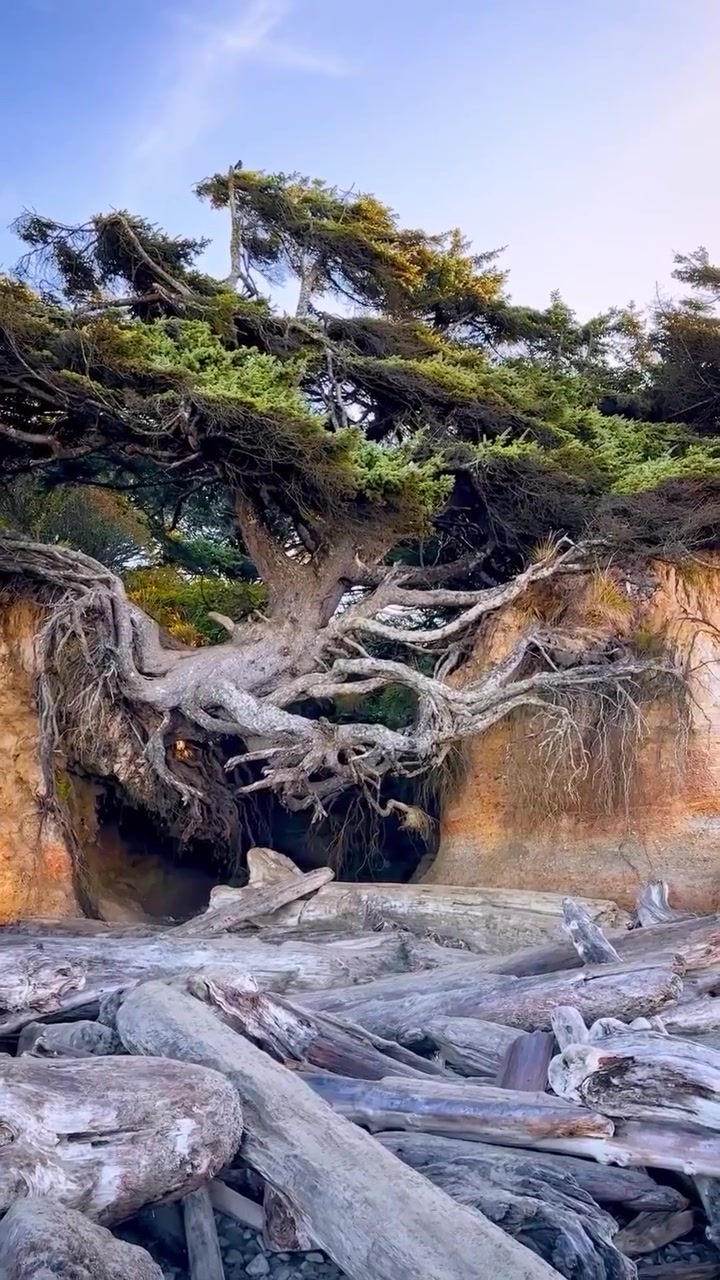
Suspended from a cliffside, its roots twisted and exposed, an ancient Sitka spruce stands tall at the edge of the Pacific. The Kalaloch Tree of Life in Olympic National Park, Washington, defies odds and time. Leaning precariously, its robust root system battles erosion to stay grounded in a brutal ocean. The tree's survival is a testament to nature’s power. It’s not alone in standing against the sea. For centuries, harsh coastal conditions have shaped this tree's unique root structure. This distinctive growth pattern which helps the tree anchor to the cliffside, not just for stability, but also for survival.
Nature's Adaptive Clinging
The Kalaloch Tree of Life, an ancient Sitka spruce, has adapted to its coastal environment with a striking root structure. This tree species is known for its robustness, capable of withstanding winds and weather. The tree’s roots extend down the cliff face, intertwining with driftwood on the beach below, where the ocean’s relentless erosion exposes them. These roots represent nature’s ingenuity. They don’t just grasp the cliffs for stability; they also spread out to absorb the nutrients required for survival. Their deep, twisting patterns, are an indicator of the tree’s resilience and its ability to adapt. Glacier-carved valleys and wildflower meadows are also all apart of Olympic National Park, but the Tree of Life stands unique among them. A symbol of resilience, the tree's harsh environment makes the natural wonder even more compelling.
Defiance in an Ocean Rocked Realm
Waves crash against the Kalaloch Tree of Life's clifftop home. The climate is unforgiving, as ocean winds and waves continually erode any solid soil with unyielding might. The tree’s embrace of the cliffside makes it dramatically displayed and beautiful. As the tree fights for survival, it champions endurances for all viewers. It epitomizes survival, and the power of nature in action. The Tree's roots reach deep into the earth, and its branches extend towards the sky.
Root design, Twisted Branches
The Kalaloch Tree has roots that extend in unexpected directions. They twist and bend away from the trunk. Rather than pointing down, they grow diagonally. This unique growth lets the roots interlock with the surrounding rock, securing the tree in place. A testament to nature's resilience. The Kalaloch Tree's roots are not just displays of resilience, but also unique to the tree. These roots stretch from the cliff, down, and toward the beach. They even intertwine with driftwood and sand on the ocean floor. Though the roots are horizontal, they still perform vital roles, anchoring the tree and absorbing nutrients.
Historical and Cultural Significance
The Kalaloch Tree of Life, an ancient Sitka spruce, stands tall in the Olympic National Park. It represents nature's enduring forces, defying the elements for centuries. This tree's roots, exposed due to erosion, have a cultural and historical significance. They're a symbol of the resilience of nature and the enduring power of life. The Kalaloch Tree is a part of the ongoing story in the Olympic Peninsula. The park has a diverse range of natural wonders, but it is this tree that stands out.
How to Visit
Olympic National Park encompasses diverse ecosystems, from wilderness to shore. To reach the Kalaloch Tree of Life, travelers must navigate a coastal trail and take in stunning sights outcroppings overlooking the ocean nearby.
- Planning: Arrive early in the day to explore the park and visit the tree. Stay on designated trails and respect the natural surroundings.
- Gear: Wear sturdy shoes and bring water and snacks. Prepare for all weather conditions, and remember that the trail can be slippery.
- Permits: No special permits are needed for this trip, but be sure to check if other areas of the park require them.
- Group Size: The trail and tree are best experienced in small groups, so consider going alone or with a close friend. Seek additional park information on popular times and places to avoid crowds.
Continuing the Story
Ocean waves crash against the Kalaloch Tree of Life. Wind whips its branches, and yet the ancient Sitka spruce remains rooted firmly in its cliffside home. This is the scene at Olympic National Park, Washington. The Tree of Life stands as a symbol of endurance and resilience.
Watch the Reel
Questions readers ask
How does the Kalaloch Tree of Life stay rooted to the cliffside despite the harsh conditions?
The tree has a unique root system that extends diagonally and intertwines with the surrounding rock and driftwood, anchoring it securely. This design allows the tree to withstand the relentless erosion caused by the ocean waves and winds, providing both stability and nutrient absorption. The roots' ability to twist and bend in unexpected directions is a key factor in the tree's survival.
What makes the Kalaloch Tree of Life unique compared to other trees in Olympic National Park?
The Kalaloch Tree of Life is unique due to its dramatic location, growing on a cliffside overlooking the Pacific Ocean, and its distinctive root structure. Unlike other trees in the park, it has adapted to its harsh coastal environment by developing roots that spread out horizontally and intertwine with the cliff and beach below. This not only provides stability but also allows the tree to absorb essential nutrients, making it a symbol of resilience and endurance.
Is the Kalaloch Tree of Life accessible to visitors, and if so, how can they see it?
Yes, the Kalaloch Tree of Life is accessible to visitors. It is located within Olympic National Park in Washington. Visitors can reach the tree by taking a short hike from the Kalaloch Lodge Beach Trail, which offers stunning views of the tree and the surrounding coastal landscape. The trail is relatively easy, making it a popular spot for tourists and nature enthusiasts alike.
How old is the Kalaloch Tree of Life, and how has it managed to survive for so long?
The exact age of the Kalaloch Tree of Life is not specified, but it is described as ancient, indicating it has been standing for centuries. Its survival is attributed to its robust root system, which has adapted to the harsh coastal environment by anchoring itself to the cliff and absorbing nutrients from the surrounding area. The tree's resilience and ability to withstand the relentless erosion and weather conditions make it a testament to nature's enduring forces.
What other natural wonders can be found near the Kalaloch Tree of Life in Olympic National Park?
Olympic National Park is home to a diverse range of natural wonders, including glacier-carved valleys and wildflower meadows. While the Kalaloch Tree of Life stands out as a unique symbol of resilience, visitors can also explore other notable sites such as the Hoh Rain Forest, the Rialto Beach, and the Hurricane Ridge. Each of these locations offers a unique experience, showcasing the park's rich biodiversity and stunning landscapes.
Related deep dives
Similar reads based on topic and creator.



Recent articles
Fresh deep dives from the latest Reels we unpacked.




Comments
Be the first to comment.