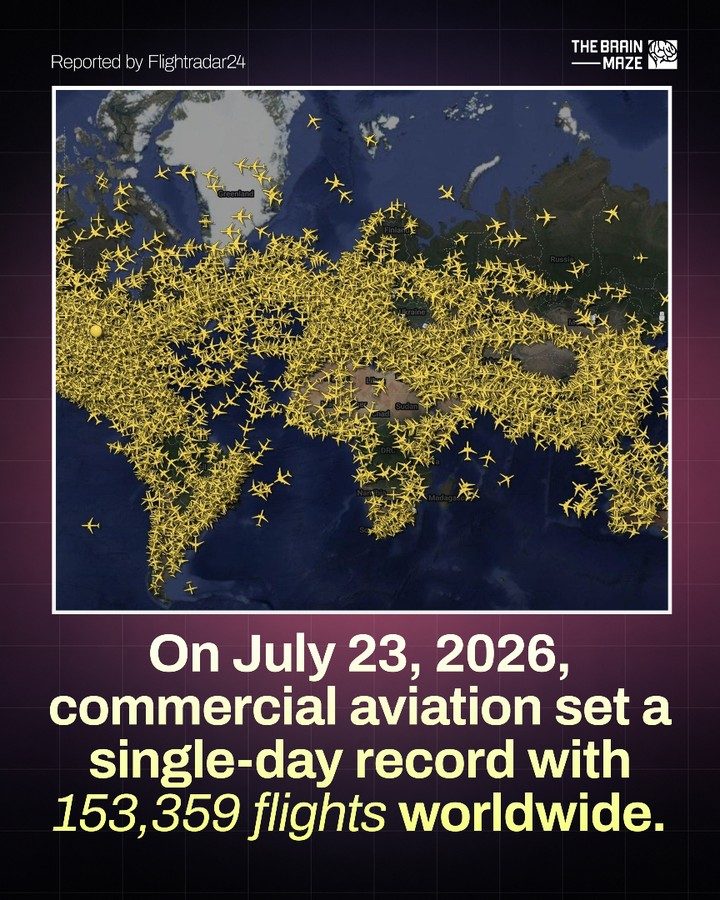
Commercial Aviation Hits Record High
On July 23, 2026, commercial aviation hit an unprecedented milestone. Flightradar24 recorded 153,359 commercial flights worldwide in a single day — the highest number ever tracked. This surge in flight activity reflects the robust global travel demand during the peak summer season, with airlines operating at near maximum capacity to transport millions of passengers across both international and domestic routes.
Why This Matters
The record-breaking number of flights underscores the resilience and growth of the aviation industry. It highlights the increasing demand for air travel, driven by factors such as economic growth, increased tourism, and more affordable flight options. Understanding this milestone provides insights into the industry's current state and future trends.
The 2026 Flight Surge
Peak Season Demand
The summer season is traditionally the busiest time for air travel. Families plan vacations, business travelers attend conferences, and leisure travelers explore new destinations. The surge in flights on July 23, 2026, aligns with this pattern, with airlines operating at near full capacity to meet the high demand.
Global Distribution
The flights were distributed across various regions, including North America, Europe, and Asia. This global distribution reflects the interconnected nature of modern travel, where people move freely between continents for work, leisure, and family visits.
Factors Driving the Record
Economic Recovery
The aviation industry has seen a significant recovery from the economic downturns of the past decade. With economies stabilizing, more people are traveling for both business and leisure, driving the demand for flights.
Increased Tourism
Tourism has been on the rise globally, with more people exploring new destinations. This trend has led to an increase in flights, as tourists seek convenient and efficient ways to travel.
Affordable Air Travel
The aviation industry has become more competitive, leading to lower airfares. This affordability has made air travel accessible to a broader segment of the population, contributing to the surge in flights.
Technological advancements
Advancements in aviation technology have also played a role. Modern aircraft are more fuel-efficient and can carry more passengers, making it feasible for airlines to operate more flights efficiently.
Practical Tips for Travelers
Plan Ahead
Given the high demand, it's essential to plan your travel well in advance. Book your flights early to secure better deals and availability.
Be Flexible
Consider being flexible with your travel dates and times. Flights during off-peak hours or on weekdays can often be cheaper and less crowded.
Stay Informed
Stay updated with the latest travel advisories and weather conditions. This information can help you make informed decisions and avoid unexpected disruptions.
Important Takeaways
The record-breaking number of flights on July 23, 2026, highlights the robustness of the aviation industry. It reflects the increasing demand for air travel, driven by various factors including economic recovery, increased tourism, and technological advancements.
The global distribution of flights underscores the interconnected nature of modern travel. As more people explore new destinations and businesses expand globally, the demand for air travel is likely to continue rising.
Conclusion
The historic milestone of 153,359 commercial flights in a single day marks a significant achievement for the aviation industry. It reflects the growing demand for air travel and the industry's ability to meet this demand efficiently. As we look to the future, continued innovation and sustainability efforts will be crucial in supporting this growth while minimizing the environmental impact.
Watch the Reel
Questions readers ask
What factors contributed to the record of 153,359 flights on July 23, 2026?
The record was driven by several factors, including robust global travel demand, economic recovery, increased tourism, and the availability of more affordable air travel options. These elements combined to push airlines to operate at near maximum capacity, leading to the highest number of flights ever tracked in a single day.
How was the record number of flights tracked and verified?
The record was tracked and verified by Flightradar24, a global leader in flight tracking. The company uses advanced technology and data collection methods to monitor and record flight movements worldwide, ensuring the accuracy of the 153,359 flights recorded on July 23, 2026.
What insights does this milestone provide about the aviation industry?
This milestone offers valuable insights into the aviation industry's growth and resilience. It demonstrates the increasing demand for air travel and the industry's ability to adapt and thrive in a post-pandemic world, with airlines successfully meeting the high demand for both international and domestic routes.
How does the July 23, 2026, record compare to previous flight records?
The 153,359 flights recorded on July 23, 2026, surpassed all previous records, making it the highest number of daily flights ever tracked. This significant increase highlights the unprecedented growth in air travel demand and the aviation industry's capacity to handle such high volumes.
What role did affordability play in achieving this aviation milestone?
Affordability played a crucial role in achieving this milestone. As air travel became more accessible and budget-friendly, more people opted to fly, leading to a surge in demand. This increased demand, in turn, drove airlines to maximize their flight schedules, contributing to the record-breaking number of flights.
What does this record mean for the future of commercial aviation?
This record indicates a strong and growing demand for air travel, suggesting that commercial aviation will continue to expand. Airlines and aviation authorities may need to focus on further improving infrastructure, enhancing operational efficiency, and implementing sustainable practices to meet future demands.
Which regions or countries likely contributed most to the record number of flights?
While specific regional data isn't detailed, it can be inferred that regions with significant economic recovery, high tourism rates, and extensive air travel networks, such as North America, Europe, and parts of Asia, likely contributed most to the record. These areas are known for their robust aviation infrastructure and high demand for air travel.
Related deep dives
Similar reads based on topic and creator.




Recent articles
Fresh deep dives from the latest Reels we unpacked.




Comments
Be the first to comment.