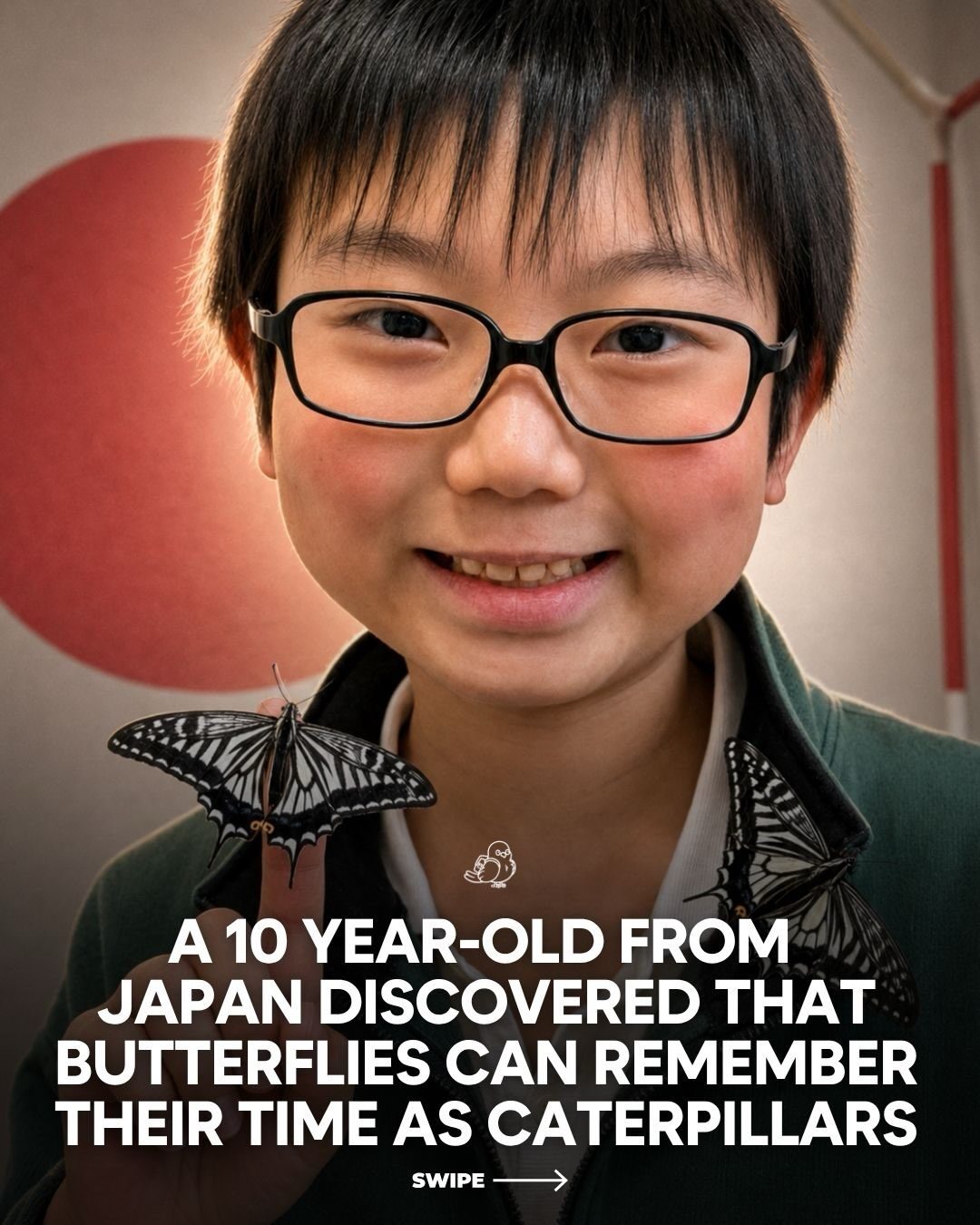
Butterfly Memory and the Remarkable Discovery by Jo Nagai
A 10-year-old boy from Japan named Jo Nagai made an astonishing discovery about butterfly memory. While raising swallowtail butterflies at home, Jo noticed an intriguing behavior: the butterflies he had raised seemed to recognize and return to him. This observation sparked a curiosity that led to a groundbreaking experiment, one that surprised scientists worldwide and shed new light on the fascinating world of insect memory.
Why This Matters
Jo's discovery highlights the importance of curiosity-driven research. It also raises intriguing questions about memory preservation during metamorphosis—a dramatic transformation that completely alters an insect's physical form.
The fact that insects can retain memories from their earlier life stages has significant implications. It suggests that memories are more resilient and adaptable than previously thought, challenging the idea that memories are easily lost during such profound physical changes.
Main Discussion
The Curiosity That Sparked a Discovery
Jo Nagai's journey began with a simple observation: the butterflies he raised seemed to recognize him. This initial curiosity led to a hypothesis: could these butterflies remember experiences from their time as caterpillars? To test this, Jo conducted an experiment that would eventually capture the attention of the scientific community.
The Experiment
Jo trained caterpillars to associate a specific scent, lavender, with a mild vibration. By gently vibrating the caterpillars’ enclosure while introducing the lavender scent, Jo created a conditioned response. When the caterpillars matured into butterflies, Jo tested them again with the lavender scent.
The results were astounding: the butterflies, despite their dramatic physical transformation, still exhibited a strong aversion to the lavender scent. This indicated that the memory of the association between the scent and the vibration had persisted through metamorphosis.
Scientific Implications
Jo's discovery adds to the growing body of research on memory in insects. It supports earlier findings that suggest some insects, including bees and ants, can retain memories from their larval stages. This phenomenon challenges the conventional wisdom that significant physical changes, like metamorphosis, would erase memories.
The Role of Curiosity in Scientific Exploration
The story of Jo Nagai underscores the importance of curiosity and observation in scientific discovery. His experiment, although simple in design, yielded profound results. It serves as a reminder that scientific exploration can begin with just a question and a desire to understand the world more deeply.
Practical Tips
If you are interested in insect behavior and memory, here are a few tips to guide your own explorations:
Start with Observation
Jo began with simple observation. By paying close attention to the behavior of the butterflies, he noticed something unusual. This is a great place to start your own investigations into insect behavior.
Design Simple Experiments
Jo's experiment was straightforward but effective. It involved training caterpillars to associate a scent with a sensation and then testing the butterflies to see if the memory persisted. Simple experiments can yield significant results and are often more feasible for beginners.
Document Your Findings
Keeping detailed records of your observations and experiments is crucial. This not only helps in understanding your results but also provides a basis for further research or sharing your findings with others.
Stay Curious
The most important aspect of Jo's story is his curiosity. Staying curious and asking questions can lead to significant discoveries.
Important Takeaways
-
Insect Memory Persistence: Jo's experiment showed that memories can survive significant physical changes, such as metamorphosis. This discovery has broader implications for understanding memory and learning in insects.
-
Curiosity-Driven Research: Jo's story underscores the value of curiosity and hands-on experimentation. His simple experiment, driven by a question, led to a significant discovery.
-
Accessibility of Science: The fact that a 10-year-old boy could make such a significant discovery through simple, accessible methods highlights the accessibility of science. It also shows that anyone with a curious mind can contribute to scientific knowledge.
Conclusion
Jo Nagai's discovery about butterfly memory is a testament to the power of curiosity and the importance of asking questions. While raising butterflies, his simple experiment resulted in a surprising finding that has broad implications for our understanding of memory and metamorphosis in insects. His story reminds us that scientific exploration can begin with just a question and a willingness to observe and experiment. Whether you are a seasoned scientist or a curious observer, there is always more to discover.
Watch the Reel
Questions readers ask
How did Jo Nagai first notice the unusual behavior in butterflies?
Jo Nagai observed that the swallowtail butterflies he had raised from caterpillars seemed to recognize and return to him, which sparked his curiosity and led to his remarkable discovery.
What was the significance of Jo Nagai's discovery about butterfly memory?
Jo's findings challenged existing beliefs about insect memory and demonstrated that butterflies can retain memories from their time as caterpillars, even after metamorphosis.
How did Jo Nagai's discovery impact the scientific community?
Jo's discovery surprised scientists around the world and opened up new avenues for research into insect memory and the effects of metamorphosis on memory retention.
What role did curiosity play in Jo Nagai's discovery?
Curiosity was the driving force behind Jo Nagai's discovery. His observation of the butterflies' behavior led him to conduct an experiment that ultimately revealed new insights into butterfly memory.
Can butterflies remember scents from their time as caterpillars?
Yes, Jo Nagai's research suggested that butterflies can remember scents from their time as caterpillars, demonstrating that memories can persist through the dramatic physical changes of metamorphosis.
What kind of butterflies did Jo Nagai study in his discovery?
Jo Nagai studied swallowtail butterflies. He raised them from caterpillars and observed their behavior, which led to his groundbreaking discovery about memory retention in butterflies.
How does Jo Nagai's discovery contribute to our understanding of memory in insects?
Jo Nagai's discovery sheds new light on the fascinating world of insect memory, particularly how memories can be preserved during the dramatic transformation of metamorphosis from caterpillar to butterfly.
Related deep dives
Similar reads based on topic and creator.




Recent articles
Fresh deep dives from the latest Reels we unpacked.




Comments
Be the first to comment.