
The Uncharted Path of Jewish Heritage
From a remote island in Tunisia to a community in Azerbaijan, and from the inland mountains in Colombia to other unseen destinations, this journey not only tells the story of Jewish heritage, but also showcases not just the reveal of Jewish history, but also other facets of culture, architecture, and more. This is the other side of the narrative, where discovering Jewish heritage becomes a journey of immense depth and nuance.
Unpacking Jewish Heritage
A woman embarked on a mission, to go around the world to find Jews. Since childhood, she had an incomplete perception of being Jewish. She thought all Jews looked like her, spoke English, and came from Europe. But that was before she encountered Jews in Tunisia, Azerbaijan, and Colombia, and a handful of other countries. This journey was to help her understand her identity, and so she set off to six countries to find six different Jewish communities. The journey began with a question, "What it meant to be Jewish?" For her, the realization started when she left America. Meeting Jews in Tunisia, who lived on a remote island for 3,000 years and their language was almost incomprehensible to anyone else, changed things. It turned out that the Jews of Azerbaijan have a Middle Eastern cuisine that you cannot find anywhere else in the world. Then, when she met Jews in Colombia, whose families fled Spain and Portugal 500 years ago, and kept their religious customs intact, it was a revelation. With that, she began to understand her identity as a Jewish person, part of a global people scattered across the world, each community with its distinct features and heritage. "If you're not Jewish, you might think we're all white, all rich, all powerful. But you're wrong. So wrong," she said.
The Transformative Power of Travel
Travel can be transformative, especially when it is aimed at connecting with your roots. What started as a journey to understand Jewish heritage evolved into a broader exploration of identity. This became about unlearning stereotypes, and a deeper connection with being Jewish. This is empowering, not just for those seeking to understand their heritage, but for everyone who thinks they know what it means to be Jewish. It offers a broader perspective to everyone who mistakes Jewish identity as being white, wealthy, and powerful. As these stereotypes are shattered, the truth gets revealed — diversity, resilience, and uniqueness.
### The Jewish Diaspora Unveiled
Understanding the dispersed Jews involved understanding their habits, traditions, food, and language. They each had a unique identity. This is not just about going to different countries, but meeting people who have stayed true to their roots in a different part of the world. Ever since the Spanish Inquisition in 1492, Jews have been scattered far and wide, fleeing persecution, and settling in various parts of the world. Jews live on an island in Tunisia for 3,000 years, their geographical isolation has kept them secluded from the rest of the world, making them the oldest existing Jewish community. If we take their DNA back to the 400s, it will only be of Italians and Greeks. In Azerbaijan, they have a unique blend of Middle-Eastern cuisine and vibrant culture. They have continued to live, surrounded by a largely Shia Muslim population and filled with their unique traditions and customs. Then there are the Jews in Colombia, whose families fled Spain and Portugal 500 years ago. This is striking as you can see the uncanny resemblance to the Sephardic Jews in the way they speak Spanish. They are easily identifiable in their region, which has been vital for them.
### The Jewish Diaspora: What Brings Us Together?
Meetings with people who have stayed true to their roots in a different part of the world also involved connecting with your own identity as a Jew. Jews from various communities are different but each community is a reflection of the Jewish people they are. They have stayed true to their roots despite persecution and isolation. The woman set out on a journey but this was not about exploring a different culture. It was not about learning a different language. It was about understanding your own identity, who you are, and who you come from and what does it mean to be a Jew. And for her, it meant to meet all these different types of Jews. Since the Spanish Inquisition, Jews have been scattered far and wide, but they have stayed true to their roots.
### Navigating Cultural and Linguistic Diversity
Understanding Jewish heritage is about navigating cultural and linguistic diversity. While she thought all Jews looked like her, spoke English, and came from Europe, her journey revealed the vast diversity within the Jewish community. From the Jews of Tunisia, who live on a secluded island for 3,000 years and speak a language incomprehensible to anyone else, to the Jews of Azerbaijan, who have a unique blend of Middle-Eastern cuisine and vibrant culture, to the Jews in Colombia, who are easily identifiable in their region, the journey was about understanding the diversity and richness of Jewish heritage. If we take the DNA of the Jews of Tunisia back to the 400s, it will only be of Italians and Greeks. This means they are not from the Middle East. These Jews were among the first Jews to come back from the Babylonian exile and settled in North Africa. This brought a lot of new understanding into what Judaism is and is not.
Wanting to Understand Who They Are
The challenge is finding the right place for a six-month journey. She took it up as her mission. Then she began to understand her identity as a Jewish person, part of a global people scattered across the world. This is what keeps someone going, understanding the Jewish community and her identity as a Jewish person.
### Planning Your Pilgrimage
Planning a journey of this magnitude involves careful planning and research. With a clear mission in front of her, the woman had a six-month journey to find six different Jewish communities around the world. There is no one-size-fits-all approach. Strategies to Plan It Right:
- Identify the Unique Communities: She identified unique Jewish communities scattered across the globe.
- Research the Locations: She researched the locations and planned a schedule for traveling to Tunisia, Azerbaijan, Colombia, and other destinations.
- Have A Clear Vision: The plan involved going to six countries around the world to find six different Jewish communities.
- Engage with Locals: Engaging with the locals was also part of the plan. She had to connect with the Jewish people in each community. The journey was not just about meeting different types of Jews but also about understanding the Jewish community. This was a mission to understand who she was and who they were as people.
A Convergence of Modernity and Antiquity
The Jewish heritage and the Jewish identity are interlinked. It is a beautiful blend of modernity and antiquity. The Jews of the world have kept their traditions and customs intact, despite the scattered communities. This was to understand who she was and who they were as people by meeting as many different types of Jews as she could. This article is about discovering your identity as a Jew in a world as diverse as it is complex. This means encountering people who have stayed true to their roots and understanding their identity as a Jew, part of a global Jewish community scattered across the world. This venture was a journey of six months to six different countries seeking six different Jewish communities and keeping a record of it. This was about sharing the journey with people and inviting them to join.
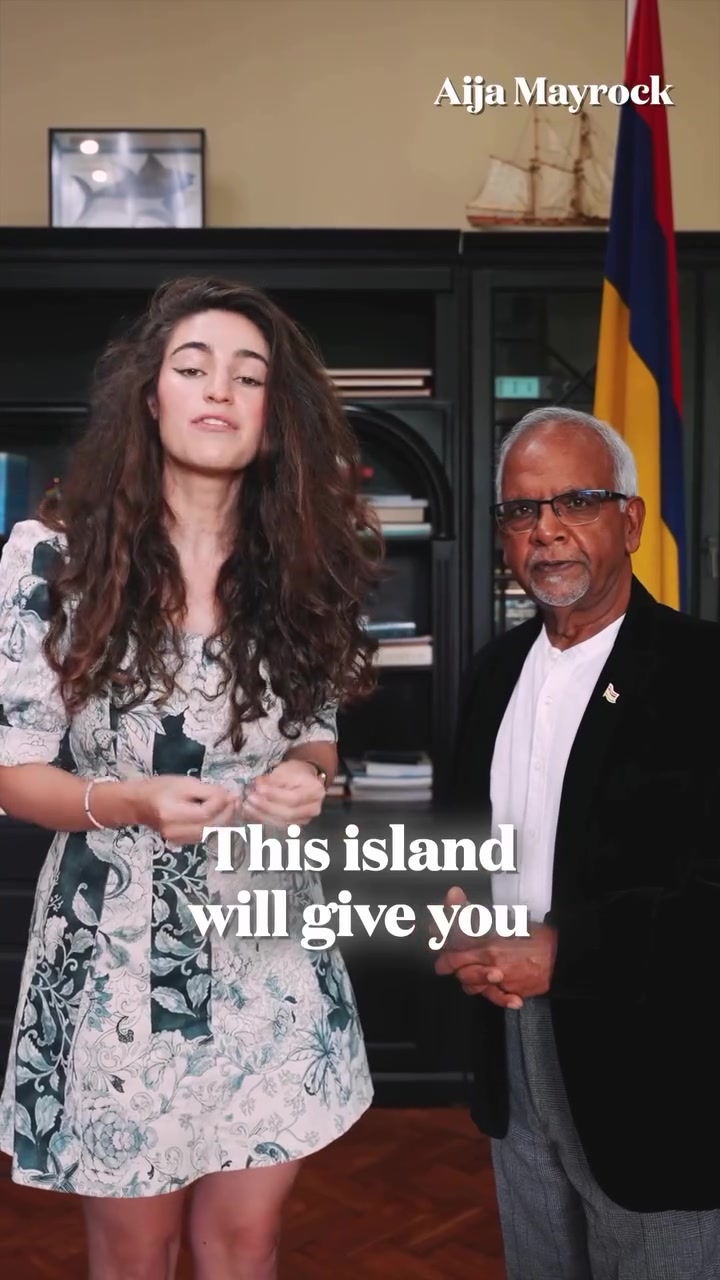
Watch the Reel
Questions readers ask
What inspired this woman to embark on her global journey to understand her Jewish identity?
Her journey began when she realized that the Jews she knew in America didn't represent the full diversity of Jewish heritage. It was when she met Jews in Tunisia, whose language and culture were almost incomprehensible to her, that she started to realize the vastness of the Jewish experience.
How did the experience of meeting Jewish communities in different countries change her perception of Jewish identity?
Meeting Jews in various countries like Tunisia, Azerbaijan, and Colombia showed her that Jewish identity is incredibly diverse. She learned that Jews come from different backgrounds, speak different languages, and have unique cultural practices, challenging the stereotypes she had grown up with.
What was the significance of the Jewish community in Tunisia and Colombia in her journey?
The Jewish community on a remote island in Tunisia, which had been isolated for 3,000 years, revealed to her the depth of Jewish history and the preservation of unique traditions. In Colombia, meeting Jews whose families had fled Spain and Portugal centuries ago showed her how Jewish customs can be preserved over generations, despite being far from their original homeland.
How did the journey reveal the transformative power of travel?
Her journey transformed her understanding of Jewish identity by challenging stereotypes and showing her the diversity and resilience of Jewish communities worldwide. It also empowered her to unlearn preconceived notions about what it means to be Jewish, revealing a broader, more nuanced perspective.
How does the Jewish community in Azerbaijan contribute to the global understanding of Jewish heritage?
The Jews of Azerbaijan have a unique Middle Eastern cuisine and distinct cultural practices that are not found elsewhere. Their presence adds to the global mosaic of Jewish heritage, showing that Jewish identity is not monolithic but rather a rich tapestry of diverse cultures and traditions.
What is the significance of the Spanish Inquisition in the context of the Jewish diaspora?
The Spanish Inquisition in 1492 led to the dispersal of Jews across the world as they fled persecution. This event is crucial in understanding the Jewish diaspora, as it marked the beginning of Jews settling in various parts of the world, each community developing unique identities and traditions.
How does this journey challenge common stereotypes about Jewish identity?
The journey challenges the common stereotypes that all Jews are white, wealthy, and powerful. By encountering diverse Jewish communities, she realized that Jewish identity encompasses a wide range of backgrounds, cultures, and economic statuses, revealing the true diversity and resilience of the Jewish people.
Related deep dives
Similar reads based on topic and creator.



Recent articles
Fresh deep dives from the latest Reels we unpacked.




Comments
Be the first to comment.