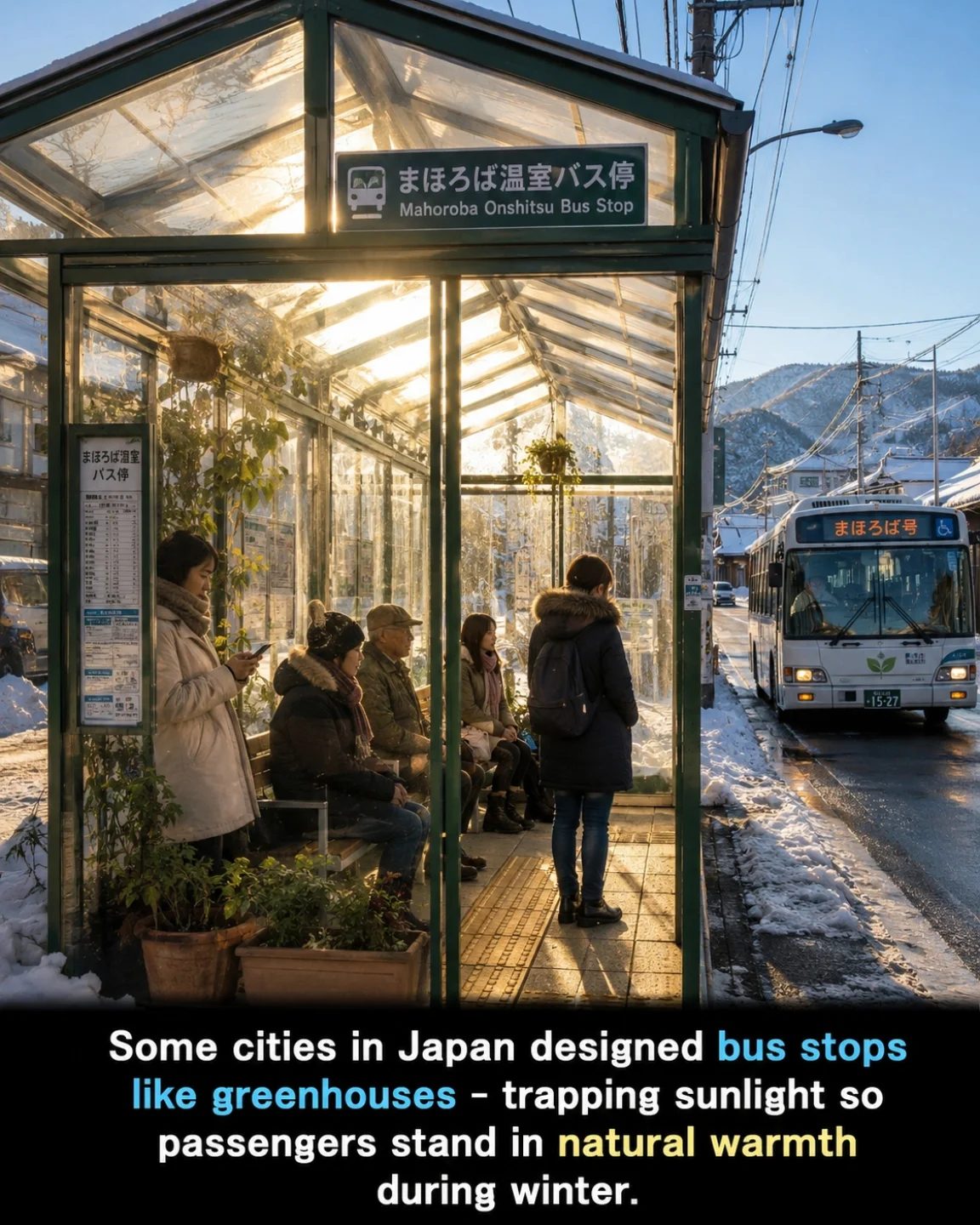
Unique Bus Stop Design in Japan
The Mahoroba Onshitsu Bus Stop in Japan is a remarkable example of innovative architectural design. This bus stop is not just a place for passengers to wait for their bus; it's a structure designed with a unique purpose—trapping sunlight to create a warm and comfortable environment during the cold winter months.
Context / Why This Matters
In regions with harsh winters, waiting for public transportation can be an uncomfortable experience. Traditional bus stops often lack adequate shelter from the cold. The Mahoroba Onshitsu Bus Stop addresses this issue by incorporating a glass enclosure that allows sunlight to enter, creating a greenhouse-like effect. This design not only provides warmth but also enhances the overall waiting experience for passengers.
Main Discussion
Innovative Design and Functionality
The bus stop's design is centered around its glass enclosure, which is both functional and aesthetically pleasing. The glass panels trap sunlight during the day, heating the interior and creating a cozy space for waiting passengers. This design is particularly beneficial in winter, when natural light and warmth can significantly improve the comfort level of those waiting for their bus.
The structure's primary material, glass, plays a crucial role in achieving this effect. It allows for ample natural light to enter, making the bus stop feel bright and airy even on the gloomiest days. This design feature is not just a matter of convenience but also a testament to the innovative use of materials in modern architecture.
Enhanced Passenger Experience
One of the most notable aspects of this design is the enhanced passenger experience it offers. Waiting for a bus can be tedious, but the Mahoroba Onshitsu Bus Stop transforms this waiting time into a more pleasant experience. Passengers can enjoy the natural warmth and light, making the wait feel shorter and more comfortable.
The design also provides a sense of security and shelter, which is often lacking in traditional bus stops. The glass enclosure creates a barrier from the elements, protecting passengers from wind, rain, and snow. This makes the bus stop a more inviting and comfortable space, encouraging more people to use public transportation.
Sustainability and Energy Efficiency
The use of natural sunlight to heat the bus stop is not only a functional design choice but also an environmentally friendly one. By relying on solar energy, the bus stop reduces its dependence on traditional heating methods, which can be energy-intensive and contribute to carbon emissions. This sustainable approach is in line with modern architectural trends that prioritize energy efficiency and eco-friendliness.
The design of the Mahoroba Onshitsu Bus Stop showcases how innovative architectural solutions can improve public spaces and enhance the quality of life for those who use them. By incorporating natural elements like sunlight, the bus stop demonstrates a harmonious blend of form and function, creating a space that is both practical and aesthetically pleasing.
Practical Tips
If you're planning to visit Japan or are interested in innovative architecture, the Mahoroba Onshitsu Bus Stop is a must-see. Here are some practical tips to help you make the most of your visit:
- Best Time to Visit: The bus stop’s design is particularly striking during the winter months when the sunlight trapping feature is most apparent. However, it’s also appealing during other times of the year for its unique architecture.
- Nearby Attractions: While the bus stop itself is a notable attraction, consider exploring the surrounding area. Visit nearby parks, shops, and other architectural landmarks that show off Japan’s innovative design.
- Transportation: Plan your journey to include public transportation, so you can experience the convenience and comfort of the Mahoroba Onshitsu Bus Stop for yourself.
Important Takeaways
The Mahoroba Onshitsu Bus Stop in Japan serves as a prime example of how thoughtful architectural design can significantly enhance public spaces. Here are the key takeaways:
- Innovative Use of Materials: The glass enclosure is a brilliant use of materials that trap sunlight, providing warmth and natural light.
- Enhanced Passenger Experience: The design makes waiting for a bus a more comfortable and pleasant experience, encouraging more use of public transportation.
- Sustainability: Utilizing natural sunlight for heating is an eco-friendly and energy-efficient solution, reducing the reliance on traditional heating methods.
- Architectural Inspiration: The bus stop’s design is a testament to Japan’s innovative architecture and dedication to creating functional, comfortable, and sustainable public spaces.
In a world where public transportation is a vital part of daily life, the Mahoroba Onshitsu Bus Stop stands out as a beacon of innovative design, showcasing how simple yet effective architectural solutions can improve the quality of life for many.
Conclusion
The Mahoroba Onshitsu Bus Stop in Japan is more than just a place to wait for a bus; it is a testament to the power of innovative design and sustainable architecture. By utilizing natural sunlight to create a warm and comfortable environment, this bus stop not only enhances the passenger experience but also sets a new standard for public transportation infrastructure. Whether you're a local commuter or a tourist, this bus stop is a must-visit destination that showcases the best of modern architectural design and eco-friendliness.
Watch the Reel
Questions readers ask
How does the Mahoroba Onshitsu Bus Stop in Japan generate warmth during winter?
The bus stop uses a glass enclosure to trap sunlight, creating a greenhouse effect that naturally warms the interior. This design allows passengers to wait in a cozy environment even during cold winter months.
What makes the Mahoroba Onshitsu Bus Stop unique compared to traditional bus stops?
Unlike traditional bus stops, the Mahoroba Onshitsu Bus Stop is designed with a glass enclosure that maximizes sunlight intake, providing both warmth and natural light. This creates a more comfortable and inviting space for passengers.
Why is the design of the Mahoroba Onshitsu Bus Stop important for public transportation in cold regions?
The design addresses the discomfort of waiting in the cold by using natural sunlight to generate warmth. This innovative approach improves the overall experience of using public transportation, especially in harsh winter conditions.
Can the Mahoroba Onshitsu Bus Stop design be replicated in other regions with cold winters?
While the design is inspired by Japan's specific climate and architectural styles, the principle of using sunlight to create a warm waiting space can be adapted to suit different regions. Local climate and sunlight intensity should be considered to optimize its effectiveness.
How does the glass enclosure of the Mahoroba Onshitsu Bus Stop contribute to passenger comfort?
The glass enclosure allows sunlight to enter and trap heat inside, creating a warm and well-lit environment. This not only keeps passengers comfortable during winter but also provides a pleasant atmosphere with natural light.
Is the Mahoroba Onshitsu Bus Stop only beneficial during winter, or does it offer advantages year-round?
While the warmth generated by the sunlight is most beneficial during winter, the bus stop's design also provides a well-lit and comfortable space for passengers throughout the year. The glass enclosure ensures natural light and a pleasant waiting area regardless of the season.
Recent articles
Fresh deep dives from the latest Reels we unpacked.




Comments
Be the first to comment.