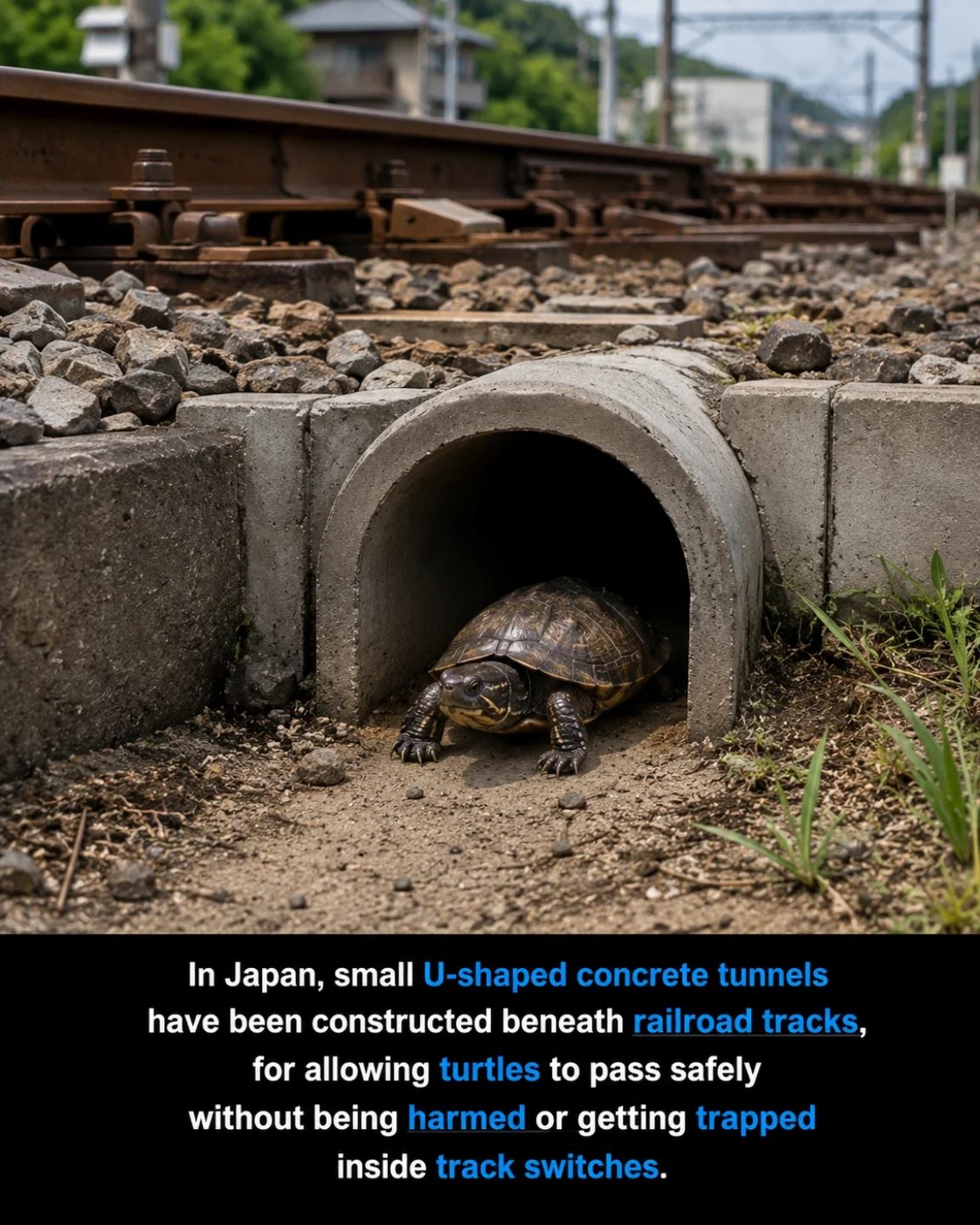
Turtle Tunnels Under Railway Tracks in Japan
Japan has implemented an innovative solution to protect its wildlife from the dangers posed by railroad tracks. Small U-shaped concrete tunnels have been constructed beneath these tracks, allowing turtles to safely cross without getting harmed or trapped. This initiative showcases a unique approach to wildlife conservation in an urban and industrialized environment, demonstrating how human infrastructure can coexist with nature.
Context / Why This Matters
Railroad tracks crisscross the landscape, essential for transportation but often deadly for wildlife. Turtles, in particular, face significant risks when attempting to cross these tracks. They can be struck by trains or, even worse, become trapped in track switches and be injured or killed. The innovative tunnels in Japan offer a practical solution to this problem, ensuring the safety of turtles while maintaining the efficiency of rail transport.
Main Discussion
The Design and Function of Turtle Tunnels
These tunnels are specifically designed to cater to the movements of turtles. The U-shaped design not only provides a safe passage but also ensures that turtles are not deterred by the presence of human infrastructure. The tunnels are positioned beneath the tracks, allowing turtles to navigate safely without the risk of being struck by a train. This design reflects a deep understanding of turtle behavior and their natural habitat, ensuring that the tunnels are practical and effective.
The Importance of Wildlife Conservation in Urban Areas
In urban and industrialized regions, wildlife conservation often takes a backseat to infrastructure development. However, Japan's initiative highlights the importance of integrating wildlife conservation into urban planning. By accommodating the needs of turtles, Japan has shown that it is possible to create a harmonious balance between human activities and the natural world. This approach not only protects wildlife but also enhances the overall biodiversity of the region.
How These Tunnels Protect Turtles
The tunnels are not just about providing a safe passage; they also help prevent turtles from getting trapped in the track switches. These switches are mechanical devices that change the direction of the train tracks, and they can pose a significant risk to turtles. The tunnels ensure that turtles can cross the tracks without encountering these switches, thereby reducing the risk of injury or death.
The Impact on Local Ecosystems
The construction of these tunnels has a positive impact on local ecosystems. Turtles play a crucial role in maintaining the balance of their ecosystems, and their safety is vital for the health of these environments. By ensuring the safe passage of turtles, Japan has taken a significant step towards preserving the natural habitats and biodiversity of the region.
Practical Tips
Best Practices for Wildlife-Friendly Infrastructure
When designing infrastructure, it's essential to consider the impact on local wildlife. Here are some best practices for creating wildlife-friendly infrastructure:
- Integrate Nature: Ensure that infrastructure designs take into account the natural habitats and movements of local wildlife. This can help minimize the impact on their ecosystems.
- Construct Wildlife Crossings: Building wildlife crossings, such as tunnels and overpasses, can provide safe passage for animals and reduce the risk of collisions with vehicles.
- Minimize Noise and Light Pollution: Excessive noise and light can disrupt wildlife behavior. Designing infrastructure to minimize these factors can help maintain the natural balance.
- Regular Monitoring: Regular monitoring of wildlife activity around infrastructure can help identify any issues and make necessary adjustments.
Engaging Local Communities
Engaging local communities in wildlife conservation efforts can be highly beneficial. Communities can provide valuable insights into local wildlife and help monitor the effectiveness of conservation measures. Try these strategies:
- Educational Programs: Conduct educational programs to raise awareness about the importance of wildlife conservation.
- Community Involvement: Involve local communities in conservation efforts, such as volunteering for wildlife monitoring and habitat restoration.
- Feedback Mechanisms: Establish feedback mechanisms to gather input from communities on wildlife conservation efforts and make necessary adjustments.
Collaboration with Experts
Collaborating with experts in wildlife conservation and urban planning can provide valuable insights and best practices. These experts can help design infrastructure that is both functional and wildlife-friendly.
- Consult Experts: Engage with experts in wildlife conservation and urban planning to gain insights and best practices for creating wildlife-friendly infrastructure.
- Conduct Research: Conduct research to understand the specific needs and behaviors of local wildlife and integrate this knowledge into infrastructure design.
- Implement Best Practices: Implement best practices for wildlife conservation, such as constructing wildlife crossings and minimizing noise and light pollution.
Important Takeaways
Innovative Solutions
Japan’s use of small U-shaped concrete tunnels under railroad tracks serves as a model for innovative wildlife conservation efforts. This solution highlights the importance of thinking creatively and practically about how human infrastructure can coexist with nature.
Balancing Progress and Conservation
The initiative demonstrates that it is possible to balance the need for infrastructure development with wildlife conservation. By designing infrastructure that takes into account the needs of local wildlife, we can create a harmonious balance that benefits both humans and animals.
Community and Expert Involvement
Involving local communities and experts in the planning and implementation of wildlife conservation efforts can enhance their effectiveness. Communities can provide valuable insights, while experts can offer best practices and technical expertise.
Long-Term Benefits
The long-term benefits of wildlife conservation efforts, such as the turtle tunnels, include maintaining the health and diversity of local ecosystems. Protecting wildlife ensures that ecosystems remain balanced and resilient, which in turn supports human well-being.
Conclusion
Japan's innovative approach to protecting turtles from the dangers of railroad tracks offers a valuable lesson in wildlife conservation. By constructing U-shaped concrete tunnels, Japan has created a safe passage for turtles, ensuring their safety and the health of local ecosystems. This initiative underscores the importance of considering the needs of wildlife in infrastructure design and the benefits of involving local communities and experts in conservation efforts. Through these steps, we can create a harmonious balance between human activities and the natural world, ensuring the well-being of both.
Watch the Reel
Related deep dives
Similar reads based on topic and creator.




Recent articles
Fresh deep dives from the latest Reels we unpacked.




Comments
Be the first to comment.