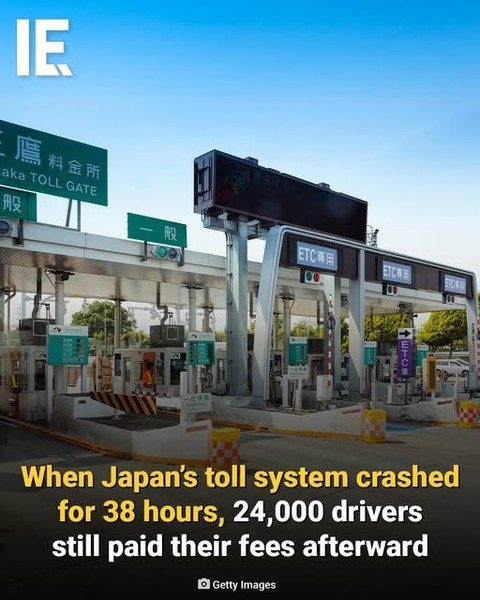
Japan's Toll System Failure: A Story of Honor and Trust
In April 2025, Japan's electronic toll collection system experienced a significant malfunction, resulting in a 38-hour outage. This unexpected failure led to the opening of toll gates, allowing drivers free passage without the usual payment. Remarkably, over 24,000 drivers voluntarily paid their fees once the system was back online. This event serves as a striking example of Japan's cultural values of honor, trust, and integrity, showcasing how these principles can influence behavior even when no one is watching.
Context / Why this matters
This story is not just about a technical glitch; it reflects deeper societal values. In a world where honesty and integrity are often questioned, this event underscores the power of cultural values in shaping behavior. It also highlights the resilience and responsibility of individuals in the face of systemic failures, providing a unique perspective on the intersection of technology and human behavior.
Main discussion
The Toll System Failure
Japan's electronic toll collection system is a vital part of the country's infrastructure, ensuring seamless and efficient travel on highways. The 38-hour outage in April 2025 was an unprecedented event, causing significant disruptions.
Immediate Impact
When the system crashed, toll gates were forced open, allowing drivers to pass without paying. This situation could have easily led to widespread non-compliance, as drivers might have seen an opportunity to avoid toll fees. However, the response was quite different.
Public Response
Despite the easy access, over 24,000 drivers voluntarily paid their tolls online after the system was restored. This remarkable behavior was not just an isolated incident but a reflection of Japan's cultural values. The act of paying the tolls even after the system failure highlights the deeply ingrained sense of duty and responsibility among the public.
Cultural Values of Honor and Trust
Japan is known for its strong cultural emphasis on honor, trust, and integrity. These values are embedded in the society's fabric and significantly influence individual behavior.
Honor and Integrity
In Japan, honor is more than just a concept; it is a way of life. The idea of doing the right thing, even when no one is watching, is deeply rooted in the culture. The drivers' decision to pay their tolls after the system was restored exemplifies this principle. They chose to uphold their integrity and fulfill their obligations, even when they could have easily avoided it.
Trust and Social Contract
Trust is another fundamental value that drives behavior in Japan. The social contract between citizens and the system is built on mutual trust. Drivers, by paying their tolls even after the system failure, demonstrated their trust in the system and their commitment to the social contract. This act of trust is a testament to the strong sense of civic responsibility and collective harmony.
Systemic and Technological Implications
The toll system failure also raises important questions about the reliability and robustness of technological systems.
Reliance on Technology
In today's digital age, society heavily relies on technology for various aspects of life, including transportation and toll collection. The failure in Japan highlights the risks associated with this reliance. When systems fail, there must be contingency plans in place to manage the disruptions effectively.
Contingency Planning
The incident underscores the importance of having robust contingency plans. While technological failures are inevitable, their impact can be mitigated through well-thought-out plans. Resilience in the face of such challenges requires not just technical solutions but also a commitment to upholding values and responsibilities, as demonstrated by the Japanese drivers.
Cultural Influences on Behavior
The drivers' actions provide valuable insights into how cultural values can shape behavior, even in complex and uncertain situations.
Cultural Norms
Cultural norms and values play a crucial role in shaping individual behavior. In Japan, the norm of honoring commitments and fulfilling obligations is deeply ingrained. This cultural influence is evident in the drivers' actions, demonstrating how societal values can guide behavior during crises.
Trust and Collective Harmony
The trust and collective harmony that define Japanese society are reflected in the public's response to the system failure. The drivers' decision to pay their tolls highlights the power of collective values in fostering trust and ensuring compliance, even in the face of adversity.
Practical tips
For organizations and societies dealing with similar challenges, the following tips can help:
Building Trust and Responsibility
- Encourage Civic Responsibility: Foster a culture of civic responsibility by promoting values of honor, trust, and integrity. This can be achieved through education and community initiatives.
- Implement Contingency Plans: Develop robust contingency plans to manage system failures and disruptions. This includes having backup systems and clear protocols for emergencies.
- Promote Transparency and Accountability: Ensure that systems are transparent and accountable, building trust among users. Clear communication and transparency can help maintain public trust during crises.
Important takeaways
- Cultural Values Matter: The drivers' actions during the toll system failure highlight the significance of cultural values in shaping behavior. Honor, trust, and integrity are powerful influences that guide individuals' decisions.
- Resilience in the Face of Failure: The incident underscores the importance of resilience and preparedness. Having contingency plans and a commitment to values can help manage disruptions effectively.
- Trust and Social Contract: Trust is a vital component of the social contract. The public's response to the system failure demonstrates that trust and collective harmony are essential for maintaining social order and compliance.
Conclusion
The failure of Japan's electronic toll collection system in April 2025 is more than just a technical issue; it is a story of honor, trust, and integrity. The drivers' decision to pay their tolls after the system was restored reflects Japan's cultural values and the power of these principles in shaping behavior. This event serves as a reminder that integrity means doing what's right, even when no one is watching. As societies increasingly rely on technology, it is crucial to uphold these values and ensure that systems are resilient and trustworthy.
Watch the Reel
Questions readers ask
What caused the Japan toll system failure in 2025?
The exact cause of the 38-hour toll system failure in Japan in 2025 has not been specified. It was a significant malfunction in the electronic toll collection system, which led to the opening of toll gates.
How did drivers react to the toll system outage?
During the 38-hour outage, many drivers took advantage of the free passage. However, over 24,000 drivers voluntarily paid their fees once the system was back online, demonstrating a strong sense of integrity and honor.
What does this event reveal about Japanese culture?
This event highlights the deep-seated cultural values of honor, trust, and integrity in Japan. It shows that many Japanese drivers are committed to doing the right thing, even when there are no immediate consequences for not doing so.
How does the electronic toll system usually work in Japan?
Japan's electronic toll collection system typically deducts toll fees automatically when a vehicle passes through a toll gate. This system is designed to streamline the payment process and reduce congestion.
Why did over 24,000 drivers voluntarily pay their fees?
These drivers chose to pay their fees voluntarily because of their commitment to integrity and a sense of honor. It reflects a broader cultural attitude where personal integrity is valued, and individuals feel a responsibility to uphold societal norms, even in the absence of enforcement.
What can be inferred about Japan's society from this event?
This event serves as a testament to Japan's society where trust and integrity are strong. Many drivers paid their fees voluntarily, showing that they consider it important to uphold honesty, even when no external mechanisms are in place to enforce it.
How did the toll system failure impact Japanese drivers during the 38 hours?
During the 38-hour toll system outage, drivers could pass through toll gates without paying. Once the system was restored, over 24,000 drivers chose to pay their fees, reflecting their adherence to personal responsibility and ethical standards.
Related deep dives
Similar reads based on topic and creator.


Recent articles
Fresh deep dives from the latest Reels we unpacked.




Comments
Be the first to comment.