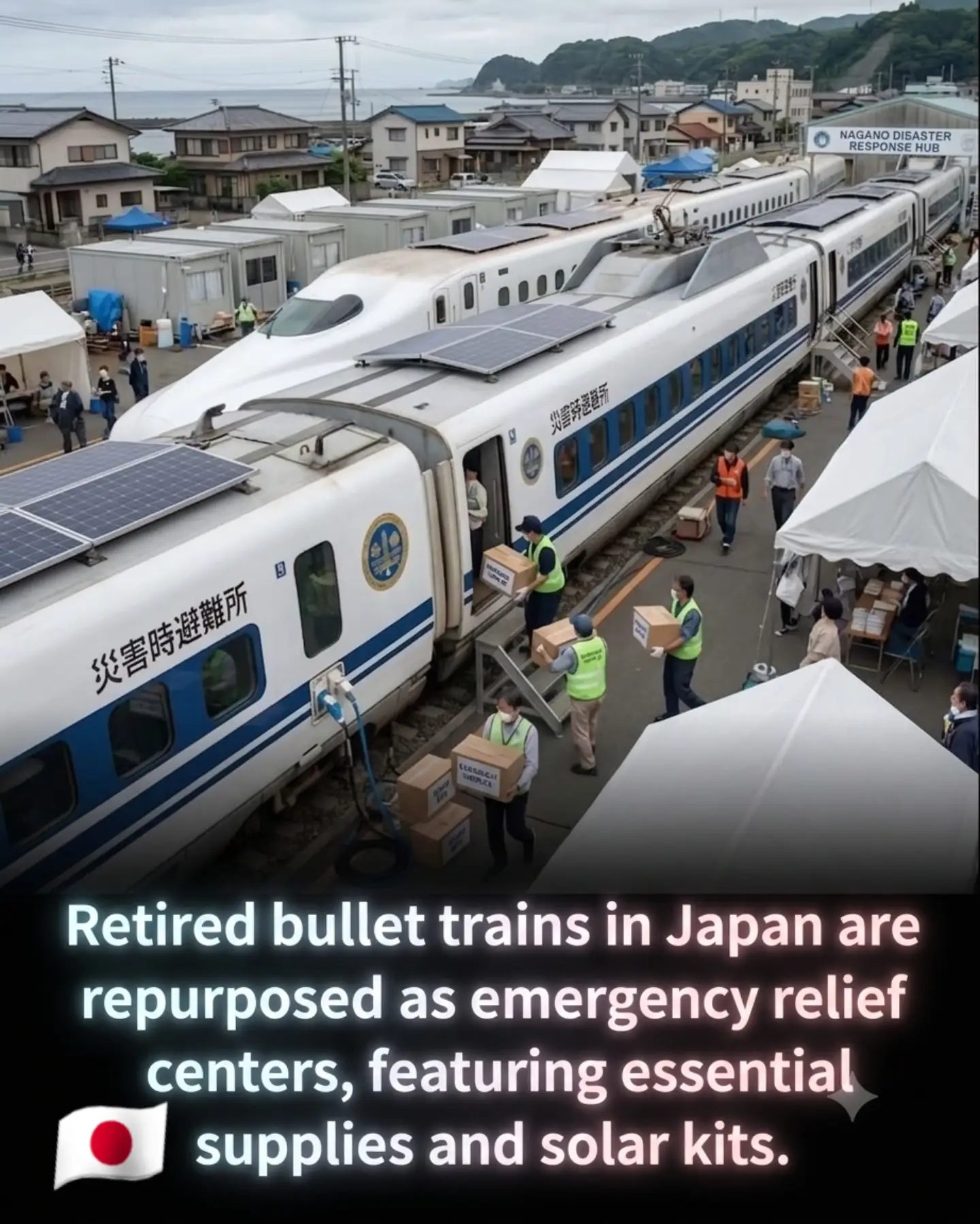
Japan's Innovative Approach to Disaster Preparedness: Repurposed Bullet Trains
Japan has long been at the forefront of technological innovation, but it's also a country that understands the importance of preparedness, especially in the face of natural disasters. The East Japan Railway Company (JR East) has developed a unique and practical solution to this challenge with the "Nagano Disaster Response Hub." This initiative involves repurposing retired E2 series Shinkansen, or bullet train, carriages to serve as emergency relief centers. These trains are not merely abandoned relics, but essential components in a comprehensive disaster response strategy.
Why This Matters
Japan is highly susceptible to natural disasters, including earthquakes, tsunamis, and typhoons. When these events occur, infrastructure is often damaged, and traditional power grids may be compromised. During these critical moments, having access to a reliable, self-sufficient mobile relief center is invaluable. The repurposed bullet trains offer a robust, flexible, and sustainable solution to these challenges.
Retrofitting for Resilience
Solar-Powered Reliability
One of the most significant features of these repurposed trains is the installation of solar panel kits on their rooftops. This setup ensures that the trains can operate independently of the main power grid, providing a reliable source of electricity even during widespread power outages. Solar panels not only make the trains self-sufficient but also contribute to environmental sustainability, reducing the disaster response system's carbon footprint.
Equipped with Essentials
Inside these former passenger cars, essential medical and survival supplies are pre-stocked and ready for deployment. This includes everything from food and water to first-aid kits and emergency medical equipment. The trains are designed to be rapidly mobilized, allowing personnel to quickly distribute aid to affected communities. This organizational efficiency is critical in the immediate aftermath of a disaster, when time is of the essence.
Mobile and Versatile
The mobile nature of these repurposed bullet trains allows them to be prepositioned in vulnerable areas or deployed to disaster sites quickly. This flexibility ensures that aid can reach remote or hard-to-access locations, where traditional relief efforts might be delayed. The trains' sturdy construction provides a secure and structured environment for organizing and distributing essential supplies.
Preparedness and Deployment
During a disaster, personnel in green and orange safety vests are tasked with organizing and deploying the essential supplies. The trains serve as centralized, well-equipped hubs, enabling efficient distribution and coordination of relief efforts. These mobile centers can operate autonomously, even in areas where infrastructure is damaged or inaccessible.
Practical Tips for Effective Disaster Preparedness
While the Nagano Disaster Response Hub showcases an innovative approach, there are broader lessons and tips that can be applied to disaster preparedness efforts worldwide:
Infrastructure Resilience
Invest in infrastructure that can withstand and operate during disasters. This includes robust, self-sufficient power sources like solar panels, as well as secure, well-stocked supply centers.
Pre-positioning and Mobility
Evaluate and preposition mobile relief centers in areas most at risk. Ensure that these centers can be rapidly deployed and operated in remote or inaccessible locations.
Collaboration and Coordination
Foster strong collaboration between government agencies, private companies, and community organizations. Effective coordination is crucial for swift and efficient disaster response.
Stocking Essential Supplies
Maintain well-stocked supplies of essential items, including medical and survival gear. Regularly update and rotate these supplies to ensure freshness and functionality.
Important Takeaways
The repurposing of retired bullet trains into emergency relief centers highlights several key points about disaster preparedness. Firstly, innovation in disaster response can leverage existing infrastructure in creative and effective ways. Secondly, self-sufficiency is a critical component of disaster resilience. Thirdly, preparedness requires a combination of strategic planning, robust infrastructure, and efficient coordination.
Conclusion
Japan's approach to disaster preparedness with the Nagano Disaster Response Hub offers a tangible example of how technology and strategic planning can enhance response capabilities. By repurposing retired bullet trains into emergency relief centers, JR East has created a model that ensures essential supplies and support are readily available when needed most. This initiative underscores the importance of sustainability, resilience, and community support in disaster response strategies.
Watch the Reel
Questions readers ask
How do Japan's repurposed bullet trains contribute to disaster relief?
These retired bullet trains serve as mobile emergency relief centers, stocked with medical supplies and essentials. They can be quickly deployed to affected areas, providing immediate support and aiding in the recovery process.
What makes these emergency relief centers sustainable?
The repurposed bullet trains are equipped with solar panels, making them self-sufficient and eco-friendly. This allows them to operate independently of local power infrastructure, which is often damaged during disasters.
Who is responsible for this initiative?
The East Japan Railway Company (JR East) is behind the 'Nagano Disaster Response Hub' initiative. They have taken retired E2 series Shinkansen carriages and repurposed them for emergency relief efforts.
Why is this initiative important for Japan?
Japan frequently experiences natural disasters, such as earthquakes, tsunamis, and typhoons. This initiative ensures that aid is readily available and can be quickly deployed to affected regions, enhancing the country's overall disaster preparedness.
What are the benefits of using retired bullet trains for emergency relief?
Repurposing retired bullet trains is cost-effective and practical. These trains are already designed for durability and comfort, making them well-suited for emergency response. Additionally, they can be stored and deployed efficiently, making them an excellent resource for disaster relief.
How are the repurposed bullet trains equipped to handle power outages?
The repurposed bullet trains are outfitted with solar panels, providing a reliable source of power. This ensures that the trains can operate independently, even when local infrastructure is damaged, and the power grid is down.
What kinds of supplies are typically found on these emergency relief trains?
The trains are stocked with a variety of essential items, including medical supplies, food, water, and other necessities. This ensures that aid workers and affected communities have access to the resources they need during and after a disaster.
Related deep dives
Similar reads based on topic and creator.




Recent articles
Fresh deep dives from the latest Reels we unpacked.




Comments
Be the first to comment.