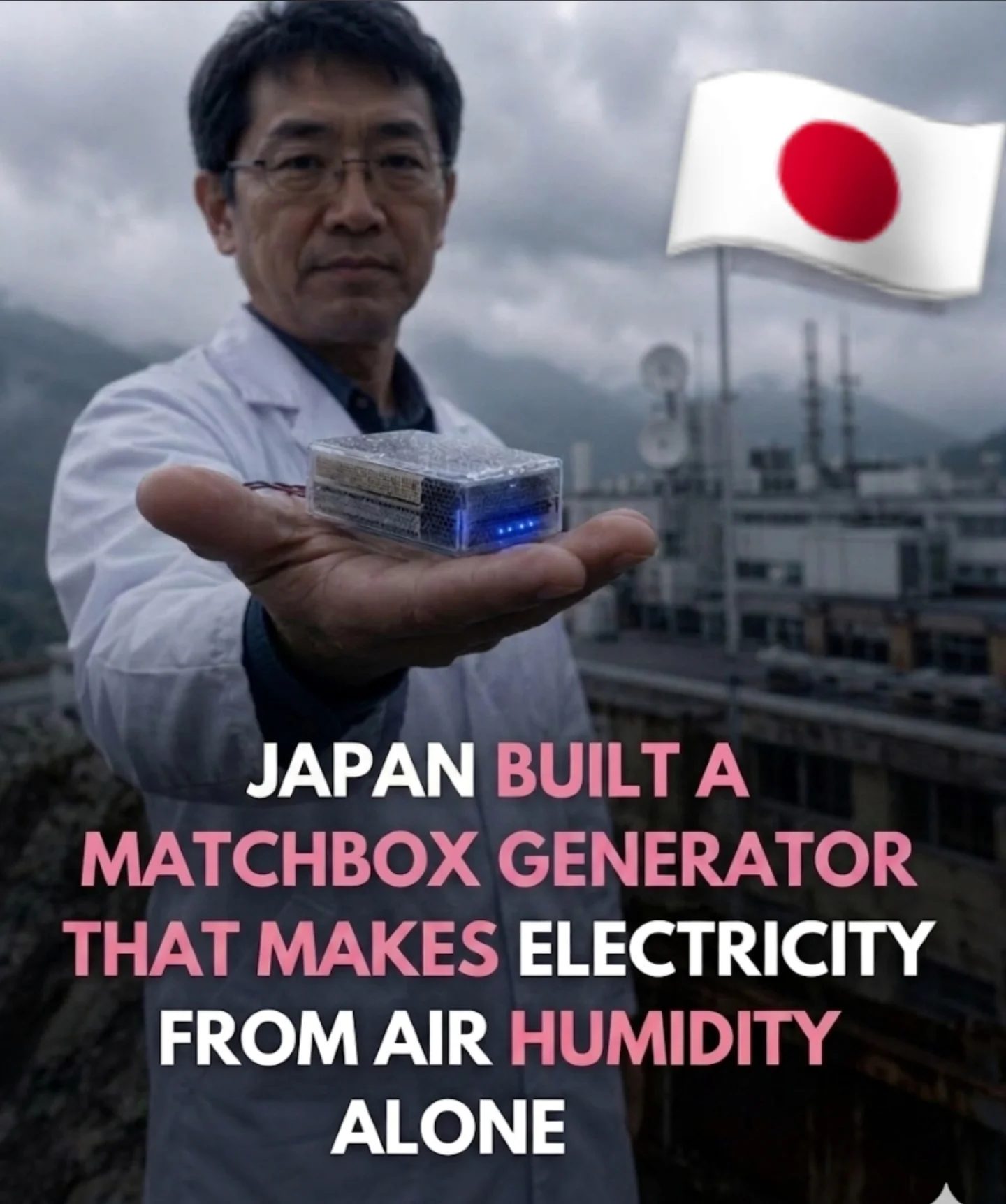
Matchbox Generator: Harnessing Ambient Humidity for Electricity
A matchbox generator is a cutting-edge device that leverages ambient humidity to produce electrical energy. This innovation, often referred to as a hygroelectric or moisture-driven generator, utilizes specialized nanomaterials to capture and convert water molecules from the air into a usable electrical current. This technology, developed in Japan, opens up new possibilities for powering low-consumption electronics, remote sensors, and IoT devices in a variety of environments.
Context: Why This Matters
The matchbox-sized generator represents a significant advancement in green technology. Traditional power sources, such as fossil fuels, solar, and wind, have their limitations—whether it's resource depletion, intermittent availability, or geographical dependency. In contrast, this generator operates independently of these factors, relying solely on the ubiquitous presence of atmospheric humidity. This makes it an exceptionally versatile and reliable power source, particularly for devices that require minimal energy and are deployed in remote or hard-to-reach locations.
Main Discussion
The Science Behind Hygroelectric Generators
Hygroelectric generators harness the power of moisture in the air through a process that involves specialized nanomaterials. These materials, which can include carbon quantum dots, graphene oxide, or engineered polymers, interact with water molecules in the atmosphere. When these materials absorb moisture, they create a chemical or mechanical gradient within their structure. This gradient facilitates a continuous flow of ions, which is then converted into an electrical current.
Key Components and Functionality
The core of a hygroelectric generator is composed of nanomaterials that are designed to absorb moisture from the air. These materials are engineered to maximize surface area and reactivity, ensuring efficient capture and conversion of water molecules. The absorbed moisture creates a gradient that drives the movement of ions, generating a steady electrical current.
This process is entirely self-sustaining, as it relies on the natural presence of atmospheric humidity. Unlike traditional generators, which require fuel or external energy sources, hygroelectric generators operate continuously as long as there is moisture in the air.
Applications and Benefits
One of the most compelling aspects of the matchbox generator is its versatility. Its compact size and self-sustaining nature make it an ideal power source for a wide range of applications. Some of the key areas where this technology can be particularly beneficial include:
- Low-Consumption Electronics: Devices such as sensors, wearable technology, and small IoT devices can be powered efficiently without the need for frequent battery replacements or recharging.
- Remote Environmental Monitoring: In areas where access to traditional power sources is limited, hygroelectric generators can power remote sensors and monitoring equipment, providing valuable data for environmental research and conservation efforts.
- IoT Devices: The Internet of Things (IoT) relies on a vast network of connected devices, many of which require continuous power. Hygroelectric generators offer a reliable and eco-friendly solution for powering these devices, ensuring uninterrupted operation.
Practical Tips
If you're considering integrating a matchbox generator into your projects or applications, here are some practical tips to keep in mind:
- Environmental Considerations: While the generator relies on atmospheric humidity, it's essential to consider the environmental conditions where it will be deployed. Ensure that the area has sufficient humidity levels to support the generator's operation.
- Device Compatibility: Assess the power requirements of the devices you plan to connect to the generator. The matchbox generator is designed for low-consumption electronics, so it's crucial to match it with compatible devices.
- Maintenance and Longevity: Although hygroelectric generators are self-sustaining, regular maintenance can help extend their lifespan. Check the condition of the nanomaterials periodically and ensure that the device is free from debris or obstructions that could hinder its performance.
Important Takeaways
The matchbox generator represents a groundbreaking advancement in the field of green technology. Its ability to harness ambient humidity for electricity production offers a sustainable and versatile solution for powering low-consumption electronics and IoT devices. By leveraging specialized nanomaterials, this device can operate independently of traditional power grids, solar exposure, or wind, making it an ideal choice for various applications, from environmental monitoring to wearable technology.
Conclusion
The innovation of the matchbox generator highlights the potential of green technology to address the energy needs of a rapidly evolving world. By harnessing the power of ambient humidity, this device offers a reliable and eco-friendly solution for powering a wide range of applications. As technology continues to advance, the matchbox generator stands as a testament to the ingenuity and innovation of Japanese engineers, paving the way for a more sustainable future.
Watch the Reel
Recent articles
Fresh deep dives from the latest Reels we unpacked.




Comments
Be the first to comment.