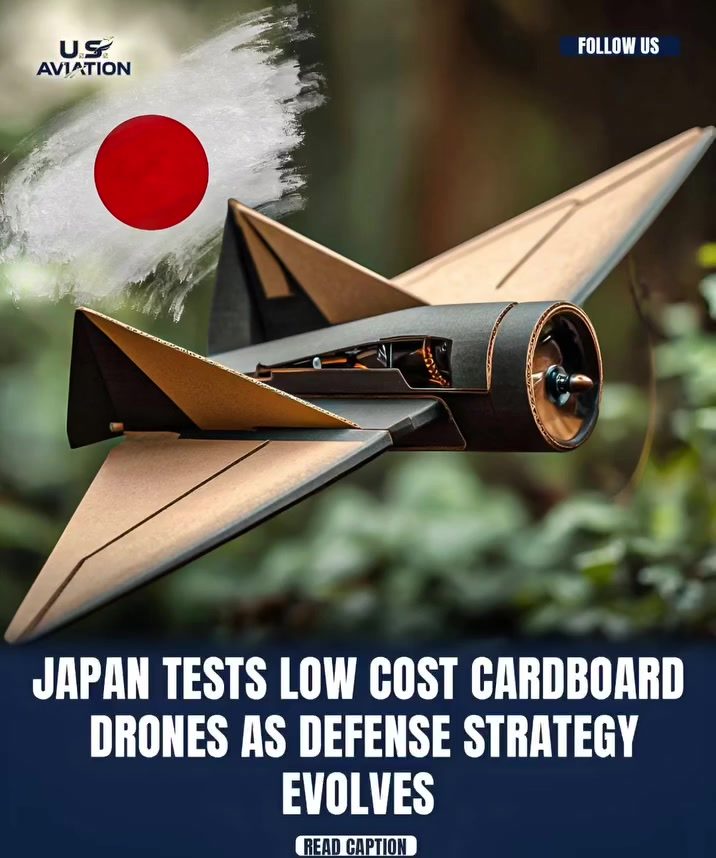
Cardboard Drones: Japan's Innovative Defense Strategy
Japan is exploring a unique approach to drone technology with the development of lightweight, corrugated cardboard drones. This innovative initiative has gained traction following a meeting between Defense Minister Shinjiro Koizumi and the startup Air Kamui, which is leading the development of these cost-effective systems.
Why This Matters
The development of cardboard drones represents a significant shift in defense strategies. Traditionally, drones are constructed from materials like metal or composite plastics, which can be expensive and difficult to produce in large quantities. Japan's focus on cardboard drones aims to address these challenges by introducing a more economical and rapidly deployable solution.
The Air Kamui Initiative
Background and Development
Air Kamui is at the forefront of this innovative project. The startup has already demonstrated the practical applications of their cardboard drones by supplying similar models to the Japan Maritime Self-Defense Force. These drones are used as aerial training targets, showcasing their initial utility in defense scenarios.
Cost and Assembly
One of the key advantages of these cardboard drones is their affordability. A particular model, the AirKamui 150, is estimated to cost around $2,500. This low cost is complemented by the ease of assembly, which can be completed within minutes. This combination of affordability and rapid deployment makes these drones an attractive option for various operational contexts.
Operational Capabilities
While the operational capabilities of these drones are currently limited, their material composition offers a unique advantage. The cardboard construction may reduce detectability by certain detection systems compared to traditional metal drones. This stealth-like feature could be crucial in scenarios where avoiding detection is essential.
Defense Strategy and Deployment
Rapid, Large-Scale Deployment
The ease of assembly and low production cost of cardboard drones facilitate rapid, large-scale deployment. This characteristic is particularly valuable in defense strategies that require swift responses to threats. The ability to quickly produce and deploy a large number of drones can significantly enhance a nation's defense capabilities.
Practical Applications
The Japan Maritime Self-Defense Force's use of these drones for aerial training targets highlights their immediate practical applications. Beyond training, these drones could be utilized in various defense scenarios, including surveillance, reconnaissance, and even as decoys to distract enemy forces.
Future Possibilities
As the technology advances, the operational capabilities of these cardboard drones are expected to improve. Future iterations could incorporate advanced features such as better sensors, longer flight times, and enhanced maneuverability. These developments could see cardboard drones becoming a staple in defense strategies across the globe.
Practical Tips for Utilizing Cardboard Drones
Assembly and Deployment
For those interested in utilizing or experimenting with cardboard drones, the ease of assembly is a significant advantage. Familiarize yourself with the assembly process to ensure quick and efficient deployment in various scenarios.
Operational Limitations
While the current models have operational limitations, it's essential to understand these constraints. For instance, the detectability factor is a double-edged sword. While it provides a stealth advantage, it may also limit the drone's effectiveness in scenarios requiring long-range surveillance.
Future-Proofing
Consider the future potential of these drones. As the technology evolves, these drones could become more versatile and capable. Investing in this technology now could provide long-term benefits as the capabilities improve.
Important Takeaways
- Cost-Effective: Corrugated cardboard drones offer a cost-effective solution for defense strategies.
- Rapid Deployment: The ease of assembly allows for rapid, large-scale deployment, crucial in defense scenarios.
- Stealth Advantage: The material composition could reduce detectability, providing a stealth advantage.
- Practical Applications: Already in use as aerial training targets, these drones have various practical applications in defense.
- Future Potential: As the technology evolves, these drones could become more versatile and capable.
Conclusion
Japan's venture into cardboard drones is an innovative step forward in defense technology. The affordability, ease of assembly, and potential stealth advantages of these drones make them a valuable addition to defense strategies. As the technology continues to develop, the future of cardboard drones holds significant promise, potentially revolutionizing the way defense operations are conducted.
Watch the Reel
Questions readers ask
What are cardboard drones and why is Japan investing in them?
Cardboard drones are unmanned aerial vehicles constructed from lightweight, corrugated cardboard. Japan is investing in this technology to create a cost-effective and rapidly deployable defense solution, addressing the high production costs and time-consuming processes associated with traditional drone materials.
How do cardboard drones compare to conventional drone models in terms of cost and deployment?
Cardboard drones offer a significant cost advantage over conventional drone models made from materials like metal or composite plastics. Their production is faster, allowing for rapid deployment in various defense scenarios. This makes them an attractive option for large-scale drone operations.
What potential benefits do cardboard drones offer in terms of stealth and defense strategies?
Cardboard drones present unique stealth advantages due to their low radar signature and unassuming appearance. This can enhance their effectiveness in surveillance and reconnaissance missions, as they are less likely to be detected or targeted.
Who is leading the development of cardboard drones in Japan?
The development of cardboard drones in Japan is primarily led by the startup Air Kamui. This company is at the forefront of this innovative initiative, collaborating with the Japanese government to advance this novel drone technology.
What are the environmental implications of using cardboard for drone construction?
The use of cardboard for drone construction has environmental benefits, as it is a biodegradable and recyclable material. This makes cardboard drones more eco-friendly compared to drones made from non-biodegradable materials, potentially reducing the environmental impact of drone operations.
How do cardboard drones fit into Japan's overall defense strategy?
Cardboard drones are part of Japan's strategy to modernize its defense capabilities with innovative and cost-effective solutions. By employing these drones, Japan aims to enhance its air defense, surveillance, and rapid response capabilities, ensuring that it can effectively address emerging threats.
What are the limitations of cardboard drones compared to traditional drone models?
While cardboard drones offer numerous advantages, they may have limitations in terms of durability and resilience to harsh weather conditions. Additionally, their operational range and payload capacity might be more limited compared to traditional drones. However, ongoing research and development aim to mitigate these challenges.
Related deep dives
Similar reads based on topic and creator.

Recent articles
Fresh deep dives from the latest Reels we unpacked.




Comments
Be the first to comment.