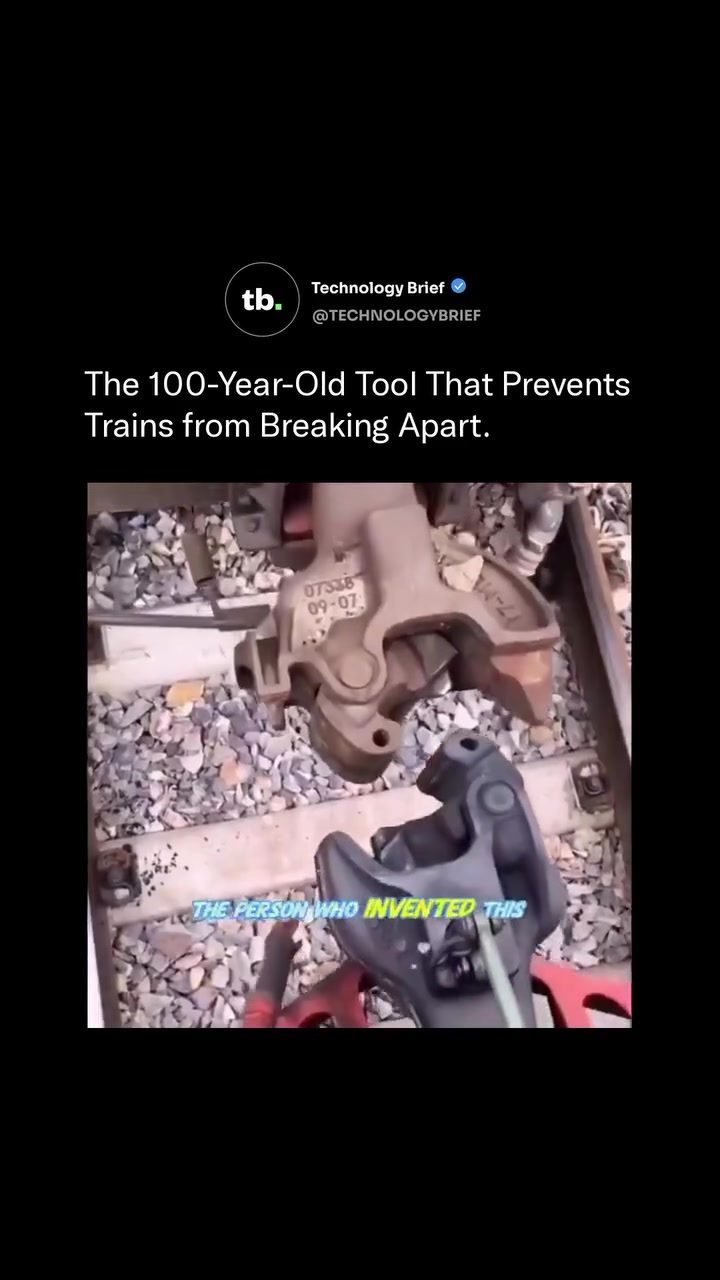
The Janney Coupler: The Unsung Hero of Train Safety
The Janney coupler is a knuckle-shaped metal device that has been securing train cars together for over 150 years. This ingenious design, patented by Eli H. Janney in 1868, has revolutionized train safety and efficiency. Janney, a Civil War veteran working as a dry goods clerk in Virginia, drew inspiration from the way his own bent fingers interlocked. Before his invention, workers had to manually fasten a link-and-pin system between moving cars, a process that was extremely dangerous and caused up to 40% of all rail yard injuries. The Janney coupler eliminated this risk by automating the coupling process.
Why the Janney Coupler Matters
The Janney coupler is more than just a piece of machinery; it is a testament to human ingenuity and a cornerstone of modern train safety. Its design has significantly reduced the risk of train derailments and improved the overall efficiency of rail transportation. Understanding the coupler's mechanics and history provides valuable insights into the evolution of train technology and the importance of safety innovations.
The Mechanics of the Janney Coupler
The Janney coupler operates on a simple yet effective principle. Each train car is equipped with one coupler at the front and one at the rear, facing opposite directions. These couplers are designed in the shape of a fist, with a hooked end that swings into place when two cars bump together. When a train is in motion, the front of the following car aligns with the rear of the preceding car, and the hooks lock tightly into each other, creating a secure connection.
Despite its tight grip, the Janney coupler is designed with a small amount of intentional movement. This flexibility is crucial because train tracks are not perfectly straight. When a train navigates a curve, each car tilts and shifts slightly differently. If the coupler were too rigid, it could force the wheels off the rails, leading to derailment. By allowing for this controlled movement, the coupler ensures that the train runs smoothly and safely, even on curved tracks.
The History and Evolution of the Janney Coupler
Eli H. Janney's invention was a game-changer in the railroad industry. Before the Janney coupler, the process of coupling train cars was manual and hazardous. Workers had to stand between moving cars to fasten a link-and-pin system, which was not only dangerous but also inefficient. Janney's design automated this process, making it safer and more efficient. The U.S. Safety Appliance Act of 1893 made the Janney coupler mandatory across all railroads in the country, and by the early 1900s, it became the universal standard in North America.
The Janney coupler has undergone several modifications over the years. While the basic design has remained largely unchanged since 1932, improvements have been made to enhance its performance and safety. Today, the coupler is still in use on both freight and passenger lines, a testament to its durability and reliability.
The Impact on Train Safety
The Janney coupler has had a profound impact on train safety. By automating the coupling process, it eliminated the need for workers to stand between moving cars, significantly reducing the risk of injuries. The coupler's design, which allows for controlled movement, has also minimized the risk of derailments, making train travel safer for both passengers and cargo.
The coupler's reliability is another key factor in its success. Despite being over a century old, the Janney coupler remains a critical component in modern train systems. Its strong structure and high range of movement ensure that trains can navigate various terrains and conditions safely.
Practical Tips for Understanding and Maintaining the Janney Coupler
Understanding how the Janney coupler works can provide valuable insights into train safety and maintenance. Here are some practical tips:
Inspect Regularly
Regular inspections of the coupler are essential to ensure it is in good working condition. Look for signs of wear and tear, such as cracks or corrosion, and address any issues promptly to prevent malfunctions.
Lubricate Properly
Proper lubrication is crucial for the smooth operation of the coupler. Ensure that all moving parts are well-lubricated to prevent friction and wear. Use high-quality lubricants specifically designed for railway applications.
Train Personnel
Ensure that all personnel involved in train operations are well-trained in the proper use and maintenance of the Janney coupler. Proper training can help prevent accidents and ensure the coupler's longevity.
Important Takeaways
The Janney coupler is a vital component in modern train systems, ensuring safety and efficiency. Its design, which allows for controlled movement, has minimized the risk of derailments and made train travel safer. Regular inspections, proper lubrication, and adequate training are essential for maintaining the coupler's performance and reliability.
Conclusion
The Janney coupler stands as a testament to human ingenuity and the importance of safety innovations in the railway industry. Its design, which has remained largely unchanged for over a century, continues to play a crucial role in ensuring the safety and efficiency of train operations. Understanding the mechanics and history of the Janney coupler provides valuable insights into the evolution of train technology and the ongoing quest for safer rail transportation.
Watch the Reel
Questions readers ask
How does the Janney coupler improve train safety?
The Janney coupler enhances train safety by automating the process of linking train cars. This automation eliminates the need for manual coupling, which significantly reduces the risk of injuries to workers in the rail yard. Its design has proven to be both reliable and efficient over the past 150 years, making it an essential component in modern rail operations.
What inspired Eli H. Janney to create the Janney coupler?
Eli H. Janney, a Civil War veteran, was inspired by the way his own fingers interlocked. He noticed that the natural shape of his fingers could be used to create a more efficient and safer way to connect train cars, leading to the development of the Janney coupler.
How did the Janney coupler reduce rail yard injuries?
Before the Janney coupler, workers had to manually fasten a link-and-pin system between moving cars. This process was extremely hazardous and accounted for up to 40% of all rail yard injuries. By automating the coupling process, the Janney coupler eliminated the need for manual intervention, thus drastically reducing the risk of injuries.
What makes the Janney coupler a significant innovation in railway history?
The Janney coupler is significant because it revolutionized the way train cars are coupled together. Its knuckle-like design, patented in 1868, has stood the test of time and remains a cornerstone of safe and efficient train operations. It has played a crucial role in preventing railway accidents and ensuring smoother train operations.
Can the Janney coupler be used on all types of trains?
The Janney coupler is designed to be versatile and can be used on a wide range of trains. Its automatic coupling mechanism is compatible with various train car designs, making it a universal solution for enhancing safety and efficiency in rail operations.
How does the Janney coupler compare to older train coupling devices?
The Janney coupler represents a significant advancement over older train coupling devices, such as the link-and-pin system. Unlike older methods, the Janney coupler automates the coupling process, reducing the need for manual labor and minimizing the risk of injuries. Its design is also more efficient, ensuring faster and more reliable train car connections.
What are the benefits of using an automatic train coupler like the Janney coupler?
Using an automatic train coupler like the Janney coupler offers numerous benefits. These include enhanced safety for rail yard workers, reduced risk of railway accidents, improved efficiency in train operations, and a more streamlined coupling process. The Janney coupler's design ensures that train cars are securely connected, minimizing the chances of derailments and other incidents.
Related deep dives
Similar reads based on topic and creator.




Recent articles
Fresh deep dives from the latest Reels we unpacked.




Comments
Be the first to comment.