Urban Transformation: Italy's Pedestrian Revolution
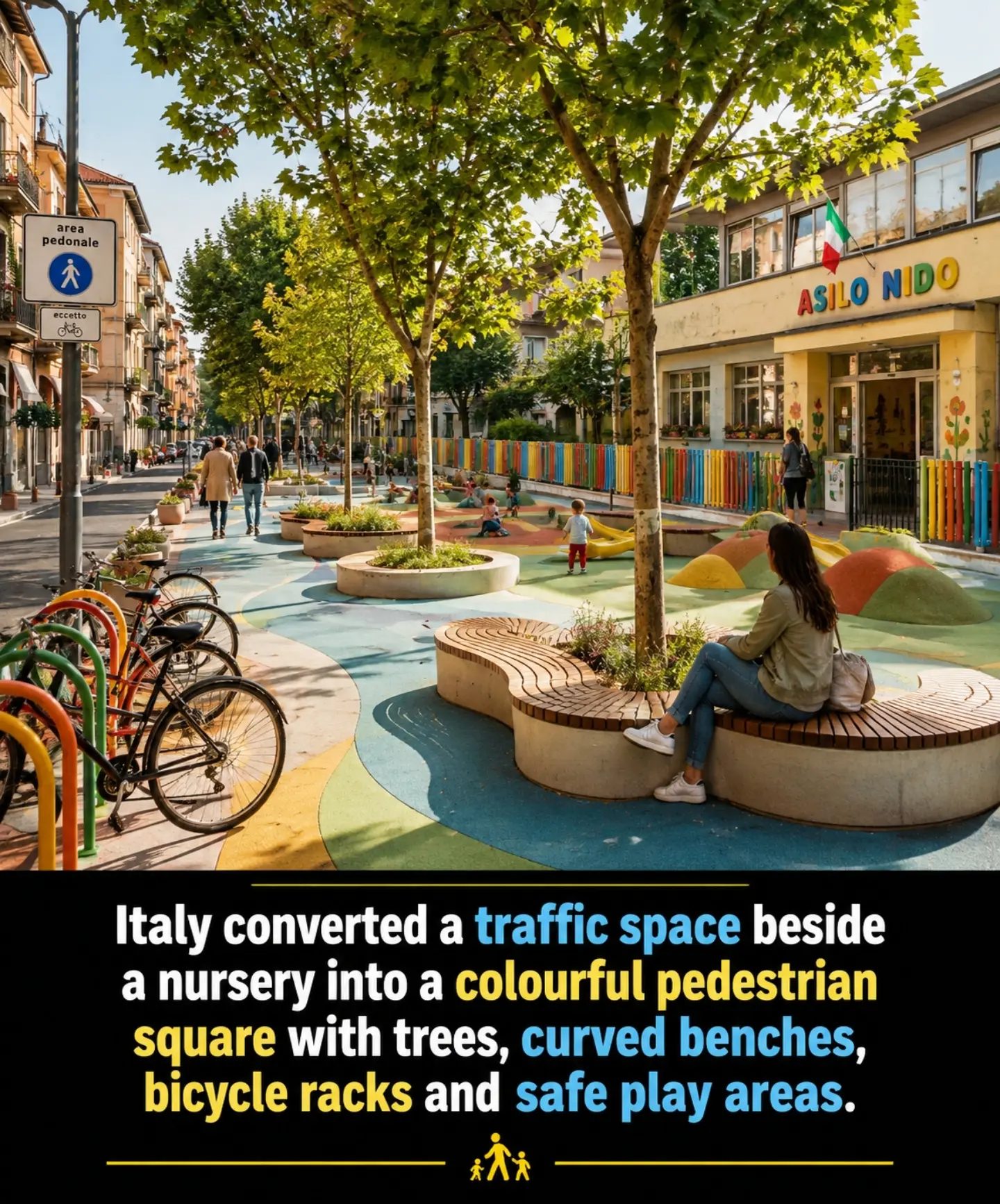
Urban transformation is reshaping cities worldwide, and Italy is leading the way with innovative pedestrian spaces. In a vibrant urban area, a traffic space has been ingeniously converted into a pedestrian square, creating a colorful, welcoming, and child-friendly environment.
Why this matters
Transforming urban spaces from traffic-heavy areas to pedestrian-friendly zones is more than just an aesthetic upgrade. It fosters a healthier, more communal lifestyle, reducing pollution, noise, and promoting walking and cycling. These spaces become hubs for social interaction, recreation, and community events.
Urban planning in Italy
The transformation of traffic areas
This transformation is an example of urban planning that prioritizes people over vehicles. By converting a traffic area into a pedestrian square, Italy has created a vibrant space where people can relax, play, and socialize. The area is adjacent to a nursery, making it particularly child-friendly. This integration of family-oriented spaces within the community is a hallmark of modern urban design.
Pedestrian squares and their impact
Pedestrian squares have a profound impact on urban environments. These spaces encourage walking and cycling, which can significantly reduce carbon emissions. They also promote community engagement, as they become hubs for local events and gatherings. The inclusion of features like trees, benches, and bicycle racks enhances the aesthetic appeal and functionality of these spaces, making them more inviting to residents and visitors alike.
Key features of the pedestrian square
The pedestrian square in Italy is a model of modern urban design. Key features include:
- Colorful Ground Patterns: The vibrant ground patterns add a playful and inviting element to the space, making it visually appealing for both children and adults.
- Greenery: Trees and other greenery provide shade and improve air quality, contributing to a healthier environment.
- Seating: Curved benches offer comfortable seating options for visitors, encouraging them to linger and enjoy the space.
- Bicycle Racks: The presence of bicycle racks promotes cycling as a sustainable mode of transportation, reducing reliance on cars.
- Safe Play Areas: The inclusion of safe play areas makes the space particularly child-friendly, fostering a family-oriented atmosphere.
Practical tips for implementing pedestrian squares
Assess the area
Before converting a traffic space, assess the area for its potential as a pedestrian square. Consider factors such as foot traffic, proximity to schools and nurseries, and existing community needs. The goal is to create a space that meets the needs of the community and enhances the overall quality of life.
Involve the community
Community involvement is crucial for the success of any urban transformation project. Engage local residents, businesses, and stakeholders in the planning and design process. Their input will ensure that the pedestrian square meets the community's needs and is well-received.
Design with functionality in mind
When designing a pedestrian square, prioritize functionality over aesthetics. Include features that promote activity and social interaction, such as seating areas, play areas, and greenery. Ensure that the space is accessible to people of all ages and abilities.
Important takeaways
Promoting a healthy lifestyle
Pedestrian squares promote a healthy lifestyle by encouraging walking, cycling, and outdoor activities. They provide a space for people to engage in physical activities, which can lead to improved health outcomes.
Enhancing community engagement
Community engagement is a key benefit of pedestrian squares. They become hubs for local events, gatherings, and social interactions, fostering a sense of community and belonging.
Reducing environmental impact
By prioritizing pedestrians and cyclists over vehicles, pedestrian squares help reduce carbon emissions and improve air quality. They also contribute to noise reduction, creating a quieter and more peaceful urban environment.
Conclusion
The transformation of a traffic area into a pedestrian square in Italy is a testament to the power of urban planning. This vibrant, child-friendly space showcases how thoughtful design can enhance community engagement, promote a healthy lifestyle, and reduce environmental impact. As cities around the world continue to grapple with urban congestion and environmental challenges, this initiative serves as a model for creating livable and sustainable urban spaces.
Watch the Reel
Questions readers ask
How does Italy's urban planning prioritize pedestrians over vehicles?
Italy's urban planning initiatives focus on transforming traffic-heavy areas into pedestrian-friendly zones. This includes converting streets into squares with inviting greenery and recreational features, thereby reducing vehicle traffic and encouraging walking and cycling.
What are the benefits of creating pedestrian squares in urban areas?
Pedestrian squares in urban areas promote healthier lifestyles by reducing pollution and noise. They also foster social interaction and community engagement, serving as hubs for recreation and events.
How does Italy incorporate child-friendly designs into its urban spaces?
Italy incorporates child-friendly designs by creating vibrant, colorful, and welcoming pedestrian squares. These spaces include recreational features and greenery. Making them safe and engaging for children to play and explore.
What role do green spaces play in Italy's urban transformation?
Green spaces are integral to Italy's urban transformation. They enhance the aesthetic appeal of pedestrian squares, promote biodiversity, and contribute to a healthier environment by absorbing pollutants and reducing urban heat.
How does the conversion of traffic areas to pedestrian zones impact local communities?
The conversion of traffic areas to pedestrian zones has a positive impact on local communities. It encourages social interaction, reduces traffic congestion and pollution, and creates a more communal lifestyle.
What measures are taken to ensure the sustainability of Italy's urban planning initiatives?
Measures include the promotion of green spaces, the creation of bicycle-friendly areas, and the reduction of vehicle traffic. These initiatives work together to promote sustainable urban living and reduce the environmental impact of urban areas.
Related deep dives
Similar reads based on topic and creator.




Recent articles
Fresh deep dives from the latest Reels we unpacked.




Comments
Be the first to comment.