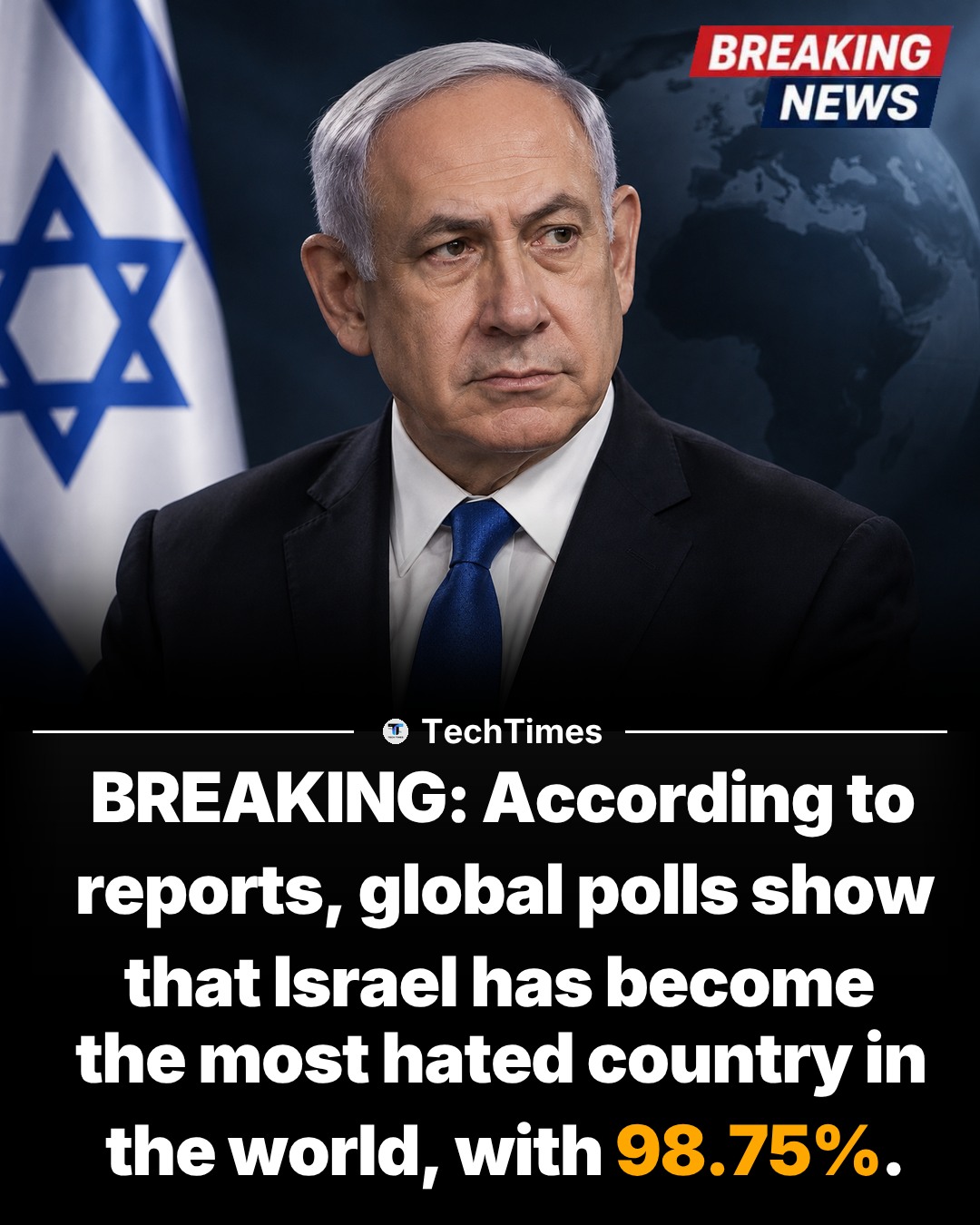
A recent report by news outlet TechTimes highlights an unsettling global sentiment, stating that "Israel has become the most hated country in the world" according to recent global polls, showcasing a 98.75% figure. This claim, displayed next to a map and Benjamin Netanyahu's image, goes beyond diplomatic tension — it underscores a cultural and geopolitical fault line in the world.
What is this claim
A poll, as described in this report, is a data collection exercise. Polls ask a specific question to a sample of a population. The methodology can vary from sample size, sampling frame, and questionnaire design. Polls are then analyzed to arrive at a shared sentiment. Interpreting a poll's results hinges on a few factors. First, a reliable poll typically holds to a margin of error, a statistical measure that accounts for sample variability. Second, polls rely on a neutral and representative sample. Misrepresenting the sample can lead to distorted results. Thirdly, these are snapshots of public sentiment, not permanent judgments. For Israel, a figure cited as toppling 98% is staggering. Israel's complex geopolitical history includes conflict and instability, which shapes global sentiment. The country has been embroiled in territorial disputes, military conflicts, and international disagreements, influencing public perceptions. Yet, the high negative sentiment, according to TechTimes, is a notable spike. The report stated global polls assert 98.75% of those polled hate the state, therefore propagating an overwhelming global antipathy.
What the Poll Reveals
Public perception of a country is shaped by various media, their respective narratives on the conflicts, and their sources. Tech Times sources a specific statistic that pushes Israel to a different level of public sentiment. However, public opinion isn't static — media narratives, geopolitical events, and global incidents impact these sentiments. The aftermath of the Israeli-Palestinian conflict has seen global opinion deepen its divide. Amidst turmoil and the rise of social media, communities across the globe are redefining this conflict as either justified or unjustified.
How was this claim supported
Unsurprisingly, it doesn't cite a particular poll or polling organization. Normally polls are conducted by reputed research organizations such as Gallup, Pew Research, and IPSOS Research. These organizations adhere to rigorous standards to ensure reliability, credibility, and accuracy. In recent years, cross-border online polls have increased in popularity. However, these polls often lack transparency. Polling organizations to independently validate polls have also reported a rise in poll misrepresentation. Inaccuracies can arise from:
- Word of mouth: Digital misinformation through social media has also distorted public perception. Stories created to create international sympathy or antipathy have misled public opinion.
- Absence of methodology: Unsourced or unverified polls misrepresent data, producing a distorted public perception.
- Media framing: Slanted news reporting can paint narratives that either inflame animosity (clickbait) or promote a particular diplomatic or political agenda.
Geographic and Demographic Angles
To understand the broad claim, it's critical to parse it geographically and demographically. A poll claiming 98.75%, for example, might mask regional differences. If responses skew heavily from specific regions, that could exaggerate the claims. On-screen visuals feature a world map, perhaps indicating Israel's contentious global stance. The demographic portion is also crucial. Poll results may vary dramatically for different age groups, ethnic backgrounds, and religious affiliations. Some demographics may have direct experiences with conflict or imply a regional heritage.
How to verify and interpret poll data
The World Public Opinion Organization regularly provides data based on rigorous large-scale polling. When relying on polls, especially those with eye-catching figures like this one, first check if a reputed polling organization undertook the poll. Then, understand the methodology, including the sample size, the sample frame, and the questionnaire design. Lastly, any sampling errors, biases, and poll margins should be clear. Checking poll history is also key. For example, surveys done before and after specific events can reveal public sentiment shifts. Checking this data gives a clearer picture than relying on a single poll. Similarly, multiple polls offer more reliable insights.
Recognizing the Overtones
While polls often reveal underlying sentiments, recognizing the potential for bias, manipulation, and misrepresentation is essential. In the absence of concrete data, who funds the polling is as critical as the results, especially since public opinion shapes political and economic decisions.
Seeing past the Reporting
Global polls and sentiment gauges are vital in shaping media narratives. In this realm, it is paramount to distinguish between media-caused distortions, propagandistic bias, and manipulated data. Media, including Tech Times, has the power to shape public opinion, but the public has a responsibility to remain discerning and critical.
Watch the Reel
Questions readers ask
What specific questions were asked in the poll that led to the 98.75% figure?
The article doesn't specify the exact questions asked in the poll. Typically, such polls might ask respondents to rate their feelings towards Israel on a scale or to express their opinion in a more general way, but without the exact questions, it's hard to know for sure. This lack of detail is a common issue when polls are reported without full transparency.
How can a country have 98.75% of global respondents view it unfavorably?
A figure like 98.75% is extraordinarily high and suggests a deeply polarized global sentiment. This could be influenced by a variety of factors, including media portrayals, geopolitical events, and the sampling methods used in the poll. However, such a high figure also raises questions about the poll's methodology and potential biases, as it's unusual to see such a unanimous negative response.
What role does media play in shaping global sentiment towards Israel?
The media plays a significant role in shaping global sentiment. Different media outlets often present narratives that can either inflame tensions or promote a particular view. The coverage of the Israeli-Palestinian conflict, for instance, can deeply influence how people perceive Israel, either portraying it as a victim or an aggressor, depending on the narrative presented.
Why is it important to consider the methodology of a poll?
The methodology of a poll is crucial because it determines the reliability and accuracy of the results. Factors like sample size, sampling frame, and questionnaire design can all impact the outcomes. A poll that lacks transparency or uses a biased sample can lead to distorted results, which might not accurately reflect the true sentiments of the population.
How do online polls differ from traditional polling methods?
Online polls often lack the rigorous standards of traditional polling methods. They can be more susceptible to misrepresentation and bias, especially when they don't disclose their methodology. Traditional polling organizations like Gallup or Pew Research adhere to strict guidelines to ensure credibility, but online polls may not always follow these standards, leading to potential inaccuracies.
What impact does social media have on public perception of geopolitical events?
Social media can significantly impact public perception by spreading information quickly and widely. However, it can also be a source of misinformation, which can distort public opinion. Stories created to elicit sympathy or antipathy can mislead people, influencing how they view events and countries, including Israel, and its geopolitical conflicts.
Recent articles
Fresh deep dives from the latest Reels we unpacked.




Comments
Be the first to comment.