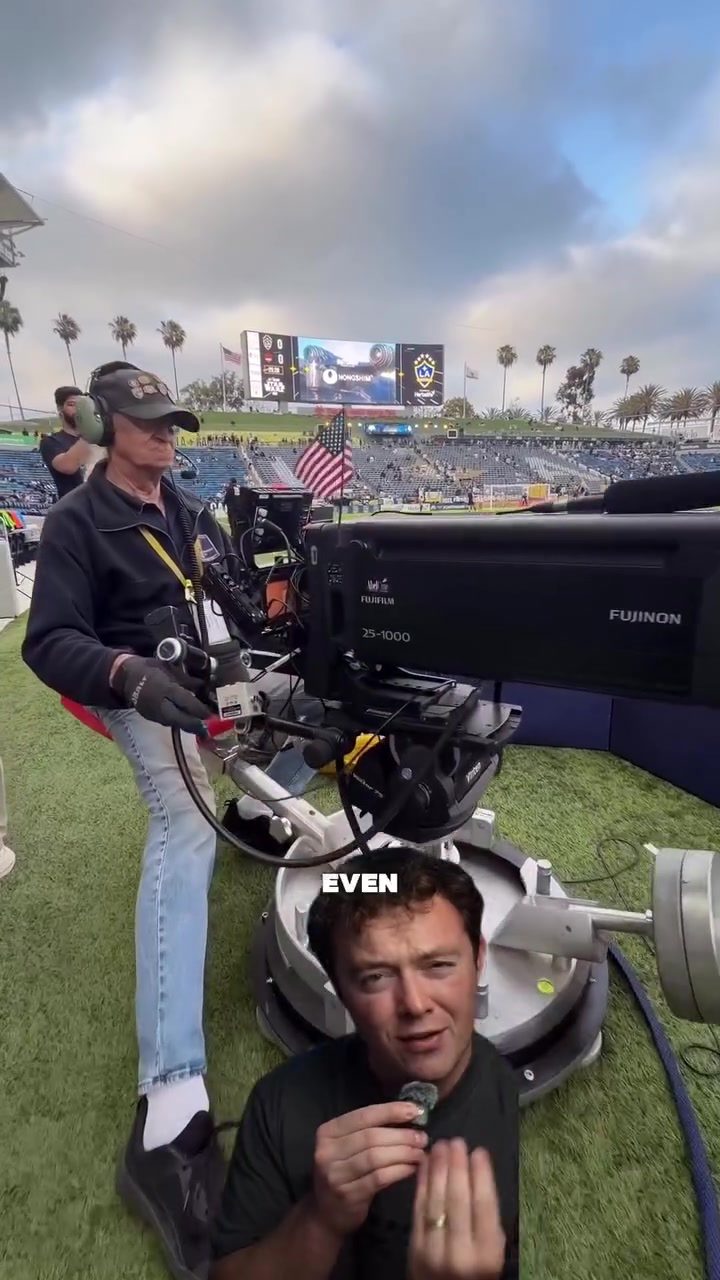
Filming at a Football Game
The claim that an entire soccer game was shot using iPhones has sparked some controversy. The camera quality is impressive, but the setup used raises questions about what truly qualifies as shot on a phone. This debate highlights the role of high-end equipment and the capabilities of modern phone cameras.
Context / Why This Matters
The discussion around mobile filmmaking has gained significant traction, especially with advancements in smartphone camera technology. Apple's recent project, which involved filming a soccer game using 15 iPhones, has brought this conversation to the forefront. The setup, however, included a $200,000 Fujifilm mega lens rig, which begs the question: is the iPhone doing the heavy lifting, or is the lens responsible for the stunning visuals?
This discussion is crucial for understanding the limitations and capabilities of modern smartphone cameras. It also underscores the role of high-end equipment in achieving professional-grade results, even with consumer devices.
Main discussion
The Role of High-End Equipment
High-end equipment, such as the Fujifilm mega lens rig, plays a pivotal role in enhancing the capabilities of smartphone cameras. While the iPhone is capable of capturing high-quality footage, the addition of professional-grade lenses and stabilizers can significantly elevate the production value. This is evident in Apple's soccer game footage, where the iPhone is backed by a $200,000 rig. The resulting footage is undoubtedly impressive, but it's essential to recognize the contribution of the high-end equipment.
The Capabilities of Smartphone Cameras
Smartphone cameras have evolved remarkably over the years. Modern smartphones are equipped with advanced sensors, lenses, and image processing algorithms that allow them to capture high-quality footage. However, their capabilities are still limited compared to professional camera equipment. While the iPhone can capture impressive footage in various scenarios, it may struggle with certain conditions, such as low light or fast-moving subjects, without additional support.
The Marketing Angle
The marketing angle behind the "shot on iPhone" campaign is to showcase the capabilities of the iPhone's camera. However, using a $200,000 Fujifilm mega lens rig slightly undermines this message. While the footage is impressive, it's clear that the rig is doing most of the work. This raises questions about the authenticity of the "shot on iPhone" claim and its implications for marketing and consumer expectations.
Practical Tips
Choosing the Right Equipment
When filming events like soccer games, it's essential to choose the right equipment. If you're aiming for professional-grade results, consider investing in high-end lenses and stabilizers. These tools can significantly enhance the quality of your footage, even when using a smartphone. However, if you're working on a budget, there are more affordable alternatives, such as tripods and basic lenses, that can still improve your footage.
Understanding the Limitations
It's crucial to understand the limitations of your equipment. While modern smartphones are capable of capturing high-quality footage, they may struggle in certain conditions. Be aware of these limitations and plan accordingly. For example, if you're filming in low light, consider using additional lighting or a stabilizer to compensate for the limitations of your camera.
Post-Processing Techniques
Post-processing techniques can significantly enhance the quality of your footage. Tools like Adobe Premiere Pro and Final Cut Pro offer a range of editing options, from color correction to stabilization, that can improve the overall quality of your footage. Experiment with different techniques to achieve the best results.
Leveraging Natural Light
Natural light can be a powerful tool in filmmaking. It can enhance the quality of your footage and create a more dynamic image. When filming outdoors, try to position your camera in a way that takes advantage of natural light. Avoid harsh shadows and bright spots, and use diffusers or reflectors to soften the light.
Important Takeaways
The debate surrounding Apple's "shot on iPhone" campaign highlights the role of high-end equipment in mobile filmmaking. While smartphones are capable of capturing impressive footage, they often require additional support to achieve professional-grade results. Understanding the limitations of your equipment and leveraging high-end tools can significantly enhance the quality of your footage.
Conclusion
Filming at a football game with iPhones has sparked a productive debate about the capabilities of smartphone cameras and the role of high-end equipment. While the iPhone is capable of capturing high-quality footage, it's essential to recognize the limitations of the device and the contribution of professional-grade equipment. By understanding these factors, you can make informed decisions about your filming setup and achieve better results.
Watch the Reel
Questions readers ask
How many iPhones were used to film the soccer game?
Fifteen iPhones were used in the filming of the soccer game, highlighting Apple's exploration of smartphone capabilities in professional settings, in particular sports filming.
What was the role of the Fujifilm mega lens rig in the filming?
The Fujifilm mega lens rig, valued at $200,000, was a critical component in the setup. This high-end equipment was used alongside the iPhones, suggesting that the lens played a significant role in achieving the desired camera quality.
Can iPhones truly replace professional filmmaking gear?
While the iPhones in this project captured impressive footage, the inclusion of a high-end Fujifilm lens rig indicates that professional gear still offers unique capabilities. iPhones excel in convenience and accessibility but may not fully replace specialized equipment for all filmmaking scenarios, especially in sports filming.
What does this project tell us about modern phone cameras?
The project underscores the advancements in smartphone cameras, particularly the iPhone's capabilities in capturing high-quality footage. It demonstrates that modern phone cameras can be utilized for professional filmmaking, providing similar outcomes to professional cameras, but only with the help of high-end equipment.
How does this project impact the debate between iPhone cinema and professional gear?
This project fuels the debate by showcasing the potential of iPhones in professional settings while also emphasizing the importance of high-end equipment. It suggests that while iPhones can produce impressive results, they often rely on supplementary gear to achieve the best outcomes.
What are the implications for aspiring filmmakers?
For aspiring filmmakers, this project serves as an inspiration, showing that high-quality filmmaking is possible with iPhones. However, it also highlights the potential need for additional equipment to achieve professional results. It encourages filmmakers to consider both the capabilities and limitations of smartphone filmmaking.
How does the setup challenge traditional notions of filmmaking?
The use of iPhones in such a high-stakes, fast paced environment challenges the traditional reliance on DSLR or cinema cameras. It demonstrates that modern technology can bridge the gap between convenience and professional output, though the inclusion of a mega lens rig hints at the need for supplementary equipment.
Related deep dives
Similar reads based on topic and creator.




Recent articles
Fresh deep dives from the latest Reels we unpacked.




Comments
Be the first to comment.