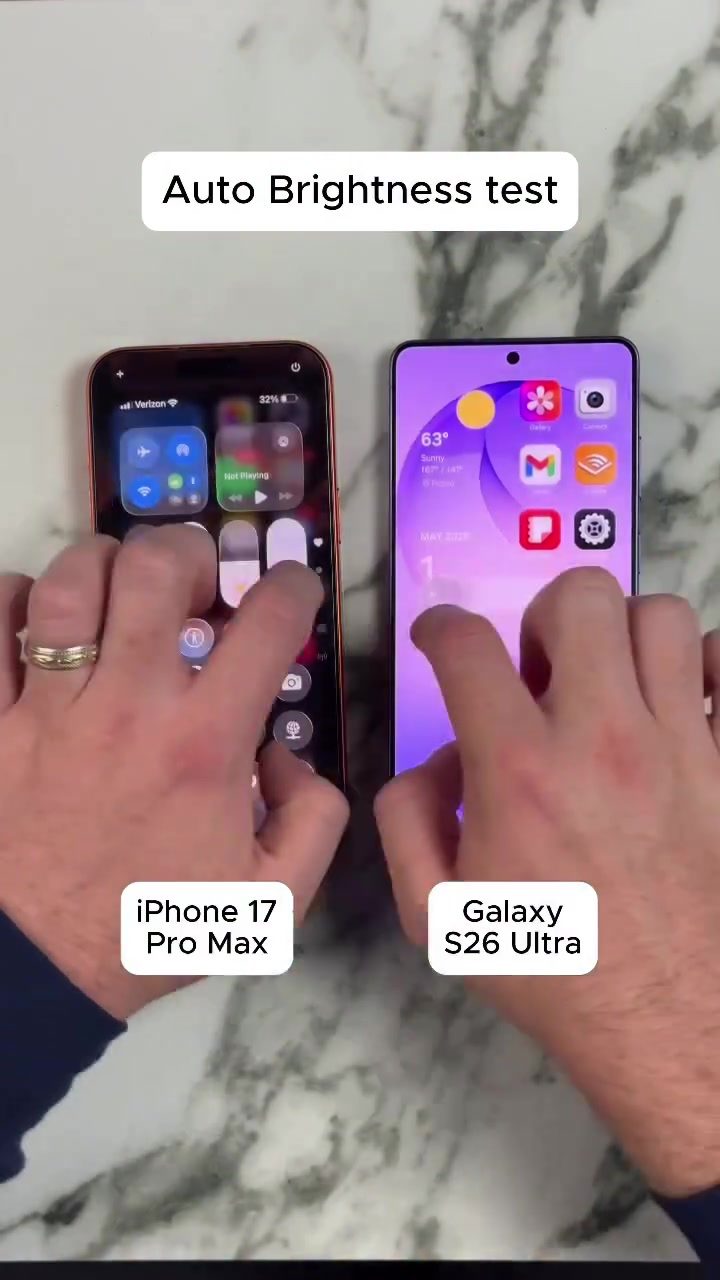
Comparing the Auto-Brightness Features
Smartphone brightness can make or break your viewing experience, particularly when watching videos or browsing outdoors. The competition is stiff, especially between the iPhone 17 Pro Max and the Samsung Galaxy S26 Ultra. Let’s dive into how these two flagship models handle auto-brightness, a critical feature for any smartphone user.
Why This Matters
Automatic brightness adjustment is crucial for several reasons. It enhances battery life by adapting screen brightness to the environment, ensuring the display remains readable without draining the battery too quickly. Additionally, it prevents eye strain by adjusting to ambient lighting, making your viewing experience more comfortable.
The Battle of Auto-Brightness: iPhone 17 Pro Max vs. Samsung Galaxy S26 Ultra
Display and Brightness Tests
The iPhone 17 Pro Max and the Samsung Galaxy S26 Ultra both feature advanced auto-brightness technologies. The iPhone’s Super Retina XDR display has a peak brightness of approximately 2,000 nits, while the Galaxy S26 Ultra’s Dynamic AMOLED 2X display reaches up to 1,750 nits. These specs can be intimidating, but the real test is how they perform in real-world scenarios.
Real-World Performance
Dim Lighting
In dim or low-light environments, such as indoors or at night, both phones perform admirably. The iPhone 17 Pro Max tends to maintain a slightly brighter screen, which can be beneficial for users who need a bit more light to see clearly. This can be particularly useful for nighttime reading or navigating in poorly lit areas.
Bright Lighting
In bright sunlight, the Samsung Galaxy S26 Ultra typically outshines the iPhone. The Galaxy S26 Ultra’s display adjusts more fluidly to high ambient light, making it easier to read and use in direct sunlight. This is a significant advantage for outdoor enthusiasts or anyone who frequently uses their phone in brightly lit environments.
Video Playback
When it comes to video playback, both phones excel, but there are nuances. The iPhone 17 Pro Max’s True Tone technology adjusts the color temperature of the screen to match the ambient light, providing a more natural viewing experience. The Galaxy S26 Ultra, on the other hand, uses its Adaptive Display feature to optimize color and brightness dynamically, ensuring vibrant and clear visuals even in changing light conditions. The result is that both phones deliver excellent video quality, but the Galaxy S26 Ultra may have a slight edge in very bright conditions.
Battery Life Considerations
One of the key advantages of auto-brightness is its impact on battery life. Both the iPhone 17 Pro Max and the Samsung Galaxy S26 Ultra are known for their efficient battery management. However, the Galaxy S26 Ultra’s more conservative brightness adjustments in brighter conditions can sometimes lead to slightly better battery performance over extended periods.
Practical Tips
Adjusting Auto-Brightness
Both devices offer ways to tweak the auto-brightness settings to better suit your needs.
For iPhone 17 Pro Max:
- Go to Settings > Display & Brightness > Auto-Brightness.
- Slide the “Auto-Brightness” toggle on or off.
- You can also manually adjust the brightness by dragging the slider.
For Samsung Galaxy S26 Ultra:
- Go to Settings > Display > Brightness.
- Slide the “Auto-Brightness” toggle on or off.
- Adjust brightness by moving the brightness slider.
Manually Adjusting Brightness
While auto-brightness is convenient, manually adjusting the brightness can be useful in specific situations. For example, if you are indoors but in a brightly lit room, manually increasing the brightness can enhance visibility. Conversely, if you are in a low-light setting, manually reducing the brightness can save battery and reduce eye strain.
Using Night Mode
Both phones offer a night mode or dark mode feature that can significantly reduce eye strain by lowering the screen’s brightness and transitioning to a darker color scheme.
-
iPhone 17 Pro Max: Go to Settings > Display & Brightness > Appearance and select Dark.
-
Samsung Galaxy S26 Ultra: Go to Settings > Display > and Toggle on Dark Mode.
Important Takeaways
-
Differences in Brightness Adjustment: The iPhone 17 Pro Max and Samsung Galaxy S26 Ultra handle auto-brightness differently, with the Samsung model often providing a more consistent experience in very bright conditions.
-
Real-World Performance: Both phones excel in low-light environments, but the Galaxy S26 Ultra has a slight edge in bright sunlight.
-
Video Playback: True Tone on the iPhone and Adaptive Display on the Galaxy S26 Ultra both deliver excellent video quality, with the Galaxy S26 Ultra potentially performing better in very bright conditions.
-
Energy Efficiency: Proper use of auto-brightness features can significantly enhance battery life, making it a crucial setting to understand and utilize.
-
Customization: Both phones offer flexible settings for tweaking auto-brightness, manual brightness, and night mode, allowing users to tailor their viewing experience to their specific needs.
Conclusion
Choosing between the iPhone 17 Pro Max and the Samsung Galaxy S26 Ultra comes down to personal preference and specific use cases. The auto-brightness feature is a vital aspect of any modern smartphone, and both devices perform impressively. The Galaxy S26 Ultra may have a slight edge in handling very bright conditions, while the iPhone 17 Pro Max offers a more nuanced viewing experience with True Tone. Regardless of which device you choose, making the most of auto-brightness and other display settings can greatly enhance your smartphone experience.
Watch the Reel
Questions readers ask
How does the iPhone 17 Pro Max perform in dim lighting compared to the Samsung Galaxy S26 Ultra?
The iPhone 17 Pro Max tends to outperform the Samsung Galaxy S26 Ultra in low-light conditions. It adjusts the brightness more smoothly, providing better visibility and comfort in dimly lit environments, which is beneficial for indoor use or during nighttime browsing.
Which smartphone is better for outdoor use in bright sunlight?
The Samsung Galaxy S26 Ultra has an advantage in bright sunlight. Its auto-brightness feature adjusts more effectively to intense outdoor lighting, ensuring that the screen remains visible and comfortable to view, even in direct sunlight.
How does auto-brightness help with battery life in both smartphones?
Auto-brightness in both the iPhone 17 Pro Max and Samsung Galaxy S26 Ultra helps extend battery life by automatically reducing screen brightness in low-light conditions and increasing it in bright environments. This adaptive feature ensures that the display uses only the necessary amount of power, conserving battery and enhancing overall usage time.
Which device offers a more comfortable viewing experience in varying light conditions?
Both devices offer a comfortable viewing experience, but the iPhone 17 Pro Max generally provides a smoother transition between different lighting conditions. This makes it slightly more comfortable for users who frequently move between indoor and outdoor environments, as the display adjusts more seamlessly.
Can I manually adjust the brightness if I'm not satisfied with the auto-brightness feature on either device?
Yes, both the iPhone 17 Pro Max and Samsung Galaxy S26 Ultra allow manual brightness adjustments. If you find the auto-brightness feature not meeting your needs, you can easily override it and set the brightness to your preferred level through the device settings.
Is the performance of auto-brightness consistent across all apps and activities on both devices?
Generally, the auto-brightness performance is consistent across different apps and activities on both the iPhone 17 Pro Max and Samsung Galaxy S26 Ultra. However, some apps may have specific brightness requirements, which might affect the overall performance. Most users will find the auto-brightness feature works well in a variety of scenarios.
What are some key differences in display technology between the iPhone 17 Pro Max and Samsung Galaxy S26 Ultra?
The iPhone 17 Pro Max uses Apple's Super Retina XDR display technology, which is known for its high contrast and color accuracy. In contrast, the Samsung Galaxy S26 Ultra features an AMOLED display with a high refresh rate, providing vibrant colors and smooth visuals. These technological differences contribute to how each device handles auto-brightness and overall display performance.
Related deep dives
Similar reads based on topic and creator.




Recent articles
Fresh deep dives from the latest Reels we unpacked.




Comments
Be the first to comment.