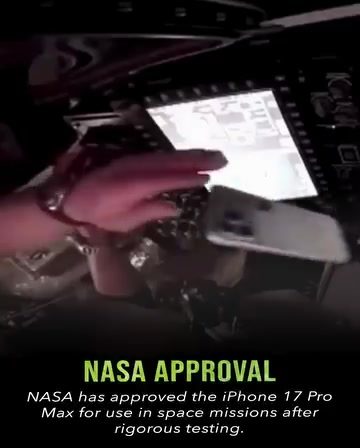
Smartphones in Space: iPhone 17 Pro Max Approved for Space Missions
Smartphones are proving to be versatile and powerful enough to support tasks related to space exploration. This advancement underscores how consumer technology is evolving to support advanced scientific and exploration activities. The recent approval of the iPhone 17 Pro Max for use in space missions by NASA illustrates this shift.
Why This Matters
This development highlights the increasing capabilities of modern smartphones and their potential to complement professional systems used in space exploration. As smartphones become more robust and feature-rich, they offer valuable support in areas such as imaging, documentation, communication, and quick data access. This trend suggests a future where everyday devices may play a more integral role in scientific and exploration activities, even in controlled environments like space.
The Capabilities of Modern Smartphones
While smartphones like the iPhone 17 Pro Max are not yet ready to replace specialized scientific equipment, they can serve as supplementary tools. These devices offer high-resolution cameras for imaging, reliable communication systems, and access to vast amounts of data, making them useful in various scientific applications.
High-Resolution Imaging
Smartphones today come equipped with advanced camera systems that can capture high-resolution images and videos. These capabilities are crucial for documentation in space missions, where detailed visual records are essential for analysis and research.
Communication and Data Access
Modern smartphones provide robust communication features and quick data access. This functionality is particularly useful in space missions, where real-time communication and data retrieval are critical. While smartphones may not yet be able to handle all the extreme conditions of space, they offer a valuable supplement to existing communication systems.
Documentation and Research
The ability to quickly document and access information is another key area where smartphones excel. Researchers and astronauts can use smartphones to record observations, take notes, and access databases, making the process of data collection and research more efficient.
Rigorous Testing and Approval
The iPhone 17 Pro Max has undergone rigorous testing to meet NASA's stringent standards. This process ensures that the device can withstand the extreme conditions of space, including radiation and vacuum. The approval of the iPhone 17 Pro Max signifies that consumer technology is reaching new levels of reliability and durability, making it suitable for use in space missions.
Practical Tips for Using Smartphones in Space
For those involved in space missions or scientific research, here are some practical tips for effectively using smartphones as supplementary tools:
Ensuring Reliable Communication
Make sure the smartphone's communication features are fully functional and compatible with the mission's communication systems. This includes checking for signal strength, data transmission capabilities, and backup communication options.
Protecting the Device
Given the extreme conditions of space, it's essential to protect the smartphone with appropriate shielding and casing. This helps safeguard the device against radiation, temperature fluctuations, and other environmental hazards.
Optimizing Data Access
Ensure that the smartphone has access to the necessary databases and research materials. Pre-download essential information and documents to avoid relying on real-time data access, which may be unreliable in space.
Documenting Data
Use the smartphone's high-resolution camera to document scientific findings, observations, and experiments. Proper documentation is crucial for accurate analysis and future reference.
Important Takeaways
The approval of the iPhone 17 Pro Max for space missions underscores the growing role of consumer technology in scientific and exploration activities. While smartphones are not yet ready to replace specialized equipment, they offer valuable support in areas such as imaging, communication, and data access. The rigorous testing and approval process by NASA ensures that these devices can withstand the extreme conditions of space, making them a reliable supplementary tool.
Conclusion
As technology continues to evolve, smartphones are becoming increasingly capable of supporting scientific and exploration activities. The approval of the iPhone 17 Pro Max for space missions is a testament to this advancement. By harnessing the capabilities of modern smartphones, researchers and astronauts can enhance their work, making it more efficient and effective. The future of consumer technology in space exploration is promising, and it will be exciting to see how these devices continue to evolve and support advanced scientific endeavors.
Watch the Reel
Questions readers ask
Why did NASA approve the iPhone 17 Pro Max for space missions?
NASA approved the iPhone 17 Pro Max due to its advanced imaging capabilities, communication features, and ability to provide quick data access. These features make it a valuable tool for supporting scientific exploration in space.
What advantages do smartphones offer in space missions?
Smartphones like the iPhone 17 Pro Max offer numerous advantages, including high-resolution imaging for documentation, reliable communication tools, and the ability to access and process data swiftly, which can enhance the efficiency of space missions.
How does the approval of the iPhone 17 Pro Max reflect on consumer technology?
The approval signifies that consumer technology is advancing to the point where it can support complex tasks traditionally handled by specialized equipment, making it a cost-effective and versatile option for space exploration.
What specific features of the iPhone 17 Pro Max make it suitable for space missions?
The iPhone 17 Pro Max's robust camera system, powerful processing capabilities, and advanced communication features make it well-suited for tasks such as high-quality imaging, real-time data processing, and maintaining reliable communication links during missions.
Can other smartphones be used in space missions, or is the iPhone 17 Pro Max unique?
While the iPhone 17 Pro Max is the first to be approved by NASA, other smartphones with comparable features and durability could potentially be used in space missions. The key is that they must meet the stringent requirements for reliability and performance in extreme conditions.
What role do smartphones play in documenting and collecting scientific data in space?
Smartphones can capture high-quality images and videos, record environmental data, and transmit this information back to Earth in real-time. This capability allows scientists to monitor experiments, document findings, and make informed decisions during missions.
How might the use of smartphones in space missions evolve in the future?
As smartphone technology continues to advance, we can expect to see more integration into space missions. Future smartphones may offer even more sophisticated features, such as enhanced sensors and improved durability, further supporting the growing role of consumer tech in advanced space exploration.
Related deep dives
Similar reads based on topic and creator.

Recent articles
Fresh deep dives from the latest Reels we unpacked.




Comments
Be the first to comment.