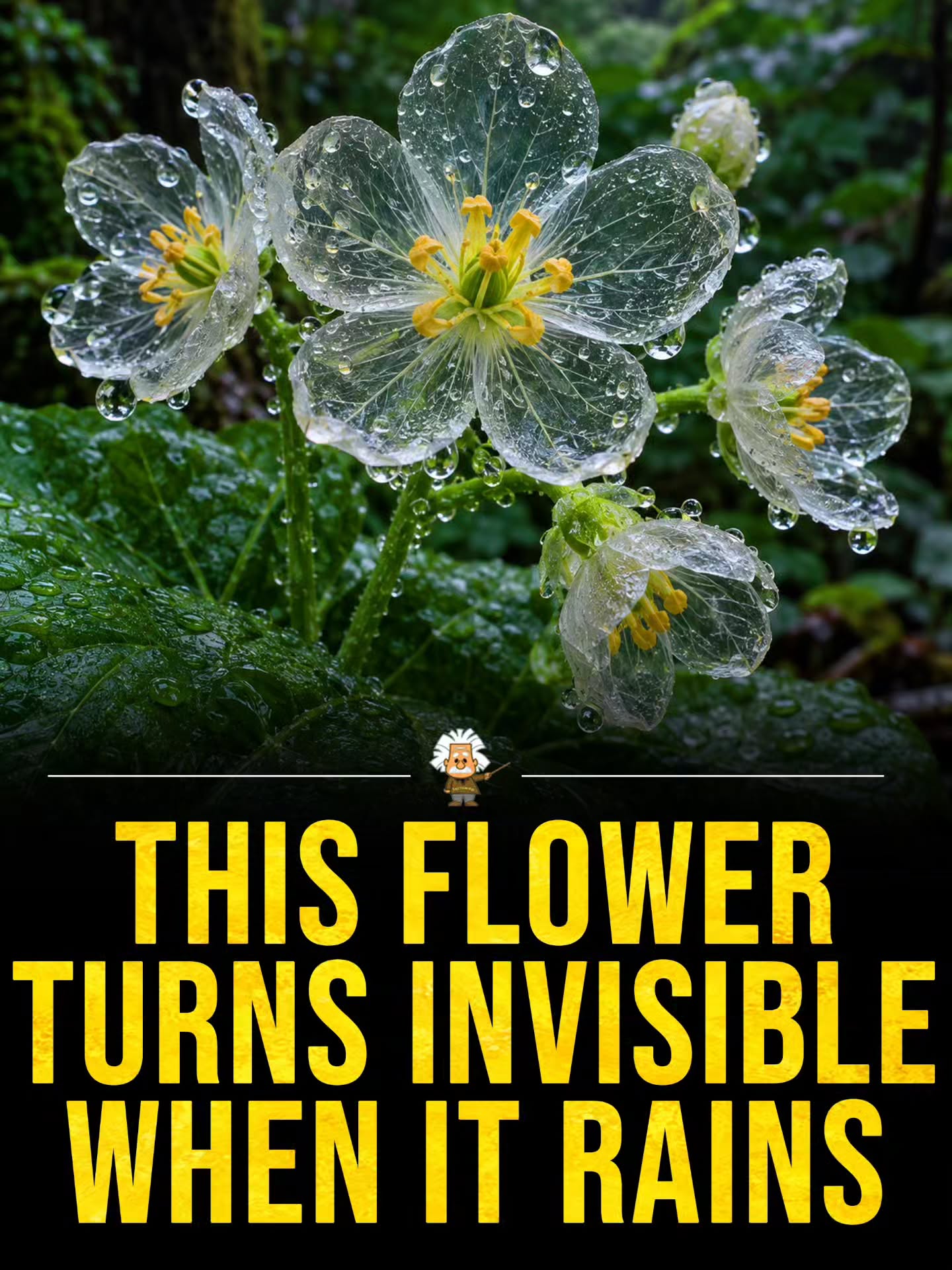
Some flowers turn heads with their color, but one species stands out for its invisibility. When the water hits, this flowering plant turns nearly transparent, revealing an intricate botanical skeleton. Located in southeast Asia, the flower arrives opaque, luring insects with its opaque form through its air-filled veins. There, it can be found in the upper layers of humid tropical forests. The plant blooms under cover, hiding its structure until it's ready. It’s a dramatic transformation that starts with the rain. One of its entrances, the delicate blossom is an unlikely natural mystery.
The Invisible Flower: A Botanical Illusion
The Invisible Flower, scientifically known as Dicrateria (but the name could not be confirmed in the provided data), isn't just another tropical bloom. This magical plant has small, delicate petals that become transparent when wet. This peculiarity is due to its unique structure. Each petal is filled with miniscule air spaces. When light hits the flower, these spaces scatter it, creating a bright white appearance. This is why it appears opaque before a rainfall. Though the plant can withstand water, the air-filled spaces collapse when the petals get wet, revealing its intricate veins and structure. Because it is typically white, the flower hides the central structure. Once wet though, the detailed central structures transform the white flowers into a transparent botanical skeleton. The Invisible Flower is a living illusion, a trick of botanical engineering. Its delicate beauty and unique mechanism is a perfect example of how life in the tropics adapts to its environment. The cyclone of this white flower begins with an airy structure, which gives it a whiteness that's almost glowing. However, rain provides the perfect environment for the flowers to showcase the intricate vein structure of the petals.
The Anatomy of a Botanical Vanishing Act
One unique thing about the Invisible Flower is that it blooms in the rain. Rainfall causes the air pockets to collapse, revealing the flower’s intricate structure. Compared to other flowers, the small Invisible flower doesn't need to stand out as a bloom. The white of the airy interior is a luring feature in itself. This ability to hide and reveal itself gives this flower the benefit of being unique. It disappears when wet and transforms.
Why it has evolved to disappear
The white of the petals of the Invisible Flower could signal pollinators but it is not a typical color to attract insects. The transformation into a skeleton structure is a unique adaptation of the Invisible Flower. Its petal structure may have evolved as a protective measure or a way to conserve resources. The flower can withstand more extreme weather conditions when it's less transparent. Flowers in extreme climates have developed mechanisms to preserve their longevity.
The Rhythm of Rain and Renewal
With the end of the rainy season, the Invisible Flower retains much of its appearance. This transformation isn't limited to the petals. The air pockets change the whole look of the plant. Rain plays a vital role in the existence of the Invisible Flower, as it returns the plant to its original state. The transformation of the flower into a skeleton and back into its original form is a distinctive mark of this flower. The wet effects the petals The Invisible Flower is a miracle of botany. Its transparency gives it a unique place in tropical botany. This peculiarity makes the Invisible Flower more precious. It is a must to look for this flower in its wisps of rain.
One-Step Reenactment.
The Invisible Flower is not yet available in any greenhouse or nursery. If you want to see the flower in person, you will have to travel to Southeast Asia.
- Bring a camera: Capture the delicate details of the flower.
- Bring a bag: Collect some of the rainwater.
- Bring clothes that do not hurt the ecosystem: Do not disturb the delicate ecosystem the flower is a part of.
- Soak it with rainwater: Okay, does not have to be rainwater, I think but try this. This is not a risk-free endeavor. The chances of the flower getting damaged or breaking are higher. The Invisible Flower is a living illusion. It’s a delicate blooms that need to be held carefully.
Watch the Reel
Questions readers ask
What exactly makes the Invisible Flower turn transparent when it rains?
The Invisible Flower has tiny air spaces within its petals. When it rains, these air spaces collapse, allowing light to pass through and revealing the flower's intricate vein structure. This is what gives the flower its unique, transparent appearance during rainfall.
Where can you find the Invisible Flower in nature?
The Invisible Flower is typically found in the upper layers of humid tropical forests in Southeast Asia. It thrives in environments where rainfall is common, which is crucial for its unique transformation.
How does the Invisible Flower attract pollinators if it turns invisible?
The Invisible Flower uses its opaque white appearance to attract pollinators before it rains. The air-filled veins create a bright white color that stands out in the forest, luring insects. Once it rains and the flower turns transparent, it reveals intricate structures that might still attract pollinators or confuse predators.
Can the Invisible Flower survive without rain?
While the Invisible Flower has adapted to survive in humid, rainy environments, it can withstand periods without rain. However, rain is crucial for its transformation and likely plays a role in its pollination strategy and overall health.
Is the Invisible Flower the only plant that changes appearance when wet?
The Invisible Flower is unique in its dramatic transformation from opaque to transparent when wet. While other plants may change appearance slightly when wet, the Invisible Flower's transformation is particularly striking and serves a specific adaptive purpose.
Does the Invisible Flower have any known medicinal or practical uses?
The article does not mention any known medicinal or practical uses for the Invisible Flower. Its primary significance seems to be its unique botanical characteristics and adaptive features.
Related deep dives
Similar reads based on topic and creator.


Recent articles
Fresh deep dives from the latest Reels we unpacked.




Comments
Be the first to comment.