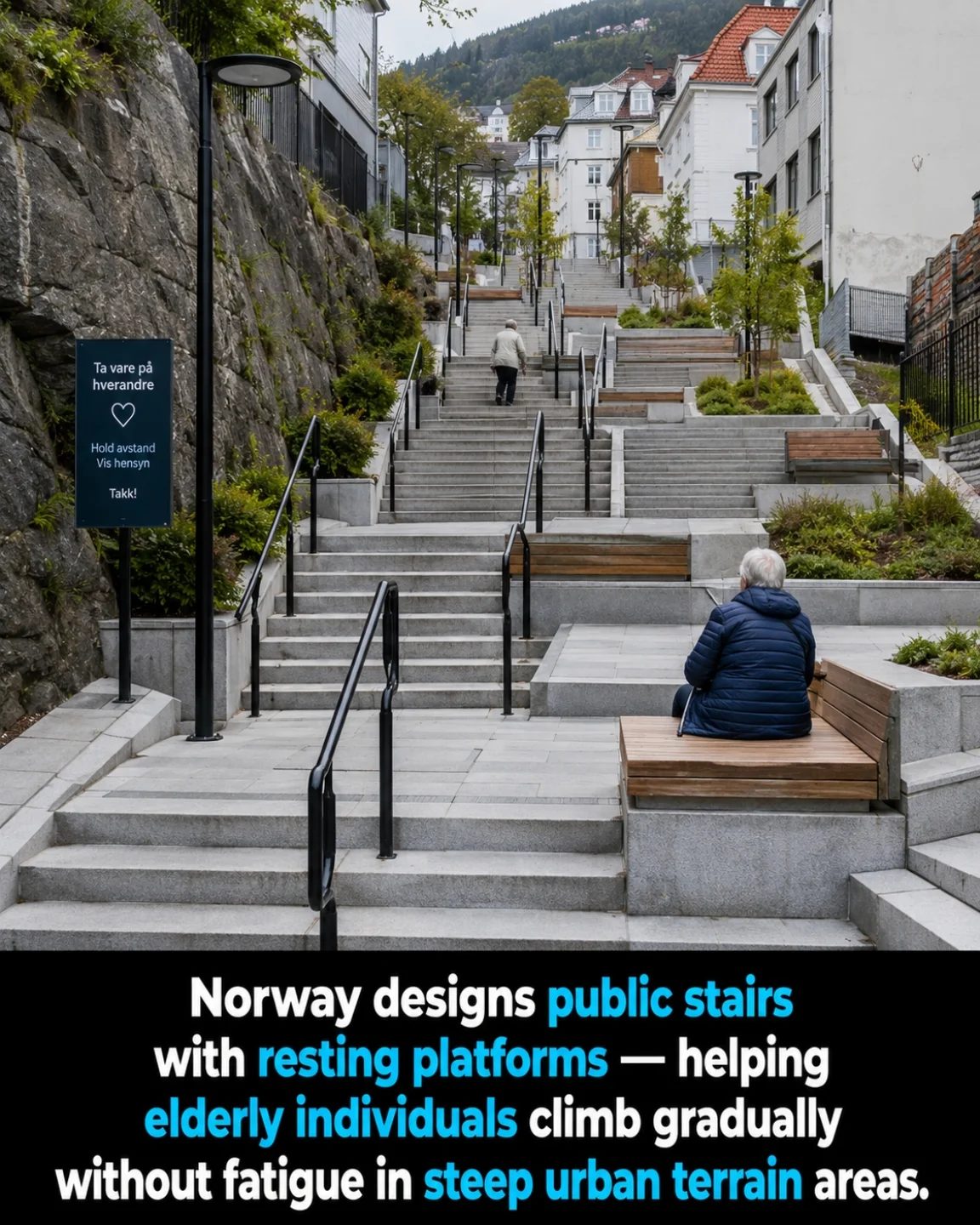
Public staircases are essential features in urban landscapes, providing essential pathways to navigate steep terrain. In urban planning, public staircases are designed to assist residents in navigating hillsides and steep areas. Norway, in particular, has taken an innovative approach to public staircase design.
Context / Why this matters
Well-designed public staircases, especially in hilly areas, ensure that people of all ages and abilities can navigate the terrain with ease. Proper staircases with resting platforms are crucial for improving access to public spaces and ensuring that urban environments are inclusive and accommodating for everyone.
Main discussion
Public staircases in Norway are built into the hillside, often incorporating multiple resting platforms at regular intervals. These platforms offer users a place to rest and catch their breath, which is particularly beneficial for elderly individuals. Beyond just aiding in navigation, these staircases play a crucial role in public health. They encourage physical activity and allow people to climb steep areas gradually. By incorporating resting platforms, the design helps users avoid fatigue and reduces the risk of falls and injuries.
The Design Features
The design of these staircases is focused on accessibility and user safety. The inclusion of resting platforms is not just a convenience but a necessity. For elderly residents, these platforms help to alleviate the physical strain of climbing steep hills. The platforms are spaced at regular intervals, allowing users to rest as needed. They also signal points of rest to others, promoting consideration and respect for those who may be climbing at a slower pace.
Considerations for Elderly Individuals
The steep terrain in many urban areas can be a significant barrier for elderly individuals. Public staircases designed with resting platforms address this challenge effectively. The design allows for a gradual ascent, reducing the risk of fatigue and potential injuries. The presence of these platforms also sends a clear message about the importance of respecting the needs of all users, including those who may require more time to navigate the stairs.
Promoting Health and Well-being
Public staircases with resting platforms encourage physical activity and promote a healthier lifestyle. By making it easier for people to navigate steep terrain, these staircases promote walking as a form of exercise. This can have a positive impact on public health, reducing sedentary lifestyles and promoting physical well-being.
Practical tips
If you are involved in an urban design project and need to add public staircases, consider these tips:
-
Include Resting Platforms: Ensure that the staircase has multiple resting platforms, especially in steep areas. This will allow users to rest and recover before continuing their ascent or descent.
-
Accessibility: Design the staircases to be accessible to people of all ages and abilities, including those with mobility issues.
-
Signage: Incorporate clear signage to guide users and indicate the location of resting platforms.
-
Maintenance: Regularly inspect and maintain the staircases to ensure they are safe and well-maintained.
-
Community Engagement: Engage with the community to understand their needs and preferences, ensuring the staircases meet the requirements of the residents.
Important takeaways
Public staircases, especially those with resting platforms, are a critical feature in urban environments. They address the challenges posed by steep terrain and ensure that the urban landscape is accessible to everyone. These staircases play a significant role in promoting physical activity and public health. By incorporating resting platforms, the design ensures that elderly individuals can navigate steep urban areas without experiencing fatigue.
Conclusion
Public staircases in Norway serve as a model for urban design, demonstrating the importance of accessibility and user safety. Incorporating resting platforms into public staircase design is a practical solution to the challenges posed by steep terrain. It promotes a healthier lifestyle and ensures that urban environments are inclusive and welcoming to residents of all ages and abilities.
Watch the Reel
Questions readers ask
Why are resting platforms important in public staircases, especially in hilly areas like those in Norway?
Resting platforms are crucial in hilly terrain because they allow users, particularly the elderly, to take breaks and recover from exertion. These platforms help prevent fatigue and reduce the risk of falls, making staircases safer and more accessible for everyone. They are strategically placed at regular intervals to support users navigating steep hillsides.
How do public staircases in Norway enhance accessibility for the elderly?
Norwegian public staircases are designed with accessibility in mind, featuring regular resting platforms that cater to the needs of the elderly. These platforms provide essential stops for rest, helping to reduce physical strain and making it easier for older adults to navigate hilly terrain. The inclusion of handrails and non-slip surfaces further enhances safety for all users.
What role do public staircases play in encouraging physical activity in urban environments?
Public staircases serve as practical alternatives to elevators or escalators, promoting regular physical activity. They offer a beneficial way for residents to incorporate exercise into daily routines. By providing a safe and accessible route, public staircases help foster a more active lifestyle, contributing to overall health and well-being in urban communities.
How does the design of public staircases in Norway make urban areas more inclusive?
The design of public staircases in Norway includes thoughtful elements like resting platforms and handrails, which support individuals of all ages and abilities. This thoughtful design helps to break down barriers for those with mobility challenges, ensuring that everyone can comfortably navigate urban landscapes. Creating an inclusive environment promotes social integration and community cohesion.
What are some key considerations in staircase design for accessibility in hilly terrain?
Key considerations include the placement of regular resting platforms, ensuring adequate handrail support, and using non-slip materials. It’s also important to design staircases with appropriate width, height, and depth of steps to accommodate users with varying mobility levels. Incorporating clear signage and lighting can also enhance navigation, especially for the elderly.
How do public staircases in Norway address safety concerns, particularly for the elderly?
Norwegian public staircases address safety concerns by incorporating several design features. The inclusion of handrails provides stability, while non-slip surfaces reduce the risk of falls. Regular resting platforms allow users to recuperate, lowering the likelihood of fatigue and accidents. These thoughtful designs collectively create a safer environment for all users, especially the elderly.
What are the benefits of integrating public staircases into the urban landscape of hilly areas?
Integrating public staircases into the urban landscape of hilly areas offers numerous benefits, including improved accessibility for all residents and encouraging physical activity. It also helps to reduce the need for vehicular traffic in hilly regions, as more people can navigate on foot. Additionally, well-designed staircases can enhance the aesthetic appeal of urban environments, making them more enjoyable to traverse.
Related deep dives
Similar reads based on topic and creator.


Recent articles
Fresh deep dives from the latest Reels we unpacked.




Comments
Be the first to comment.