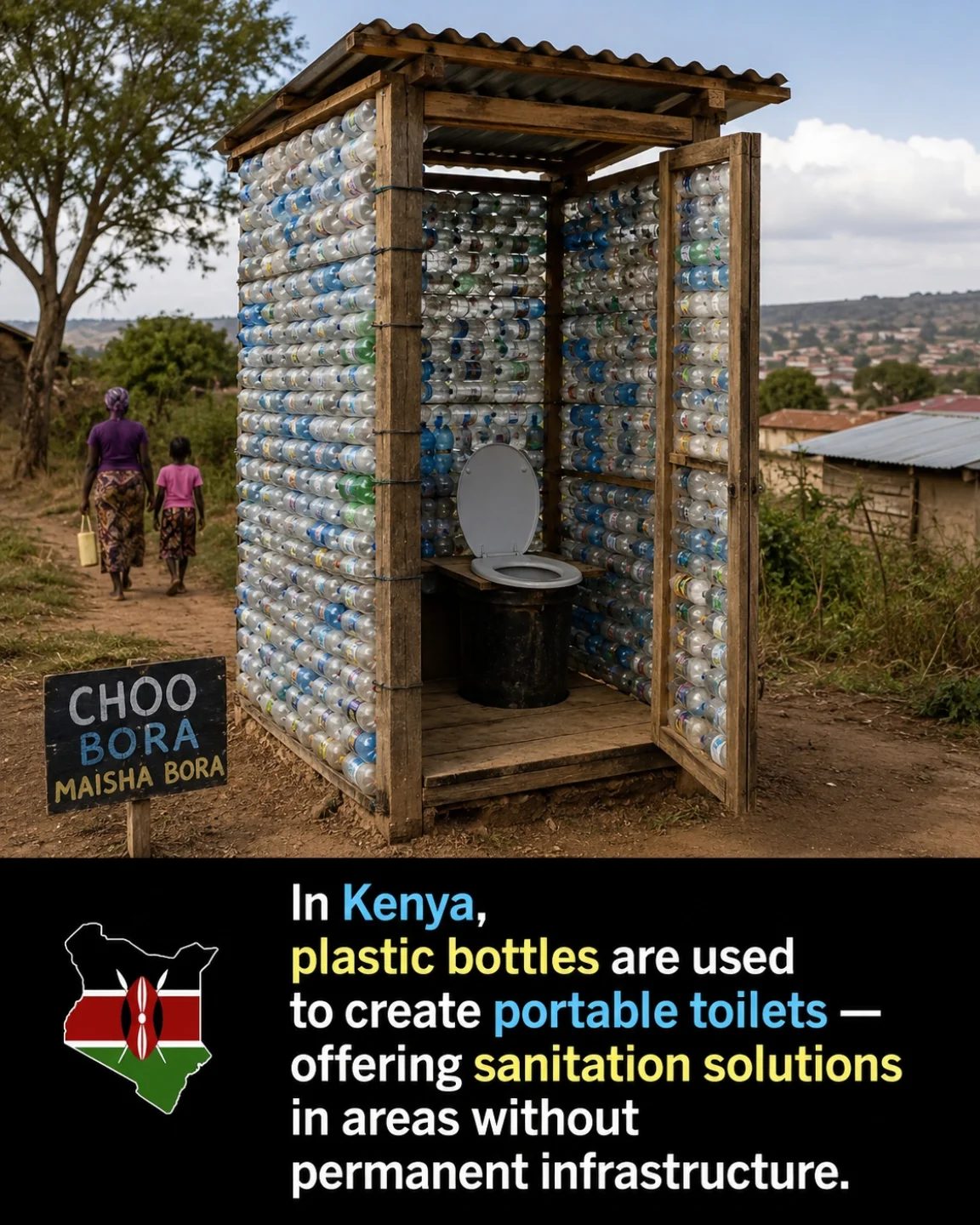
The Innovative Use of Plastic Bottles for Portable Toilets in Kenya
The inventive use of plastic bottles to create portable toilets, particularly under the 'Choo Bora Maisha Bora' initiative, addresses a critical need for sanitation in areas without permanent infrastructure. This approach not only provides a practical solution to a pressing problem but also showcases the potential of creative recycling and repurposing.
The Context: Why This Matters
Sanitation is a fundamental aspect of public health and quality of life, yet many regions, particularly in developing countries, struggle with adequate facilities. In Kenya, the 'Choo Bora Maisha Bora' initiative has taken a unique approach to tackle this issue. By repurposing plastic bottles, the initiative offers a sustainable and cost-effective solution for areas lacking permanent sanitation infrastructure. This not only addresses immediate hygiene needs but also contributes to environmental sustainability by reducing plastic waste.
The 'Choo Bora Maisha Bora' Initiative
The 'Choo Bora Maisha Bora' initiative is a testament to the power of innovation in solving practical problems. The name itself translates to "go to the toilet, make life better," encapsulating the initiative's mission to improve lives through better sanitation.
The Construction Process
The portable toilets are constructed using tightly packed plastic bottles, which form the walls of the structure. This method is both innovative and practical. Plastic bottles are readily available and can be easily collected, making them an accessible resource for construction. The bottles are packed tightly to ensure stability and durability.
The structure includes a standard toilet seat, making it functional and user-friendly. This design ensures that users have access to a hygienic and comfortable sanitary facility, even in areas where permanent infrastructure is lacking.
Sustainability and Environmental Impact
The use of plastic bottles for construction has a significant environmental benefit. Plastic waste is a global problem, with millions of tons ending up in landfills and oceans. By repurposing these bottles into toilets, the initiative reduces plastic waste and promotes recycling.
Moreover, the construction process does not require complex machinery or expensive materials, making it a cost-effective solution. This makes it accessible for communities that may not have the resources to invest in more conventional sanitation solutions.
Practical Tips for Implementing Similar Projects
Implementing a similar initiative in other regions involves several key steps and considerations:
Community Engagement
Engage with the local community to understand their needs and preferences. Community support is crucial for the success of any sanitation project. Involving local residents in the construction process can also foster a sense of ownership and responsibility.
Resource Collection
Collecting plastic bottles can be made into a community-wide effort. Schools, local businesses, and community centers can participate in bottle drives, making the resource collection phase both efficient and inclusive.
Design and Construction
Ensure that the design is functional and user-friendly. A standard toilet seat and a sturdy structure are essential for usability. The construction process should be straightforward and require minimal technical expertise, allowing for community involvement.
Maintenance and Sustainability
Plan for the long-term maintenance and sustainability of the portable toilets. Regular cleaning and upkeep are necessary to ensure the facilities remain hygienic and functional. Encourage community members to take responsibility for the maintenance, promoting a sense of ownership.
Important Takeaways
The 'Choo Bora Maisha Bora' initiative in Kenya demonstrates the potential of innovative solutions to address critical sanitation needs. By repurposing plastic bottles, the initiative not only provides a practical and cost-effective sanitation solution but also promotes environmental sustainability.
Repurposing Waste
Repurposing waste materials, such as plastic bottles, into functional infrastructure can significantly reduce environmental impact and promote sustainability.
Community Involvement
Community involvement is key to the success of any sanitation project. Engaging with the local community ensures that the solution meets their needs and fosters a sense of ownership and responsibility.
Cost-Effective Solutions
Cost-effective solutions are essential for regions with limited resources. By using readily available materials and involving the community, the initiative makes sanitation accessible to those who need it most.
Conclusion
The innovative use of plastic bottles to create portable toilets in Kenya shows how creativity and resourcefulness can address pressing issues. This approach not only improves sanitation but also promotes environmental sustainability by reducing plastic waste. As communities around the world face similar challenges, initiatives like 'Choo Bora Maisha Bora' serve as a model for innovative and practical solutions.
Watch the Reel
Questions readers ask
How does the 'Choo Bora Maisha Bora' initiative work?
The 'Choo Bora Maisha Bora' initiative collects discarded plastic bottles and repurposes them to construct portable toilets. These toilets are designed to be functional and easy to use, providing a practical sanitation solution in areas where permanent facilities are lacking.
What are the benefits of using plastic bottles for portable toilets?
Using plastic bottles for portable toilets helps to address two significant issues: sanitation needs and environmental waste. This approach reduces plastic pollution by repurposing waste materials and provides a low-cost, eco-friendly sanitation solution for communities.
Are these portable toilets durable and easy to maintain?
Yes, the portable toilets made from plastic bottles are designed to be durable and easy to maintain. The plastic materials used are robust and can withstand various environmental conditions. Regular maintenance involves simple cleaning and occasional replacement of parts to ensure the toilets remain functional.
How does this initiative impact the local community in Kenya?
The initiative positively impacts the local community by providing access to essential sanitation facilities, which improves public health and hygiene. Additionally, it creates local jobs and fosters a sense of community involvement in environmental conservation and public health.
Can these portable toilets be used in urban areas as well?
Yes, while the portable toilets are particularly beneficial in rural areas with limited infrastructure, they can also be used in urban settings. They are versatile and can be deployed in areas with temporary or emergency sanitation needs, such as during events, construction sites, or disaster relief efforts.
What is the environmental impact of the 'Choo Bora Maisha Bora' initiative?
The initiative reduces environmental waste by repurposing plastic bottles that would otherwise end up in landfills or polluting water bodies. By transforming these waste materials into useful sanitation facilities, the initiative contributes to a cleaner environment and promotes sustainable waste management practices.
Related deep dives
Similar reads based on topic and creator.


Recent articles
Fresh deep dives from the latest Reels we unpacked.




Comments
Be the first to comment.