Floating Water Farms: The Future of Sustainable Aquaculture
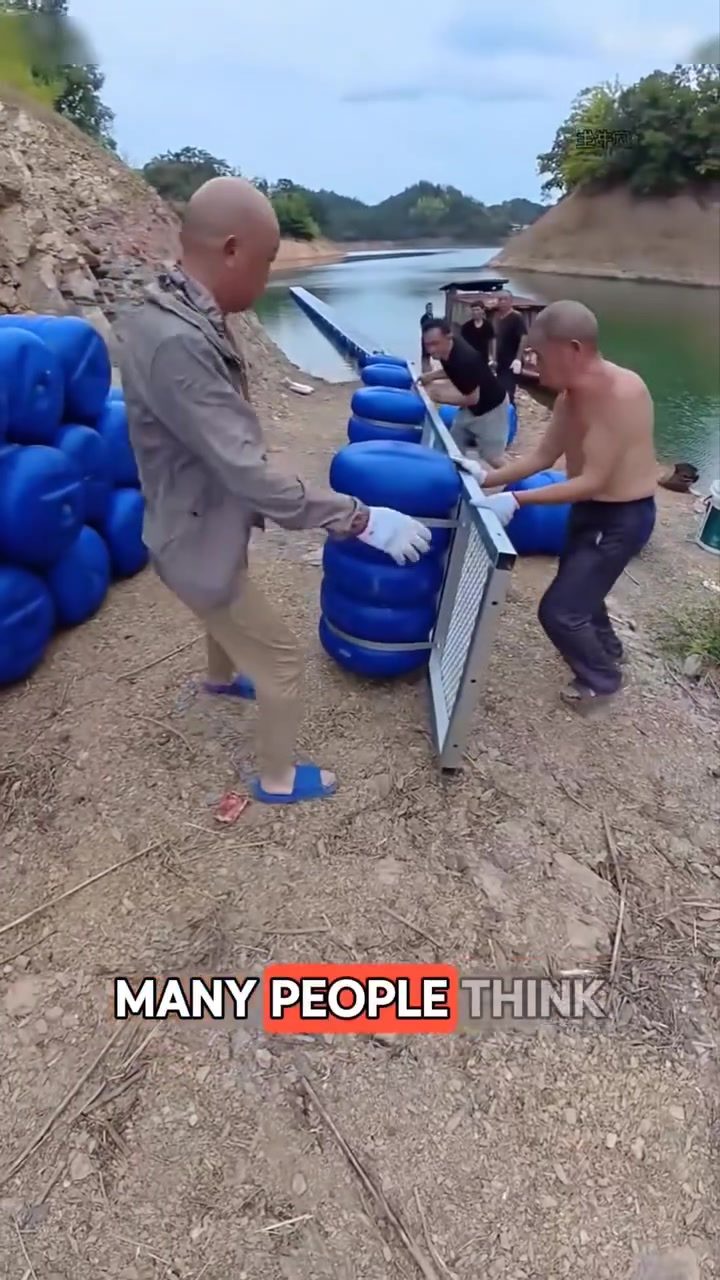
Floating water farms, often mistaken for bridge supports, are innovative fish farming systems. These structures, made from steel frames and blue plastic barrels, create buoyant platforms that serve as fish cages. The construction of these floating platforms on bodies of water is a testament to the versatility and efficiency of modern aquaculture.
Context: The Need for Innovative Aquaculture
Traditional fish farming methods, such as ponds and enclosures in natural lakes and rivers, often face challenges related to land use and water quality. Floating water farms offer a solution to these issues by utilizing water bodies that may not be suitable for other forms of agriculture. This makes them particularly beneficial for regions with abundant water resources but limited arable land.
Advantages of Floating Water Farms
Environmental Benefits
The constant flow of fresh water in these systems delivers oxygen to the fish while flushing away waste, creating a cleaner and healthier environment. This natural filtration process reduces the need for manual cleaning and chemical treatments, making it an eco-friendlier option. The fish in these systems grow faster, develop firmer meat, and taste more like wild fish due to the superior water quality and natural feeding habits.
Efficiency in Feeding
Feeding fish in traditional ponds can be inefficient, with a significant amount of food being wasted due to dispersion. In floating water farms, the food stays inside the cage, reducing waste and making the feeding process more efficient. This not only saves costs but also minimizes the environmental impact of uneaten feed.
Simplified Harvesting
One of the most practical advantages of floating water farms is the ease of harvesting. Unlike traditional ponds, where draining is often required, floating cages allow for simple retrieval of the fish. Workers can pull in the nets, collect the fish, and reset the cage without draining the pond or entering the water. This method is not only more efficient but also safer for the workers and the fish.
Construction and Design
The construction of these floating platforms involves attaching blue plastic barrels to steel frames, providing enough buoyancy to keep them afloat. These frames are then surrounded by fine mesh nets, creating cages of various sizes. The use of a grid-like material for the walkway and platform ensures stability and durability, making the entire structure robust and reliable.
Practical Tips for Setting Up a Floating Water Farm
-
Choose the Right Location: Select a body of water with a constant flow of fresh water. Avoid stagnant or polluted areas to ensure the health and growth of the fish.
-
Use Durable Materials: Opt for high-quality steel frames and plastic barrels that can withstand environmental conditions and provide long-term durability.
-
Ensure Proper Buoyancy: Calculate the necessary buoyancy to keep the platform stable and afloat. Adjust the number and size of the barrels accordingly.
-
Implement Effective Nets: Use fine mesh nets to create cages that keep the fish contained while allowing water to flow through, ensuring a clean and healthy environment.
-
Maintain Regular Monitoring: Regularly check the water quality, fish health, and structural integrity of the platform to ensure optimal conditions and early detection of any issues.
Important Takeaways
Floating water farms represent a significant advancement in aquaculture. They offer a sustainable and efficient way to raise fish, particularly in regions with abundant water but limited land. The environmental benefits, feeding efficiency, and simplified harvesting process make them a viable and attractive option for modern fish farming.
Conclusion
Floating water farms are a game-changer in the world of aquaculture. By utilizing bodies of water that are often underutilized, these systems provide a sustainable solution to the challenges faced by traditional fish farming methods. With their environmental benefits, efficient feeding processes, and simplified harvesting, floating water farms are paving the way for a more sustainable and productive future in aquaculture.
Watch the Reel
Questions readers ask
What are floating fish farms and how do they differ from traditional fish farming methods?
Floating fish farms are aquaculture systems that use buoyant platforms to raise fish in open water. Unlike traditional methods, such as ponds or land-based enclosures, floating farms utilize open water bodies, reducing land use and minimizing environmental impact. This design allows fish to thrive in a more natural and cleaner environment, while also improving waste management.
What are the key benefits of floating fish farms for sustainable aquaculture?
Floating fish farms offer several benefits, including improved water quality, reduced waste, and increased efficiency. By utilizing open water, these farms can help mitigate the environmental impact of aquaculture, making them a promising solution for sustainable fish farming. They also allow for the use of water bodies that may not be suitable for other forms of agriculture, promoting a more efficient use of resources.
How do floating fish farms address the issue of waste management in aquaculture?
Floating fish farms naturally reduce waste accumulation in one area, as water currents help to disperse and dilute waste products. Additionally, the open water environment promotes the growth of beneficial microorganisms, which help to break down waste, further improving water quality and reducing the need for chemical interventions. This makes floating fish farms a more environmentally friendly option for fish farming.
What are the primary materials used in the construction of floating fish farms?
Floating fish farms are typically constructed using steel frames and blue plastic barrels, which provide the necessary buoyancy and stability. The design allows for the creation of robust, yet lightweight platforms that can support fish cages in open water. This construction method ensures durability and longevity, making it a reliable solution for marine and freshwater fish farming.
What types of water bodies are suitable for floating fish farms?
Floating fish farms can be deployed in a variety of water bodies, including lakes, rivers, and coastal areas. They are particularly beneficial in regions with abundant water but limited land. The key is to ensure that the water body has sufficient depth and water quality to support fish life and the buoyant structures.
How do floating fish farms contribute to the blue economy?
Floating fish farms are a key component of the blue economy, promoting sustainable use of ocean and freshwater resources. By utilizing open water for aquaculture, these farms help to reduce land use, improve water quality, and increase fish production efficiency. This makes them a valuable solution for supporting food security and economic growth in coastal and inland communities.
What are the advantages of using floating fish cage systems in open water?
Floating fish cage systems in open water offer several advantages, including better water circulation, which helps to maintain optimal oxygen levels and reduces the buildup of waste. Additionally, the open water environment allows fish to exhibit more natural behaviors, leading to healthier and faster-growing fish. This results in higher productivity and better overall fish health.
Recent articles
Fresh deep dives from the latest Reels we unpacked.




Comments
Be the first to comment.