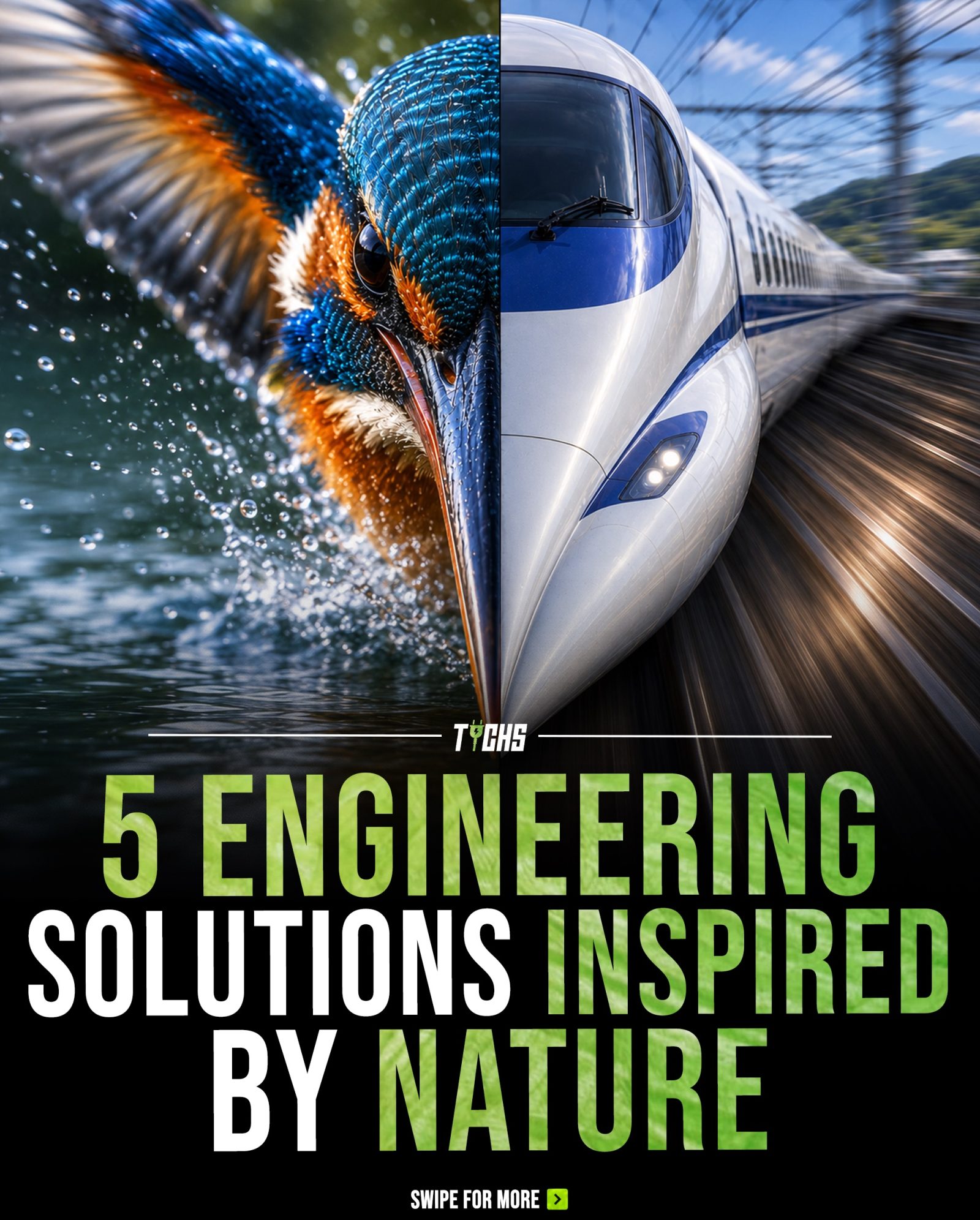
Engineering Solutions Inspired by Nature
From Velcro to faster swimsuits, and self-cooling buildings, nature has served as a powerful muse for engineers. This practice, known as biomimicry, involves studying natural designs and processes to develop cutting-edge technologies. By drawing inspiration from millions of years of natural evolution, engineers have tackled various challenges and optimized solutions.
Context / Why This Matters
Biomimicry offers a unique approach to problem-solving. Unlike traditional engineering, which often revolves around synthetic materials and artificial systems, biomimicry looks to the natural world for answers. This method not only inspires innovation but also promotes sustainability. By mimicking natural processes, engineers can create more efficient and eco-friendly technologies.
Five Inspiring Examples of Engineering Solutions
Kingfisher-Inspired Trains
One of the most well-known examples of biomimicry is the design of high-speed trains inspired by the kingfisher's beak. Kingfishers are known for their ability to dive into water with minimal splash, thanks to their streamlined beaks. Engineers have applied this aerodynamic principle to the design of high-speed trains, reducing noise and energy consumption.
Termite Mound-Inspired Building Cooling
Termite mounds are another fascinating example of nature's engineering prowess. Termites construct their mounds with intricate ventilation systems that regulate temperature and humidity. By studying these natural structures, engineers have developed more efficient cooling systems for buildings, reducing the need for energy-intensive air conditioning.
Gecko Foot-Inspired Adhesives
Gecko feet have remarkable adhesive properties, allowing them to climb vertical surfaces with ease. This capability is due to millions of tiny hairs on their feet that create strong molecular bonds. Engineers have replicated this mechanism to develop advanced adhesives that work without glue, opening up new possibilities in manufacturing and medicine.
Hummingbird Flight Inspired Underwater Vehicles
Hummingbirds are masters of aerial maneuverability, capable of hovering in mid-air and changing direction swiftly. This agility has inspired the design of underwater vehicles. By mimicking the hummingbird's flight patterns, engineers have created underwater robots that can navigate complex environments with precision.
Burdock Burr-Inspired Velcro
One of the most iconic examples of biomimicry is Velcro, which was inspired by the burdock burrs. These small, hook-shaped structures allow the burrs to stick to animal fur, aiding in seed dispersal. By replicating this natural design, engineers created a fastening system that is now ubiquitous in various industries.
Practical Tips for Applying Biomimicry
Observe Nature Closely
To apply biomimicry effectively, start by observing nature closely. Look at how different organisms and plants solve problems in their environments. Pay attention to their designs, structures, and processes.
Identify Analogies
Identify analogies between natural phenomena and engineering challenges. For example, if you're working on a project involving adhesion, studying gecko feet might provide valuable insights.
Collaborate with Biologists
Biomimicry often requires interdisciplinary collaboration. Working with biologists can help you understand the natural world better and apply those insights to your engineering projects.
Use Technology to Mimic Nature
Take advantage of modern technology to mimic natural processes. For example, 3D printing can help replicate complex biological structures, while advanced materials science can create new materials inspired by nature.
Test and Iterate
Like any engineering project, biomimicry involves testing and iteration. Continuously refine your designs based on feedback and observations, ensuring they remain effective and efficient.
Important Takeaways
Nature's designs are a treasure trove of innovative solutions. By studying and mimicking natural processes, engineers can develop more efficient, sustainable, and effective technologies. These solutions are not only practical but also environmentally friendly, contributing to a greener future.
Conclusion
Biomimicry is a powerful approach to engineering that leverages the wisdom of nature. From high-speed trains to advanced adhesives, nature has inspired some of the most innovative technologies of our time. By continuing to study and emulate natural designs, engineers can tackle complex challenges and create a more sustainable world.
Watch the Reel
Questions readers ask
What is biomimicry and how does it benefit engineering?
Biomimicry is the practice of drawing inspiration from natural designs and processes to develop innovative technologies. It benefits engineering by providing sustainable and efficient solutions, as well as inspiring new ideas through millions of years of natural evolution. This approach can help engineers create technologies that are both cutting-edge and environmentally friendly.
Can you give an example of a biomimicry solution in transportation?
One notable example is the high-speed train inspired by the kingfisher. Engineers studied the kingfisher's beak, which allows the bird to dive into water with minimal splash, to redesign the front of the train. This biomimicry solution helped reduce noise and increased efficiency, making trains faster and quieter.
How have natural cooling systems inspired sustainable building designs?
Natural cooling systems in plants and animals have influenced the design of efficient building cooling systems. For example, the structure of termite mounds, which maintain a consistent temperature, has inspired architects to create self-cooling buildings. These biomimicry solutions help reduce energy consumption and promote sustainability.
What is the story behind the invention of Velcro, and how does it relate to biomimicry?
Velcro was inspired by the small hooks on burrs that stick to clothing and animal fur. Swiss engineer George de Mestral observed these burrs and replicated their design to create a fastening system. This is a classic example of biomimicry, showcasing how nature can inspire practical and innovative solutions.
In what ways can biomimicry help in creating more efficient technologies?
Biomimicry can help create more efficient technologies by optimizing solutions that have been naturally selected for effectiveness over millions of years. For example, studying the structure of shark skin has led to the development of advanced adhesives, while the lotus leaf's self-cleaning properties have inspired non-stick and anti-fouling surfaces.
How has biomimicry influenced the design of swimsuits for athletes?
Biomimicry has led to the development of faster, more efficient swimsuits by mimicking natural surfaces and designs. For instance, the Microfin swimsuits, designed with tiny ridges inspired by shark skin, reduce drag in the water, helping athletes achieve faster speeds and improve performance.
What are some examples of biomimicry in architecture to promote sustainability?
Biomimicry in architecture includes designs inspired by natural structures like termite mounds, which maintain consistent temperatures, and the lotus leaf, which provides self-cleaning surfaces. By incorporating these natural principles, engineers can create buildings that are more energy-efficient and sustainable, reducing the need for artificial heating and cooling systems.
Related deep dives
Similar reads based on topic and creator.




Recent articles
Fresh deep dives from the latest Reels we unpacked.




Comments
Be the first to comment.