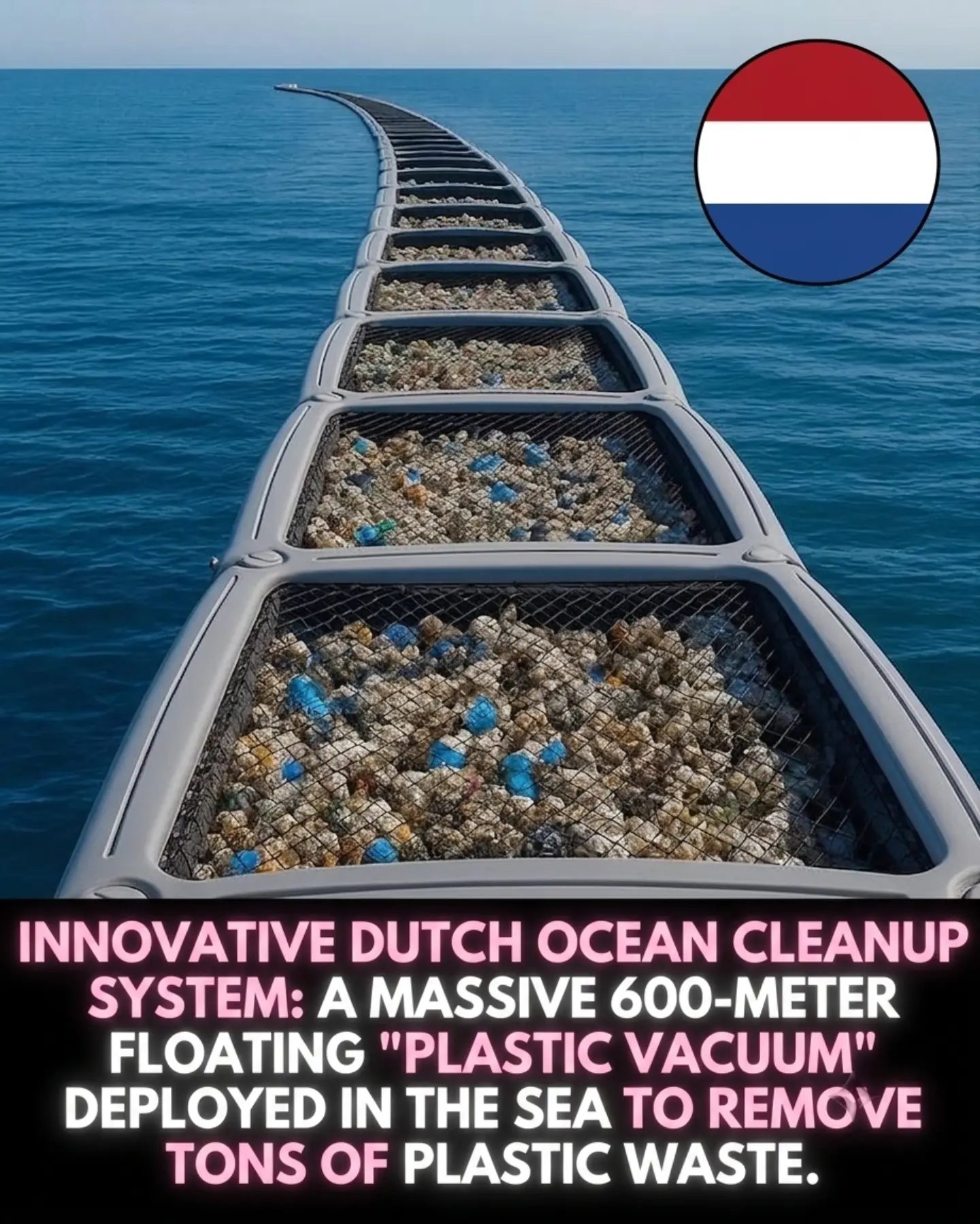
The Great Pacific Garbage Patch
The Great Pacific Garbage Patch is a vast collection of plastic waste and other debris that has accumulated in the central North Pacific Ocean, between Hawaii and California. This area is roughly twice the size of Texas, and it poses a significant threat to marine life and the overall health of the ocean. Fortunately, innovative solutions are emerging to combat this issue. One such solution is the 600-meter floating “vacuum” system developed by Dutch engineers. This system is designed to clean up the oceans by trapping floating waste while allowing marine life to swim safely underneath.
Why This Matters
The accumulation of plastic waste in the ocean is a global environmental challenge. The Great Pacific Garbage Patch is one of the most well-known examples of this problem, but similar patches exist in other parts of the world. The plastic waste in these patches breaks down into smaller pieces called microplastics, which can be ingested by marine animals, causing harm and potentially entering the human food chain. The plastic also poses a risk to marine ecosystems by entangling and trapping marine life.
The effort to clean up the ocean is essential for several reasons:
- Protecting Marine Life: By using this innovative system, we can reduce the amount of plastic waste in the ocean, potentially protecting marine animals from the dangers of plastic waste.
- Avoiding Environmental Disaster: By cleaning up the plastic, we can prevent the further breakdown of microbial plastics into microplastics that can enter the food chain.
- Recycling for Future Projects: The collected plastic can be recycled into durable products, which can help fund future cleanup efforts.
- A Model for Future Projects: The success of this project can serve as a model for similar initiatives around the world, inspiring others to take action against ocean pollution.
Understanding the Dutch Ocean Cleanup System
The 600-meter floating barrier, designed by Dutch engineers, is a groundbreaking solution to the problem of ocean pollution. The system works like a massive “plastic vacuum,” trapping tons of floating waste while allowing marine life to swim safely underneath. The system is deployed in the sea and dragged through the water to collect plastic waste.
Design and Deployment
The floating barrier is 600 meters long, making it one of the largest ocean cleanup systems in operation. It is designed to be dragged through the water, acting like a giant net that traps floating plastic waste. The system is anchored at one end and towed by a boat, allowing it to move through the water and collect debris efficiently.
The system is designed to be highly effective while minimizing the impact on marine life. The barrier is designed to allow marine animals to swim safely underneath, ensuring that the cleanup process does not harm the very ecosystems it aims to protect.
How It Works
The system works by creating a barrier that traps plastic waste in the water. The waste is then collected and removed from the ocean. The collected plastic is brought back to shore, where it is recycled into durable products. These products can then be sold, helping to fund future cleanup efforts.
The system is designed to be highly efficient, capable of collecting tons of plastic waste from the ocean. It is also designed to be environmentally friendly, ensuring that the cleanup process does not harm marine life or the environment.
Benefits and Impact
The benefits of this system are numerous. By removing tons of plastic waste from the ocean, the system helps to protect marine life and prevent environmental disasters. The collected plastic can be recycled into durable products, which helps to fund future cleanup efforts. The system can also serve as a model for similar initiatives around the world.
Practical Tips for Supporting Ocean Cleanup
While the Dutch ocean cleanup system is a significant step toward solving the problem of ocean pollution, there are also steps that individuals can take to support this effort:
- Reduce Plastic Use: One of the most effective ways to reduce ocean pollution is to reduce plastic use. This can be done by using reusable bags, bottles, and containers instead of disposable ones.
- Participate in Beach Cleanups: Many communities organize beach cleanups, which are a great way to help remove plastic waste from the ocean. Participating in these events can make a tangible difference in your local ecosystem.
- Support Organizations: There are many organizations dedicated to ocean cleanup and environmental conservation. Supporting these organizations through donations or volunteering can help fund and expand their efforts.
- Advocate for Change: Raise awareness about the issue of ocean pollution and advocate for policies that protect the environment. This can be done through social media, community events, and local government initiatives.
Important Takeaways
The Great Pacific Garbage Patch is a stark reminder of the environmental challenges we face. However, initiatives like the Dutch ocean cleanup system offer hope and a viable solution to this problem. By investing in innovative technologies and supporting environmental conservation efforts, we can work towards a cleaner, healthier ocean.
The success of the Dutch ocean cleanup system demonstrates the power of innovation and collaboration in addressing global environmental challenges. It also highlights the importance of individual and collective action in protecting the environment.
Conclusion
The Dutch ocean cleanup system is a significant step toward solving the problem of ocean pollution. By removing tons of plastic waste from the ocean, the system helps to protect marine life and prevent environmental disasters. The collected plastic can be recycled into durable products, which helps to fund future cleanup efforts. The system can also serve as a model for similar initiatives around the world.
By supporting organizations dedicated to environmental conservation and advocating for policies that protect the environment, we can work towards a cleaner, healthier ocean. The Great Pacific Garbage Patch may seem daunting, but with innovative solutions and collective effort, a plastic-free ocean is within reach.
Watch the Reel
Questions readers ask
How does the Dutch Ocean Cleanup System work?
The Dutch Ocean Cleanup System is a 600-meter long floating structure that acts as a 'vacuum' to trap plastic waste in the Great Pacific Garbage Patch. It is designed to capture debris while allowing marine life to pass safely underneath, ensuring minimal disruption to the ecosystem.
What is the Great Pacific Garbage Patch?
The Great Pacific Garbage Patch is a massive area of plastic waste and other debris located in the central North Pacific Ocean, spanning roughly twice the size of Texas. It is one of the largest concentrations of ocean plastic waste in the world.
Why is the Great Pacific Garbage Patch a concern?
The Great Pacific Garbage Patch poses significant threats to marine life and ocean health. Plastic debris can entangle or be ingested by marine animals, and microplastics can enter the human food chain, impacting both wildlife and human populations.
How does the Dutch Ocean Cleanup System protect marine life?
The system is designed with an open-bottom structure that allows marine animals to swim underneath it safely. This design ensures that while plastic waste is trapped, marine life is not harmed or impeded by the cleanup process.
What are microplastics, and why are they a threat to the food chain?
Microplastics are tiny plastic particles, often resulting from the breakdown of larger plastic waste. They pose a significant threat to the food chain because they can be ingested by marine life, entering the ocean's ecosystems and ultimately impacting humans who consume seafood.
What makes the Dutch Ocean Cleanup System an innovative solution to ocean waste?
The Dutch Ocean Cleanup System is innovative due to its unique design and scale, which combines a passive collection method with a large 600-meter structure. Its ability to capture waste while maintaining a safe environment for marine life, is a groundbreaking approach.
How does the Dutch Ocean Cleanup System contribute to global efforts in combating plastic pollution?
By tackling one of the largest known ocean plastic waste zones, the Great Pacific Garbage Patch, the System serves as a significant step in reducing the global accumulation of plastic waste. The successful implementation of this project can pave the way for similar initiatives in other affected areas.
What are the long-term goals of the Dutch Ocean Cleanup System?
The long-term goals of the Dutch Ocean Cleanup System include significantly reducing the amount of plastic in the Great Pacific Garbage Patch, as well as serving as a model for future ocean cleanup efforts. The project aims to inspire and inform other initiatives to combat ocean plastic waste worldwide.
Related deep dives
Similar reads based on topic and creator.




Recent articles
Fresh deep dives from the latest Reels we unpacked.




Comments
Be the first to comment.