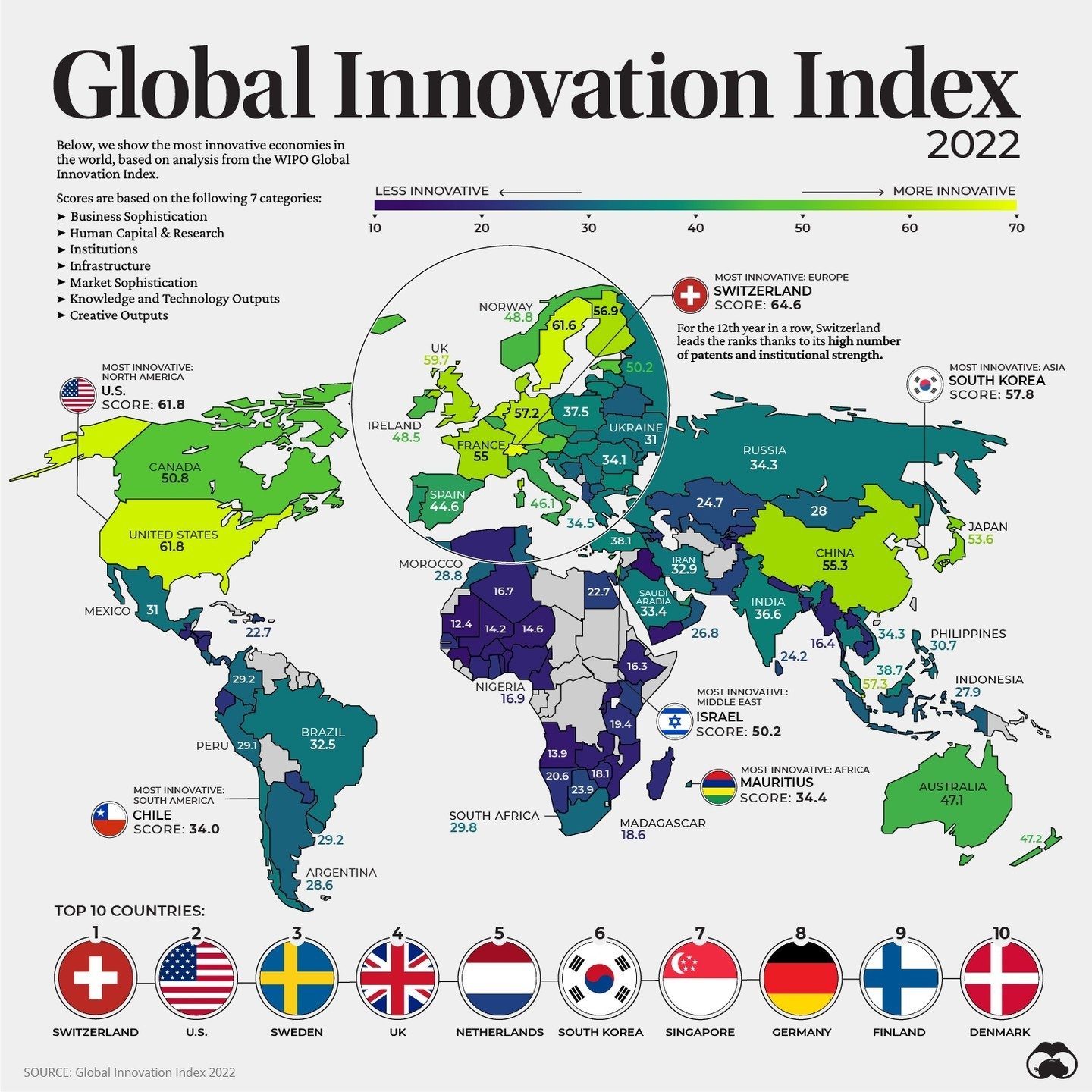
Global Innovation Index
The Global Innovation Index (GII) is a comprehensive assessment of a country's innovation capabilities and outcomes. It evaluates how effectively nations transform investments in innovation into economic growth and broader societal benefits. The GII measures innovation through various indicators, including research and development, technological adoption, and venture capital activity. These factors play a critical role in driving progress and innovation.
Why This Matters
Innovation is the lifeblood of economic growth and sustainability. It fuels job creation, enhances public health, strengthens national security, and bolsters industrial competitiveness. By understanding the Global Innovation Index, countries can identify areas for improvement, benchmark against global leaders, and strategize to foster a more innovative economy.
The Global Innovation Index 2022
The Global Innovation Index 2022 provides a snapshot of the world's most innovative economies. It highlights the key ingredients that drive innovation, including human capital, research, infrastructure, market sophistication, and creative outputs.
Most Innovative Countries
- Overall: Switzerland leads the pack with a score of 67.2. This is the 12th consecutive year that Switzerland has topped the index, underscoring its consistent investment in research, patents, and institutional strength.
- Europe: Switzerland maintains its dominance in Europe with a stellar performance across all innovation indicators.
- Asia: South Korea is the most innovative country in Asia, with a score of 57.8. Known for its technological advancements and strong research institutions, South Korea continues to make significant strides in innovation.
- North America: The United States takes the crown in North America, showcasing its leadership in technological adoption, venture capital activity, and market sophistication.
- Africa: The Middle East claims the top spot in Africa, with a score of 50.2. The region is making notable progress in innovation, driven by investments in infrastructure and human capital.
- Latin America: Chile leads Latin America with a score of 61.8, demonstrating its strong focus on research and development, and its commitment to fostering innovation.
Key Ingredients of Innovation
The Global Innovation Index evaluates countries based on several key pillars that collectively contribute to a nation’s innovative prowess:
Human Capital and Research
Human capital encompasses the skills, knowledge, and expertise of a country's workforce. It is the foundation of innovation, driving technological advancements and scientific breakthroughs. Countries with strong research institutions and a highly skilled workforce are better positioned to lead in innovation.
Infrastructure
Robust infrastructure is essential for innovation. It includes physical infrastructure like roads, bridges, and transportation systems, as well as digital infrastructure such as internet connectivity and data centers. Infrastructure supports the efficient flow of goods, services, and information, facilitating innovation and economic growth.
Market Sophistication
Market sophistication refers to the complexity and depth of a country's markets. It includes factors such as market size, the presence of large and competitive firms, and the availability of venture capital. Sophisticated markets provide the resources and opportunities necessary for innovation to thrive.
Knowledge and Technology Outputs
This pillar measures the impact of innovation through indicators such as the number of patents, scientific publications, and technology exports. It reflects the tangible outcomes of a country’s innovation efforts, highlighting its ability to translate research and development into marketable products and services.
Creative Outputs
Creative outputs include cultural and creative industries, such as design, media, and entertainment. These industries contribute to a country's innovation ecosystem by fostering creativity and driving cultural exports. They also play a crucial role in attracting talent and investment.
Practical Tips for Boosting Innovation
There are several practical steps that countries can take to enhance their innovation capabilities:
Invest in Research and Development
Countries should prioritize investments in research and development, both in the public and private sectors. This includes funding for scientific research, technological development, and innovation labs. Strong research institutions and a robust R&D ecosystem are critical for fostering innovation.
Develop a Skilled Workforce
Investing in education and training programs can help develop a skilled and knowledgeable workforce. This includes promoting STEM education, providing vocational training, and offering continuous learning opportunities. A highly skilled workforce is essential for driving innovation and competitiveness.
Strengthen Infrastructure
Improving both physical and digital infrastructure can support innovation. This involves investing in transportation systems, digital connectivity, and data centers. Reliable infrastructure facilitates the efficient flow of goods, services, and information, creating an environment conducive to innovation.
Foster Market Sophistication
Countries should work to create a sophisticated and competitive market environment. This includes promoting large and innovative firms, encouraging venture capital activity, and implementing policies that support market growth and competition. A sophisticated market provides the necessary resources and opportunities for innovation.
Encourage Knowledge and Technology Outputs
Promoting knowledge and technology outputs can enhance a country's innovation capabilities. This involves fostering the creation and application of new technologies, protecting intellectual property, and encouraging scientific publications and patents. By focusing on tangible innovation outcomes, countries can translate research and development into marketable products and services.
Cultivate Creative Outputs
Supporting creative industries can drive innovation by fostering creativity and attracting talent. This includes promoting cultural and creative industries, providing funding for arts and media, and encouraging cultural exports. Creative outputs contribute to a vibrant innovation ecosystem and enhance a country’s global competitiveness.
Important Takeaways
The Global Innovation Index 2022 provides valuable insights into the world’s most innovative economies and the key drivers of innovation. It highlights the importance of investing in research and development, human capital, infrastructure, market sophistication, and creative outputs. By understanding these key ingredients, countries can identify areas for improvement and strategize to enhance their innovation capabilities.
Conclusion
Innovation is a critical driver of economic growth, job creation, and global competitiveness. The Global Innovation Index 2022 offers a comprehensive assessment of the world’s most innovative economies, highlighting the key factors that contribute to progress and innovation. By investing in research and development, fostering a skilled workforce, strengthening infrastructure, and promoting market sophistication, countries can enhance their innovation capabilities and achieve sustainable economic growth.
Watch the Reel
Questions readers ask
Which countries topped the Global Innovation Index in 2022?
In 2022, Switzerland maintained its position at the top of the Global Innovation Index, known for its consistent strength in research and development, and technological adoption. South Korea and the United States followed closely, recognized for their technological advancements and robust market sophistication, respectively.
How does the Global Innovation Index measure innovation capabilities?
The GII uses a variety of indicators to measure innovation capabilities, including research and development investments, technological adoption rates, and the amount of venture capital activity. These metrics help assess how well countries are converting their innovation investments into tangible economic and societal benefits.
What role does venture capital play in the Global Innovation Index rankings?
Venture capital is a crucial component of the GII rankings, as it reflects a country's ability to support and nurture innovative startups. Higher levels of venture capital activity indicate a strong ecosystem for new ideas and entrepreneurial ventures, which can drive economic growth and job creation.
How does South Korea stand out in the 2022 Global Innovation Index?
South Korea is particularly notable for its rapid technological advancements, which have significantly contributed to its high ranking. The country's investments in research and development, along with its adoption of cutting-edge technologies, have positioned it as a global leader in innovation.
What are the key drivers of innovation according to the Global Innovation Index?
The key drivers of innovation highlighted by the GII include investments in research and development, the adoption of new technologies, and the availability of venture capital. These factors are essential for transforming innovative ideas into economic growth and broader societal benefits.
How does the United States' innovation score reflect its market sophistication?
The United States' high innovation score is closely tied to its sophisticated market environment, which includes a strong venture capital ecosystem, robust intellectual property laws, and a culture that encourages entrepreneurship. This environment fosters the creation and growth of innovative companies, contributing to overall economic outcomes.
What are some of the broader benefits of innovation as highlighted in the Global Innovation Index?
Innovation, as noted by the GII, offers multiple benefits beyond economic growth, including job creation, improvements in public health, and enhanced national security. It also strengthens industrial competitiveness, helping countries maintain a leading position in the global market.
Related deep dives
Similar reads based on topic and creator.


Recent articles
Fresh deep dives from the latest Reels we unpacked.




Comments
Be the first to comment.