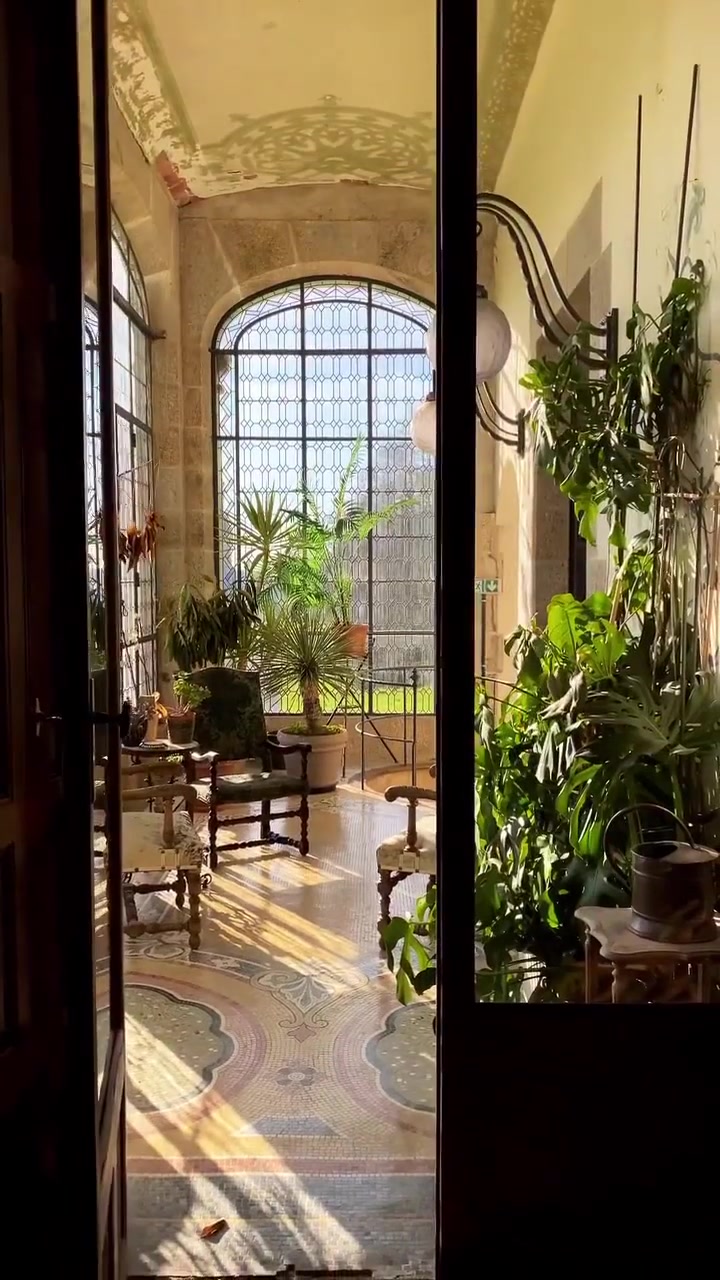
The term indoor garden room might evoke visions of a dark space filled with plastic plants, but a recent video showcases an entirely different indoor paradise. Direct sunlight pours through large arched windows, an intricate metal-work coiffure, and dapples a mosaic floor. Generous plants — potted and hanging — sprawl first across planted beds, then across the scene
How to Build a Living Room in a Greenhouse
This deromanticized living space embodied nothing so much as a room in a greenhouse which served to house both people and plants. What's the point of inviting nature indoors, if not to get as close as possible to the outside? The space reflects a battle that worked: an architect that found itself winning against both the elements and man-made forces. Pots of varying sizes are clustered together as if somewhere between a breach and a bouquet. The plantings are not mere decoration; they are the point. This is an indoor greenhouse. In a “regular” home, the living room is where people are the primary subjects. Here, people are the visitors, guests, and caretakers of a primal ecosystem.
The Lights of Day and Night
The arch windows alone are a lesson in design. But what is the role of windows in an indoor garden room? An indoor garden room is meant to be self-sustaining — not just trees, but the entire ecosystem. This means that the outside cannot be kept out. A non-extreme climate should be encouraged to come in — a barrier to much of it, but a window to some. The windows let the sun in, air circulation is encouraged, and flora share life with fauna. The space doesn't have to serve as a barrier. It can serve as an interphase
Surfaces Sink
The mosaic floor is aesthetically functional. Cut from tiles, its purpose is to manage the excess water. Mosaic tiles are not the only surface that benefits. Tile and wood may be used to form walls, while foil pans or shallow boxes may contain water. Plants should be seen for the contribution they make. They don't just stand in place and look pretty. You could compare them to the “plants” of an aquascape, but anything in an aquascape is just a plant or a fish — it is an aquascape, and the only difference between one and the next is the form of the environment and the creature. The soil plants are the protagonists, the fish and the shells merely inanimate creatures. The aquarium itself could be a room. You would be living in a large tank.
Furniture
The space is itself furniture — a miniature park, a garden, a sanctuary, a greenhouse in the heart of a house. Potted plants and resting spots are the decorative elements. The other items, like the chairs and the table, are merely the biotic apparatuses. The room's foliage has a look of a greenhouse, but instead of rubber plants and ivies, it is filled with plants of different sizes, shapes, and textures. This is not only for decoration, but it is a room where the plants will thrive. The air must be moist, the light diffused, and the soil rich. Plants need to be watered regularly, and the space needs to be cleaned regularly to keep it clean and free of pests. Flowers and vegetables provide a veritable "forest" that is also a greenhouse.
Choosing Plants and Aesthetics
Plants are the raison d'etre. Choose native species that thrive on neglect. This is not a space to house Phaedranthus and succulents. The windows should be designed to provide the requisite light. An eastern exposure is the best for the majority of plants, which will receive more or less equal amounts of light throughout the year. A southern exposure will provide more sunlight, but it will be more intense. A northern exposure will not receive sunlight for the majority of the year and thus will be darker and more humid. If you have a northern exposure, plants that prefer cooler temperatures and less light will be more successful. Plants can tolerate less light as they mature, making them more forgiving of conditions not ideal for them in the wild. Indoor garden rooms should be organized in a way that maximizes natural light, without allowing light to overwhelm the rooms. Consider lighting from the front, back, and sides of the plants. Avoid light coming from just one angle, and control ambient lighting to maintain a consistent level of light exposure. Artificial lighting can be used alongside natural lighting to ensure that the plants receive the light they need to thrive.
Pulling It All Together
Perhaps the most important lesson from this indoor garden room is understanding how to combine the art of gardening and the science of horticulture. An indoor garden room is not just a showcase for plants. It is a place to experience nature.
Watch the Reel
Questions readers ask
What exactly qualifies a room as an indoor garden room, and how does it differ from a typical greenhouse?
An indoor garden room is a living space designed to blend nature and interior design, featuring a variety of plants and antique furniture. Unlike a typical greenhouse, it prioritizes both aesthetics and functionality, serving as a sanctuary for both people and plants. It's more about creating a harmonious ecosystem within a home rather than just a space for growing plants.
How can I achieve the same level of natural light as shown in the video in my own indoor garden room?
The video showcases large arched windows and intricate metalwork that allows direct sunlight to pour in. To mimic this, consider installing large windows or skylights that can let in plenty of natural light. Ensure that the windows are positioned to maximize sunlight exposure throughout the day, and consider using light diffusers to prevent harsh sunlight from damaging your plants.
What kind of surfaces and materials are best for an indoor garden room to manage water and humidity?
Mosaic tiles, tile, and wood are great choices for flooring and walls in an indoor garden room. These materials are not only aesthetically pleasing but also functional in managing excess water and humidity. Additionally, using foil pans or shallow boxes to contain water can help maintain a balanced ecosystem. The key is to create surfaces that can handle moisture without compromising the overall design.
How do I choose the right plants for an indoor garden room, and what kind of care do they need?
Choose a variety of plants with different sizes, shapes, and textures that can thrive in an indoor environment. The room should have moist air, diffused light, and rich soil. Regular watering and cleaning are essential to keep the space free of pests and maintain a healthy ecosystem. Consider plants that can contribute to the room's aesthetic while also being easy to care for.
How does the use of antique furniture enhance the indoor garden room design, and what role does it play in the overall aesthetic?
Antique furniture in an indoor garden room adds a layer of history and elegance, creating a unique blend of old and new. These pieces serve as decorative elements and biotic apparatuses, complementing the lush greenery and natural elements. The furniture should be chosen to fit the overall theme and ensure it can withstand the humidity and moisture of the space.
What are the benefits of having an indoor garden room in terms of both aesthetics and functionality?
An indoor garden room offers a serene and inviting retreat, blending nature with interior design. It creates a self-sustaining ecosystem that can improve air quality, reduce stress, and add a touch of tranquility to your home. Functionally, it serves as a living space where plants and people coexist, providing a unique and therapeutic environment.
Can I create an indoor garden room in a smaller apartment, or is it only suitable for larger homes?
While larger homes provide more space for an indoor garden room, it's possible to create a smaller version in an apartment. Opt for compact plants, vertical gardening, and strategic placement of furniture to maximize the available space. Ensure that the room has adequate natural light and ventilation to support plant growth. The key is to design a space that is both functional and visually appealing, regardless of its size.
Related deep dives
Similar reads based on topic and creator.



Recent articles
Fresh deep dives from the latest Reels we unpacked.




Comments
Be the first to comment.