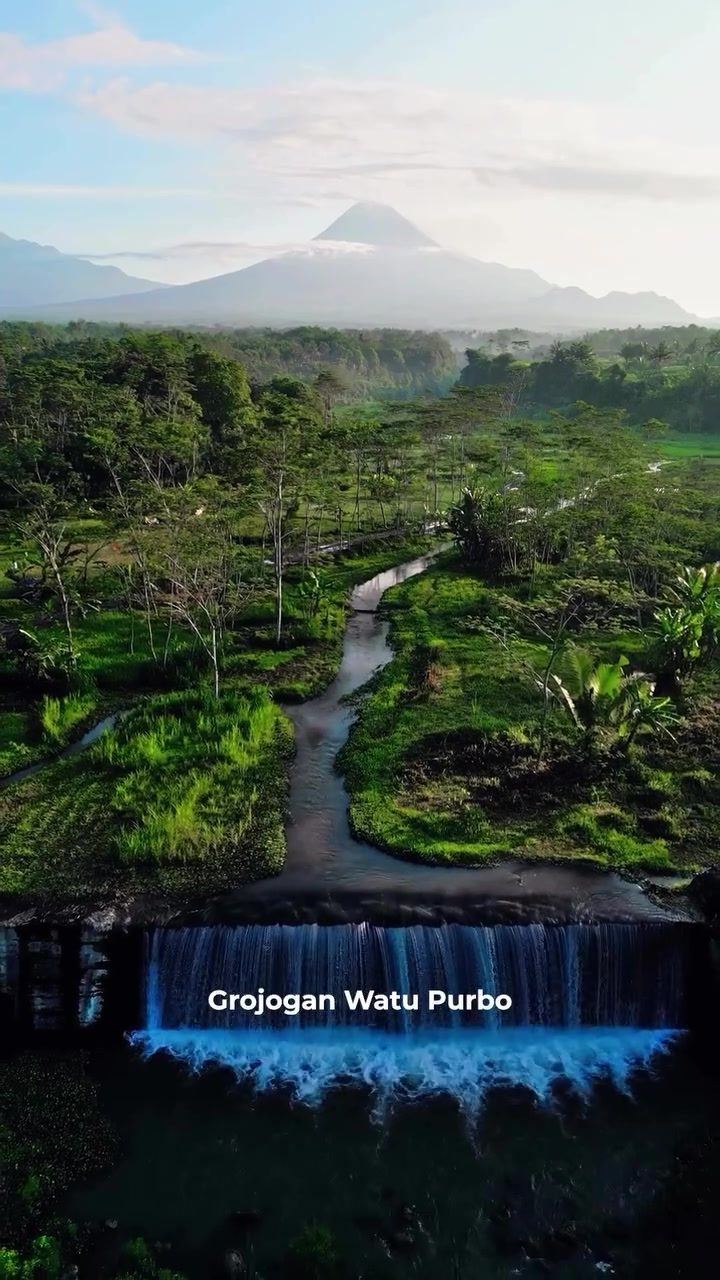
Grojogan Watu Purbo: A Unique Waterfall in Indonesia
Grojogan Watu Purbo, located in Yogyakarta, Indonesia, is a multi-level waterfall that is both a natural wonder and a testament to human ingenuity and community spirit. The site’s transformation from a protective dam to a stunning tourist destination is a fascinating story that highlights the interplay between natural forces, human intervention, and community efforts.
Why This Matters
Grojogan Watu Purbo is more than just a beautiful waterfall; it’s a symbol of resilience and the transformative power of community action. Understanding its history and development offers insights into how natural and human-made structures can coexist and evolve, creating unique and valuable attractions.
The Evolution of Grojogan Watu Purbo
From Dam to Waterfall
Constructed in 1975, Grojogan Watu Purbo was initially designed as a dam to protect against the eruptions of the Mount Merapi, one of the most active volcanoes in Indonesia. The clever design, known as the “grojogan trap,” aimed to channel and control the flow of water and lava during eruptions, safeguarding nearby communities. This dam was a crucial infrastructure project, reflecting the region’s proactive approach to mitigating natural hazards.
The Surprising Transformation
Fast forward to 2017, and nature had a different plan. Water began to flow over the dam, creating a new waterfall. This natural phenomenon turned a functional dam into a breathtaking attraction. The local community quickly recognized the potential of this transformation and took steps to enhance the area into a tourist destination.
Community Efforts and Enhancements
The local community’s efforts were instrumental in turning Grojogan Watu Purbo into the picturesque site it is today. They cleaned up the area, added flower gardens, gazebos, and toilets to enhance the visitor experience. These enhancements transformed the site from a mere waterfall into a haven for relaxation and exploration, attracting visitors from across the region and beyond.
The Role of Local Community
The initiative to transform the area was driven by the local community, demonstrating the power of grassroots efforts. Their decision to beautify and develop the site not only provided a new attraction but also contributed to the local economy. The community’s dedication to maintaining and enhancing Grojogan Watu Purbo serves as an example of how local involvement can create and sustain valuable attractions.
Practical Tips for Visiting
Best Time to Visit
The best time to visit Grojogan Watu Purbo is during the dry season, from April to September. During this period, the weather is pleasant, and the water levels are manageable, allowing visitors to explore the area comfortably.
What to Bring
When visiting, it’s essential to bring comfortable walking shoes, a water bottle, and a camera to capture the stunning views. The area features multiple levels, so being physically prepared will enhance your experience. Dressing in layers is also advisable, as temperatures can fluctuate throughout the day.
Enjoying the Experience
Take your time to explore the different levels of the waterfall and enjoy the serenity. The lush greenery and cascading water create a tranquil atmosphere, perfect for relaxation and reflection. Don't forget to take a moment to appreciate the natural beauty and the community’s efforts that turned this site into a beautiful destination.
Important Takeaways
The Power of Community
Grojogan Watu Purbo is a testament to the power of community action. The local residents' initiative to transform the area into a tourist destination not only enhanced the region’s natural beauty but also contributed to its economic growth. The site’s transformation highlights how community involvement can turn a natural phenomenon into a valuable attraction.
The Interplay of Nature and Human Intervention
The story of Grojogan Watu Purbo showcases how natural phenomena and human intervention can intersect to create unique and valuable attractions. The waterfall's transformation from a protective dam to a tourist destination is a fascinating example of this interplay, reminding us of the dynamic relationship between nature and human-made structures.
Conclusion
Grojogan Watu Purbo in Yogyakarta, Indonesia, is a unique waterfall attraction that has evolved from a protective dam to a stunning tourist destination. The transformation of this site highlights the power of community efforts and the interplay between natural forces and human intervention. Whether you are a nature enthusiast, a history buff, or simply looking for a serene getaway, Grojogan Watu Purbo offers a unique experience that combines natural beauty and community spirit.
Watch the Reel
Questions readers ask
What is the origin of the Grojogan Watu Purbo waterfall?
Grojogan Watu Purbo was originally constructed as a dam in the 1970s to mitigate the impacts of volcanic eruptions from Mount Merapi. The dam was built to protect the surrounding areas from lahars, which are volcanic mudflows that can be deadly. The dam’s design and initial purpose highlight the necessity of human intervention in safeguarding communities against natural hazards.
How did Grojogan Watu Purbo transform into a tourist destination?
Over time, the dam evolved into a stunning multi-level waterfall, drawing visitors from around the world. The transformation was driven by community efforts that recognized the potential of the site as a natural attraction. The local community played a crucial role in developing the area, ensuring it remains both a beautiful destination and a symbol of resilience.
What makes Grojogan Watu Purbo unique among Indonesia's waterfalls?
Grojogan Watu Purbo stands out due to its unique origin as a dam and its transformation into a breathtaking waterfall. Unlike other waterfalls in Indonesia, Grojogan Watu Purbo's history is intertwined with human intervention and community efforts, making it a distinctive blend of natural beauty and human ingenuity, attracting visitors and nature enthusiasts alike.
What role did Mount Merapi play in the creation of Grojogan Watu Purbo?
Mount Merapi, one of Indonesia's most active volcanoes, was the primary reason for the construction of the Grojogan Watu Purbo dam. The 1975 eruption of Mount Merapi highlighted the need for protective measures against lahars. The dam was designed to control and divert these hazardous flows, thereby protecting nearby communities and agricultural lands.
What are some of the best ways to experience Grojogan Watu Purbo?
Visitors can explore Grojogan Watu Purbo through various activities such as hiking, swimming, and picnicking. The multi-level waterfall offers several viewing points and spots for a refreshing dip. Additionally, the surrounding area, including the Maspeot village, provides opportunities to experience local culture and cuisine, enhancing the overall visit.
How has the local community contributed to the development of Grojogan Watu Purbo?
The local community has been instrumental in the development of Grojogan Watu Purbo. Their efforts include maintaining the site, creating infrastructure for visitors, and promoting it as a tourist destination. The community’s involvement has not only preserved the natural beauty of the area but has also created economic opportunities through tourism.
What are the safety measures in place for visitors to Grojogan Watu Purbo?
While Grojogan Watu Purbo is a popular destination, it is essential to follow safety guidelines. Visitors should stay on designated paths, be cautious near water edges, and be aware of any warnings about water conditions. The local community and authorities often provide safety information to ensure a secure and enjoyable experience for all visitors.
Related deep dives
Similar reads based on topic and creator.



Recent articles
Fresh deep dives from the latest Reels we unpacked.




Comments
Be the first to comment.