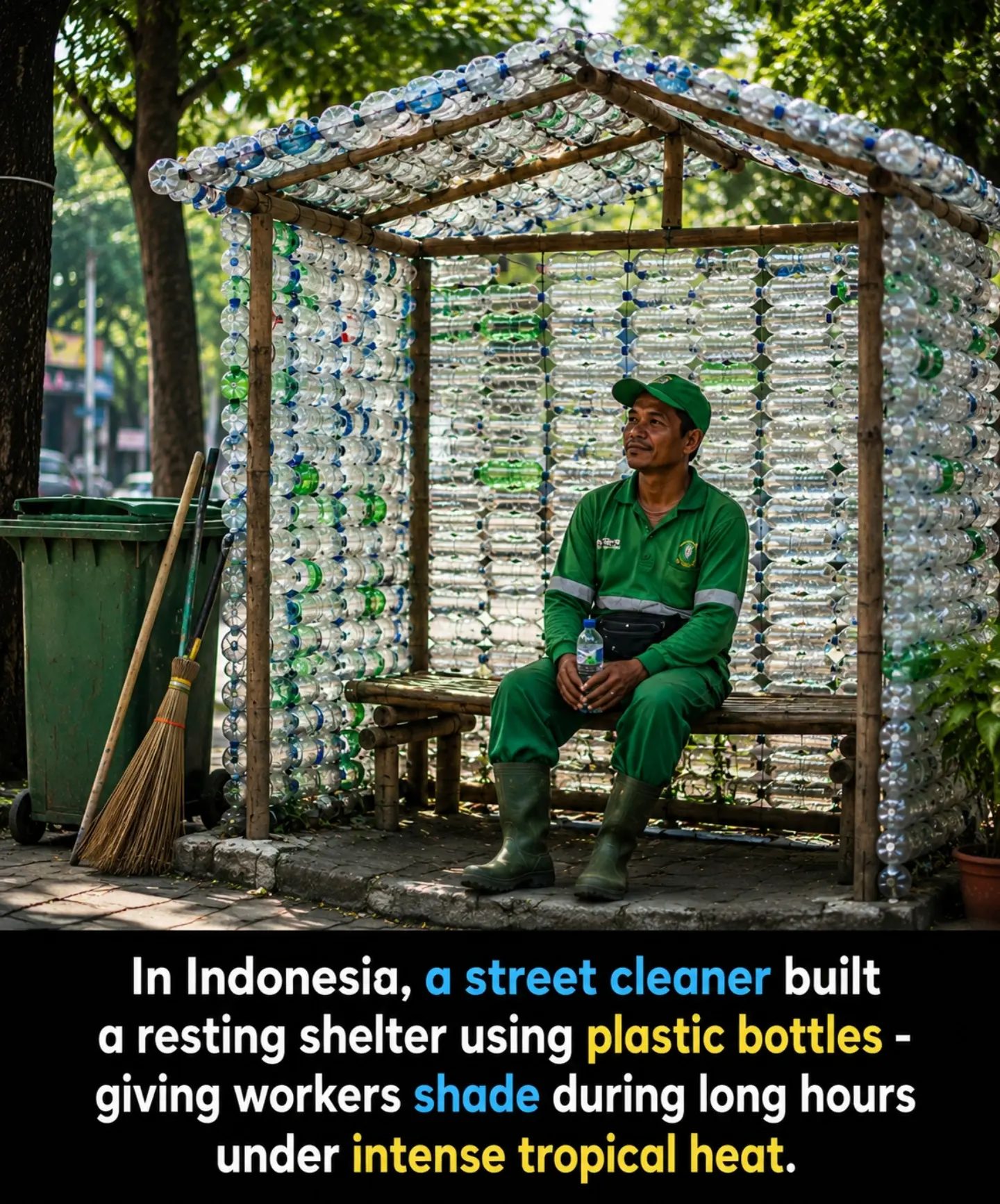
Plastic Bottle Shelter: An Innovative Solution for Worker Respite in Indonesia
In Indonesia, a street cleaner has constructed an ingenious resting shelter using an abundance of plastic bottles. This eco-friendly initiative not only provides relief from the intense tropical heat but also represents a creative approach to recycling and sustainable construction. Let's dive into the details of this unique project.
Context / Why this Matters
Indonesia, with its vibrant and bustling cities, often faces significant challenges in the areas of waste management and environmental sustainability. The streets are littered with plastic waste, which poses both health and environmental risks. This makes the innovative use of plastic bottles for constructing a shelter particularly noteworthy. By repurposing waste materials, the street cleaner has demonstrated a practical solution to a common problem, offering a model that could be replicated in other areas with similar needs.
The tropical heat in Indonesia can be unforgiving, especially for workers who spend long hours outdoors. A simple shelter can make a significant difference in their productivity, comfort, and well-being. This initiative underscores the importance of community-driven projects in enhancing the quality of life for those who work in harsh conditions.
Main Discussion
The Inspiration Behind the Shelter
The idea to build a shelter from plastic bottles is not just a practical solution but also a testament to creativity and problem-solving. The street cleaner, faced with limited resources and the daily challenge of intense heat, decided to repurpose the abundant plastic bottles into a functional and durable shelter. The design offers both practical benefits and a sense of accomplishment, demonstrating how community-driven projects can significantly impact local life.
Construction and Design
The shelter is constructed entirely from plastic bottles, which are often discarded and left to clutter the streets. These bottles are collected, cleaned, and carefully arranged to form the walls and roof of the shelter. The process may involve cutting the bottles to size, sealing them with a waterproof coating, and connecting them with a sturdy frame. The result is a robust structure that can withstand the elements and provide much-needed shade.
Benefits for Workers
The shelter primarily serves as a resting place for workers who spend long hours under the scorching sun. By offering a shaded area, the shelter helps to reduce the risk of heat exhaustion and dehydration. Workers can take breaks to cool down and recharge, which can enhance their productivity and overall well-being. This simple yet effective solution highlights the power of thoughtful design in improving working conditions.
Environmental Impact
The use of plastic bottles for construction has a positive environmental impact. By repurposing waste materials, the project reduces the volume of plastic waste in the environment. This not only helps in keeping the streets clean but also mitigates the environmental risks associated with plastic pollution. The initiative encourages others to think creatively about waste management and sustainable construction.
Practical Tips
If you're inspired to create a similar shelter or repurpose plastic bottles in your community, consider the following steps:
Planning and Design
- Assess Needs: Identify the areas where a shelter would be most beneficial, such as public spaces, work sites, or community centers.
- Gather Materials: Collect clean plastic bottles and other necessary materials like a waterproof coating, adhesive, and a sturdy frame.
- Design the Structure: Sketch out a simple design that maximizes the use of plastic bottles. Ensure the structure is stable and can withstand weather conditions.
Construction
- Prepare Bottles: Clean the bottles thoroughly and remove any labels or caps. Cut them to the required sizes if necessary.
- Build the Frame: Construct a sturdy frame using materials like bamboo, metal, or wood. This frame will support the plastic bottles.
- Attach Bottles: Secure the bottles to the frame using adhesive or other binding materials. Ensure each bottle is tightly sealed to prevent leaks and ensure durability.
Maintenance
- Regular Inspections: Periodically inspect the shelter for any signs of wear and tear. Repair or replace damaged bottles as needed.
- Cleaning: Keep the shelter clean to maintain its aesthetic appeal and functionality. Regular cleaning also helps in preventing the buildup of dirt and grime.
Important Takeaways
The plastic bottle shelter in Indonesia is a shining example of how simple, community-driven initiatives can address multiple challenges. It highlights the importance of sustainable construction and waste management, while also offering practical solutions to improve working conditions. This project serves as a reminder that innovation and creativity can often be found in the most unexpected places, and that even small steps can lead to significant improvements in our environment and communities.
Conclusion
The plastic bottle shelter in Indonesia is more than just a structure; it's a symbol of ingenuity and sustainability. By repurposing plastic waste into a functional and durable shelter, the street cleaner has not only provided relief to hardworking individuals but also contributed to a cleaner, greener environment. This project underscores the power of community initiatives and the potential for creative solutions to address everyday challenges. If you're inspired to make a difference in your community, consider how you can repurpose waste materials and create lasting, positive impacts.
Watch the Reel
Questions readers ask
How did Indonesian street cleaners come up with the idea of building shelters from plastic bottles?
The street cleaners in Indonesia were inspired by the need to find a practical solution for dealing with the large amount of plastic waste in their cities. Thus, using discarded plastic bottles for construction provided a dual benefit: creating a useful shelter and reducing waste.
What are the main benefits of these plastic bottle shelters for the workers?
These shelters offer a much-needed respite from Indonesia's tropical heat, a crucial benefit for outdoor workers. They also provide a sense of community and a place to rest during long working hours.
How are the plastic bottle shelters constructed?
The shelters are built by filling plastic bottles with sand and interlocking them to create sturdy walls. The walls are then covered with a roofing material to provide shade and protection from rain.
How do these shelters address waste management issues in Indonesia?
By repurposing plastic bottles into durable and useful structures, the shelters help to reduce the amount of plastic waste littering the streets. This approach provides a sustainable solution to waste management challenges in Indonesian cities.
Can the plastic bottle shelter design be replicated in other communities?
Yes, the plastic bottle shelter design is highly replicable. Other communities dealing with similar waste management and sustainability issues can follow this model to create their own shelters, benches, and other useful structures.
What materials are typically used to create the roof and other structural elements of the plastic bottle shelters?
The roof is typically made of materials such as corrugated metal or plastic sheets, which provide durability and resistance to the tropical climate. The walls are often reinforced with concrete or mud for added stability.
Are there any additional uses for plastic bottles in this context besides constructing shelters?
Yes, plastic bottles can also be used to create benches, tables, and other outdoor furniture for worker rest areas. This further extends the utility of the plastic bottle recycling initiative and provides additional seating for community gatherings.
Recent articles
Fresh deep dives from the latest Reels we unpacked.




Comments
Be the first to comment.