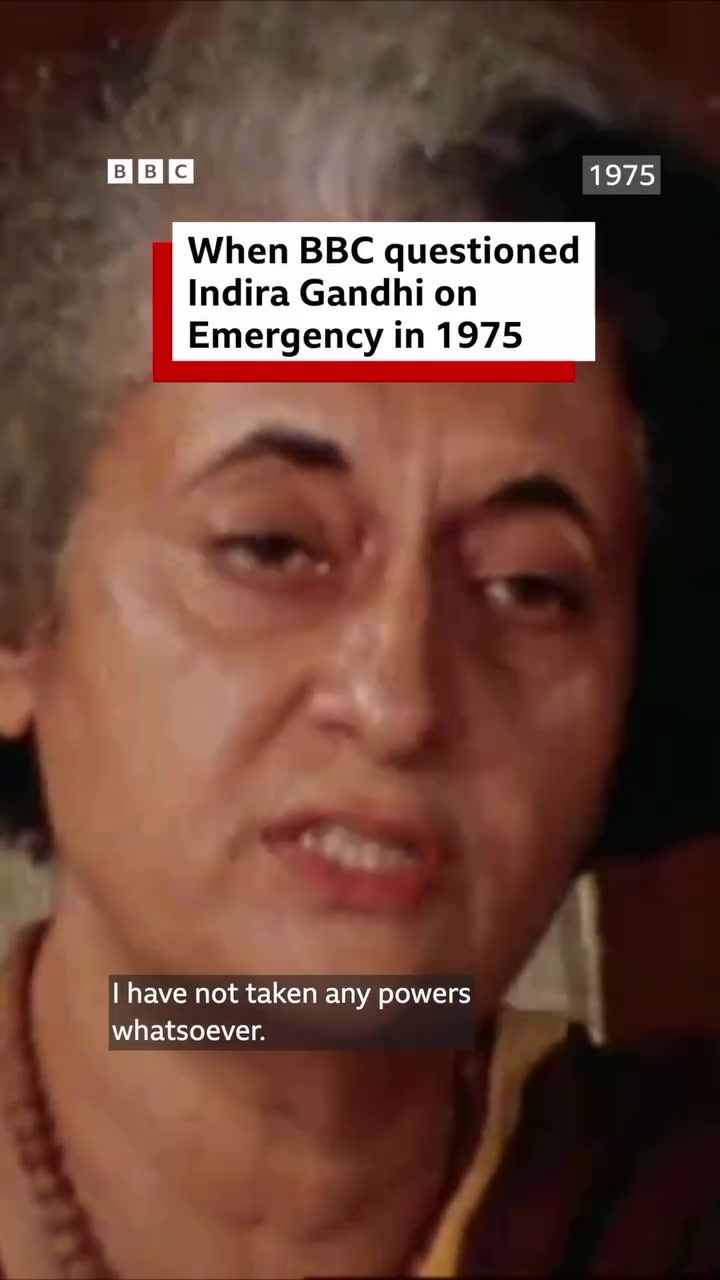
Indira Gandhi's Emergency: An Interview with Paul Saltzman
Midnight on 25 June 1975 marked a pivotal moment in India's history. As the world's largest democracy, India found itself under nationwide emergency measures proclaimed by Prime Minister Indira Gandhi. Civil liberties were suspended, opposition leaders were jailed, the press was muted, and the constitution was transformed into a tool for absolute executive power. This drastic action was met with significant opposition and criticism, both within and outside the country. An interview with journalist Paul Saltzman in September 1975 offered a rare insight into Gandhi’s perspective on this controversial decision.
Why This Matters
The Emergency period in India is a critical chapter in the country's political history. It raises fundamental questions about the balance of power, the role of the executive in a democracy, and the limits of constitutional authority. Understanding Gandhi’s rationale and the context in which these decisions were made provides a deeper appreciation of the complexities and challenges of governing a large, diverse democracy.
The Context of the Emergency
To understand Gandhi's actions, it is essential to delve into the political climate of the early 1970s. India was grappling with numerous challenges, including economic instability, social unrest, and political opposition. The government faced widespread protests and unrest, particularly from groups advocating for anarchy and violence. Gandhi, in her defense, asserted that her actions were not an overreach of power but a necessary measure to safeguard the country's unity and integrity.
The Interview with Paul Saltzman
In the interview, Gandhi reiterated that her government was functioning within the confines of the constitution. She stated, "I have not taken any powers whatsoever. We are functioning absolutely within the Constitution." This assertion was a response to critics who accused her of consolidating power and undermining democratic principles.
Preserving Unity and Integrity
Gandhi emphasized that the primary duty of any government, whether democratic or authoritarian, is to preserve the country's unity and integrity. She argued that the situation demanded extraordinary measures to prevent a collapse of the state. "The first duty of any government is to preserve the country's unity and its integrity," she said. This perspective was rooted in her belief that the opposition parties were planning to destabilize the government and create anarchy.
Criticism and Press Censorship
One of the most controversial aspects of the Emergency was the press censorship. Gandhi acknowledged the suppression of press freedom but justified it as a necessary measure to prevent the spread of misinformation and to maintain public order. She admitted that the lack of criticism and effective opposition was a cause for concern, but she believed that the situation required such measures to stabilize the country.
Legal and Constitutional Changes
Gandhi also addressed the changes made to the constitution, particularly the extension of immunity to the Vice President and the Prime Minister. She explained that this was not to protect anyone from legitimate scrutiny but to safeguard them from harassment and the misuse of litigation for political ends. She emphasized that if a real dictator were in power, they would have simply done away with the parliament. However, she believed that the Emergency measures were justified to prevent a descent into anarchy and to protect the integrity of the democratic process.
Practical Tips for Understanding Political Crises
- Contextualize the Events: Always consider the broader historical and political context when evaluating major government decisions. The Emergency was not an isolated event but a response to a complex set of challenges.
- Assess the Rationale: Understand the rationale behind the actions taken by leaders. Gandhi's defense was that her actions were necessary to preserve the country's unity and integrity.
- Examine the Legal Framework: Look at the legal and constitutional changes made during such periods. Gandhi's actions involved significant alterations to the constitution, which she justified as necessary to prevent anarchy.
- Evaluate the Impact on Civil Liberties: Consider the impact on civil liberties and democratic principles. The Emergency saw widespread suspension of civil liberties, which raised significant concerns about democratic governance.
- Analyze the Role of Media: Examine the role of the media and the impact of press censorship. Gandhi's justification for press censorship was to prevent the spread of misinformation and to maintain public order, but it raised questions about the freedom of expression.
Important Takeaways
The Emergency period in India highlights the delicate balance between preserving national unity and upholding democratic principles. Gandhi's actions, while controversial, were rooted in her belief that they were necessary to prevent the collapse of the state. Her defense in the interview with Paul Saltzman provides insights into the complexities and challenges of governing a large, diverse democracy. The Emergency serves as a reminder of the delicate balance between power and accountability in democratic governance.
Conclusion
The Emergency declared by Indira Gandhi in 1975 was a defining moment in India's political history. It raised fundamental questions about the balance of power, the role of the executive, and the limits of constitutional authority. Gandhi's interview with Paul Saltzman offered a rare glimpse into her perspective and the rationale behind her actions. Understanding this period not only provides a deeper appreciation of India's democratic journey but also offers valuable lessons on governance and the challenges of balancing power and accountability in a democratic system.
Watch the Reel
Questions readers ask
What prompted Indira Gandhi to declare a state of emergency in India in 1975?
Indira Gandhi declared a state of emergency in response to widespread economic, social, and political unrest. She cited the need to maintain national unity and stability as the primary reason for her drastic actions.
How did the 1975 emergency impact civil liberties in India?
During the emergency, civil liberties were significantly suspended. This included the arrest of opposition leaders, censorship of the press, and limitations on freedom of speech and assembly.
What was the significance of the interview with Paul Saltzman in September 1975?
The interview provided a rare glimpse into Indira Gandhi's perspective on the emergency. It offered a platform for her to justify her actions and defend her decisions amidst significant criticism.
How was the constitution affected during the emergency period?
The constitution was effectively transformed into a tool for absolute executive power. This allowed Gandhi to govern with unprecedented authority, bypassing many democratic checks and balances.
What was the public and international reaction to the 1975 Indian emergency?
The emergency was met with significant opposition and criticism both within India and internationally. Many viewed the suspension of civil liberties and consolidation of power as a threat to democratic principles.
What were some of the long-term impacts of the 1975 emergency on Indian politics?
The emergency period left a lasting mark on Indian politics, influencing future political strategies and public sentiment towards strong central leadership. It also led to a heightened awareness of civil liberties and democratic processes among the populace.
Related deep dives
Similar reads based on topic and creator.

Recent articles
Fresh deep dives from the latest Reels we unpacked.




Comments
Be the first to comment.