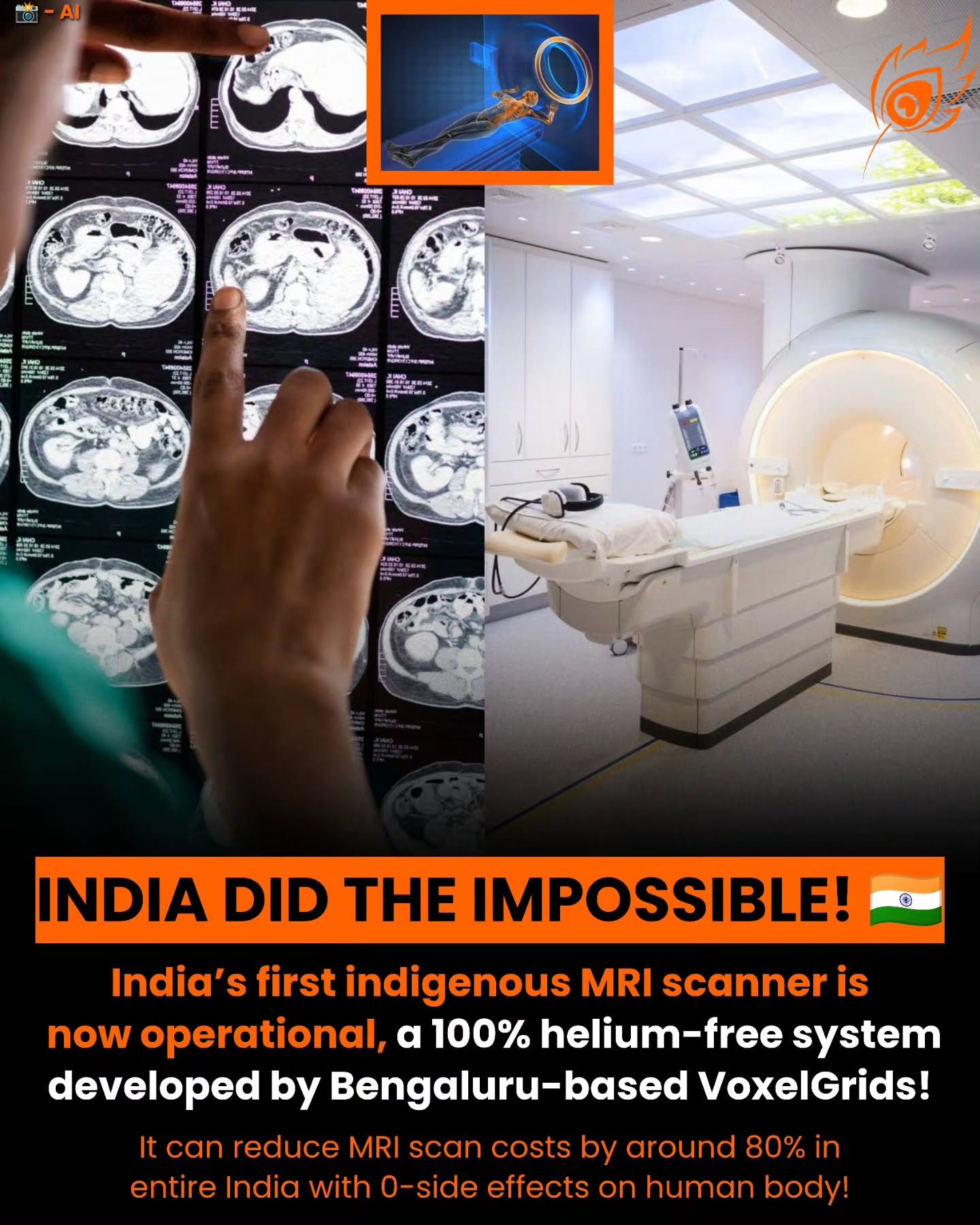
MRI Scanner Innovation
India's medical technology landscape has recently seen a groundbreaking development with the introduction of the first indigenous 1.5T MRI scanner. Developed by Bengaluru-based VoxelGrids, this innovative system is not only a testament to India's growing capabilities in medical technology but also a significant milestone in making advanced diagnostics more accessible and affordable.
Why this matters
VoxelGrids' new MRI scanner is more than just a piece of advanced technology; it represents a shift in how medical diagnostics can be conducted in India. By eliminating the need for liquid helium and reducing costs, this innovation can provide better healthcare outcomes, particularly in underserved areas. Understanding the implications of this development and its potential impact on the healthcare sector is crucial for appreciating the broader significance of this medical breakthrough.
The significance of a helium-free system
One of the most notable features of VoxelGrids' MRI scanner is its helium-free design. Traditionally, MRI scanners rely on liquid helium to cool their superconducting magnets, which can be expensive and logistically challenging to maintain. The new scanner eliminates this dependency, making it more cost-effective and easier to operate.
Cost Efficiency
The helium-free design significantly reduces operational costs. Liquid helium is a finite resource and its supply can be unpredictable, leading to fluctuations in pricing. By removing this dependency, VoxelGrids' scanner can offer a more stable and predictable cost structure. This is particularly important for healthcare providers in India, where cost management is a critical factor in delivering accessible care.
Operational Efficiency
The absence of liquid helium also simplifies the operational requirements of the scanner. Maintenance and upkeep become less complex, reducing the need for specialized infrastructure and personnel. This can be a game-changer for smaller healthcare facilities and rural clinics, where resources are often limited.
Accessibility and affordability
The scanner is designed to be around 40% cheaper than comparable imported systems, making it a more viable option for many healthcare providers in India. This reduction in cost can have a domino effect, leading to more affordable diagnostic services for patients.
Cost Reduction
With the potential to reduce MRI scan costs by around 80% in India, VoxelGrids' scanner can make advanced diagnostic services more affordable. This is a significant step towards bridging the gap in healthcare accessibility, particularly for those in lower-income regions.
Energy Efficiency
Energy efficiency is another key feature of this scanner. It is designed to be more energy-efficient, which can further reduce operational costs. In a country where energy resources are often strained, this feature can be particularly beneficial for healthcare facilities looking to manage their energy consumption more effectively.
Potential Impact on Healthcare
The introduction of this indigenous MRI scanner has the potential to revolutionize healthcare in India. By making advanced diagnostic services more accessible, it can lead to earlier detection and treatment of diseases, ultimately improving healthcare outcomes.
Improved Diagnostics
The scanner's advanced technology and energy-efficiency can provide more accurate and reliable diagnostic results. This can lead to better treatment plans and improved patient outcomes. With the scanner being operational at the Chandrapur Cancer Care Foundation in Maharashtra, patients in the region can benefit from state-of-the-art diagnostic services.
Local Innovation
This development also underscores the growing capabilities of India's medical technology sector. By developing and manufacturing advanced medical equipment locally, India can reduce its dependency on imports and foster a more self-sustaining healthcare ecosystem. This can lead to more innovation and job creation in the sector, further boosting economic growth.
Practical tips
For Healthcare Providers
- Evaluate the Cost Savings: Healthcare providers should carefully evaluate the cost savings potential of the new scanner, particularly in terms of reduced helium maintenance and energy consumption. This can help in making an informed decision about adopting the technology.
- Assess Operational Needs: Consider the operational requirements and whether your facility has the necessary infrastructure to support the new scanner. The helium-free design simplifies operations but it's still important to ensure compatibility and efficiency.
- Training and Support: Ensure that your staff is adequately trained to operate and maintain the new scanner. VoxelGrids, or other providers, may offer training and support services that can be beneficial.
For Patients
- Inquire About Availability: If you or a loved one needs an MRI scan, inquire about the availability of the new scanner at your healthcare provider. This can help you take advantage of the cost and diagnostic benefits offered by the scanner.
- Understand the Benefits: Familiarize yourself with the benefits of the new scanner, including its energy efficiency and advanced diagnostic capabilities. This can help you understand why the new scanner might be a better option for your diagnostic needs.
Important takeaways
The Future of Medical Technology in India
The introduction of VoxelGrids' MRI scanner marks a significant milestone in India's medical technology sector. It highlights the country's growing capabilities in developing advanced medical equipment and underscores the importance of innovation in improving healthcare access and affordability.
The Role of Innovation in Healthcare
Innovation plays a crucial role in healthcare, driving improvements in diagnostic capabilities, treatment options, and patient outcomes. The new scanner exemplifies how technological advancements can make a significant impact on the healthcare sector, particularly in areas where resources are limited.
Local Innovation and Economic Growth
India's growing capabilities in developing advanced medical equipment can lead to more innovation and job creation in the sector. By fostering a more self-sustaining healthcare ecosystem, the country can reduce its dependency on imports and boost economic growth.
The Significance of Accessible Healthcare
Accessible and affordable healthcare is a fundamental right, and technological advancements can play a pivotal role in delivering on this promise. The new scanner's potential to reduce costs and improve diagnostic capabilities can lead to better healthcare outcomes, particularly for those in underserved areas.
Conclusion
The introduction of VoxelGrids' 1.5T MRI scanner is a testament to India's growing capabilities in medical technology. By eliminating the need for liquid helium, this innovative system can make advanced diagnostics more accessible and affordable, ultimately improving healthcare outcomes. This development underscores the importance of innovation in healthcare and highlights the significant impact that local innovation can have on the sector and the economy. As India continues to invest in and foster local innovation, we can expect to see more groundbreaking developments that can transform the country's healthcare ecosystem.
Watch the Reel
Questions readers ask
What makes the VoxelGrids MRI scanner unique in the Indian medical technology landscape?
The VoxelGrids MRI scanner is unique because it is India's first indigenous 1.5T MRI scanner that operates without the need for liquid helium. This makes it a significant advancement in making MRI diagnostics more accessible and affordable, particularly in rural and underserved areas of India.
How does the elimination of liquid helium benefit MRI diagnostics in India?
By eliminating the need for liquid helium, the VoxelGrids MRI scanner reduces operational costs and maintenance complexities. This makes it easier to operate and more cost-effective, which can lead to better healthcare outcomes, particularly in regions where resources are limited.
What are the potential implications of the VoxelGrids MRI scanner for medical diagnostics in India?
The VoxelGrids MRI scanner can significantly improve access to advanced diagnostics in India. Its affordability and reduced maintenance requirements can lead to a wider deployment of MRI services, enabling more people to receive timely and accurate medical diagnoses, especially in underserved areas.
Why is the development of the VoxelGrids MRI scanner significant for Bengaluru and India?
The development of the VoxelGrids MRI scanner in Bengaluru highlights India's growing capabilities in medical technology innovation. It demonstrates India's potential to lead in developing advanced and affordable medical solutions, which can be a model for other countries facing similar challenges in healthcare access and affordability.
How can the VoxelGrids MRI scanner benefit rural and remote areas in India?
The VoxelGrids MRI scanner's design, which eliminates the need for liquid helium, allows it to be more easily deployed in rural and remote areas. This can bridge the gap in medical diagnostics between urban and rural healthcare services, ensuring that people in remote areas have access to advanced diagnostic tools and better healthcare outcomes.
What are the cost benefits of using the VoxelGrids helium-free MRI scanner?
The VoxelGrids MRI scanner reduces operational costs by eliminating the need for liquid helium, which is expensive and requires complex handling and storage. This cost reduction can make MRI scans more affordable for patients and healthcare providers, leading to more frequent and earlier diagnoses, which can improve treatment outcomes.
Related deep dives
Similar reads based on topic and creator.




Recent articles
Fresh deep dives from the latest Reels we unpacked.




Comments
Be the first to comment.