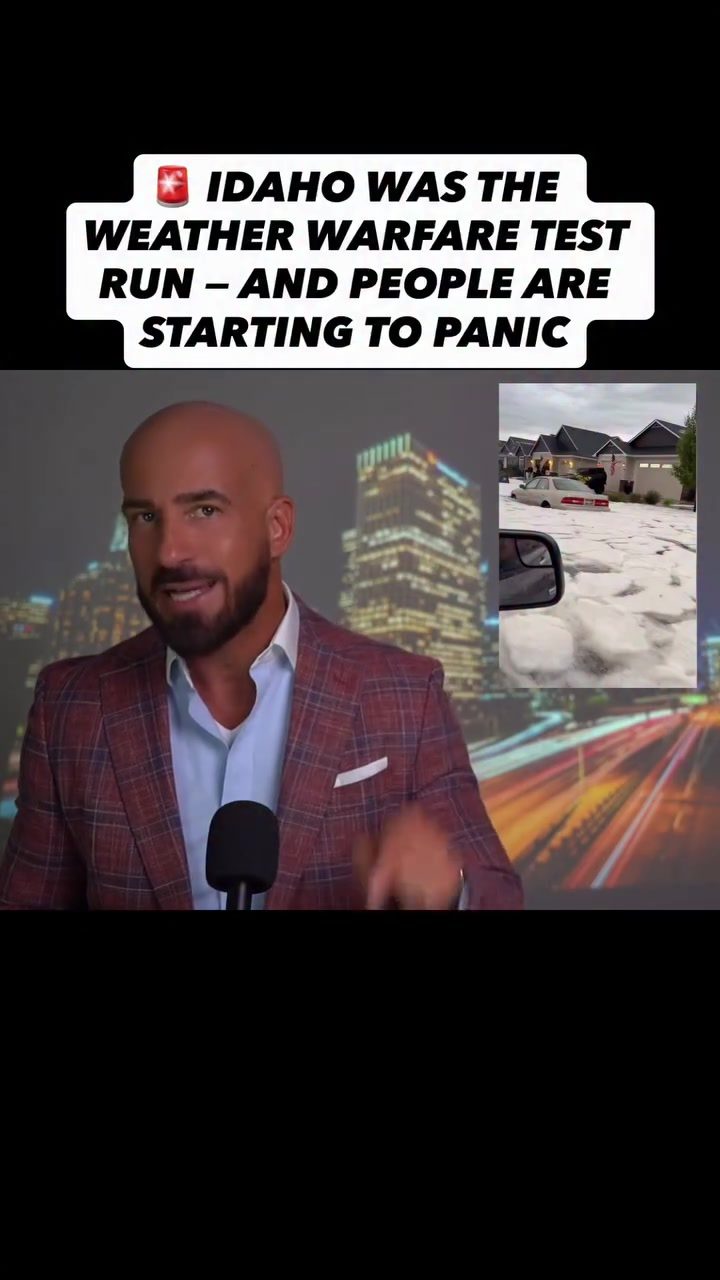
Weather Warfare Conspiracy
Weather patterns have become increasingly erratic and unpredictable in recent years. Record heat, historic wildfires, sudden floods, and droughts have left many wondering if nature alone is responsible. Some people, however, believe that something more sinister is at play: weather warfare. This idea has gained traction, particularly after an incident in Idaho.
One narrative suggests Idaho was a test site for weather manipulation. The footage from this event spread widely, prompting many to question the true nature of weather patterns around the globe. The incident in Idaho raised eyebrows, as it seemed less like a freak weather event and more like a coordinated demonstration of control over natural phenomena.
Why This Matters
The implications of weather warfare are profound. If certain entities possess the technology to alter weather patterns, it would give them unprecedented power. They could decide where rain falls, which regions receive relief, and which suffer drought. Storms could be weaponized, turning natural disasters into tools for devastation. This capability would shift the balance of power on a global scale, impacting everything from agriculture to conflict resolution.
Some people argue that recent environmental changes are not just random anomalies but part of a deliberate strategy. They point to increasing discussions about modifying the weather, which have shifted from closed-door meetings to public forums. This shift suggests that what was once laughable—weather modification—is now a legitimate concern. As public discussions evolve, the public can't help but question the nature of recent weather events.
The Idaho Incident
The incident in Idaho is often cited as a turning point in public perception. Many believe that the Idaho event was not a natural disaster but a demonstration of weather control technology. The footage from this event showed unusual weather patterns that defied conventional explanations. It seemed to many that they had glimpsed something they weren’t supposed to see—a test run of a futuristic weapon.
The conversation around weather modification has evolved significantly. For years, any mention of controlling the weather was dismissed. However, as technology advances, the idea has gained credibility. Now, discussions are happening in the open, focusing not on the feasibility but on the ethical implications of such control.
The Impact on Society
The ability to control the weather would profoundly impact society. Agriculture, energy production, and water distribution are all influenced by weather patterns. If these elements can be controlled, then the entities with this capability would wield immense power. Food, energy, and water supply could be manipulated, affecting global stability and security.
Practical Tips
For those interested in staying informed about weather manipulation and its implications, there are several steps you can take:
- Stay Informed: Follow reputable news sources and scientific journals for the latest developments in weather modification research.
- Engage in Public Discussions: Participate in discussions about the ethical implications of weather control. This can help shape public policy and ensure that any future developments are transparent and accountable.
- Support Independent Research: Encourage independent research and analysis of weather patterns. This can help provide unbiased information and counter any misinformation or conspiracy theories.
- Stay Skeptical: While it’s important to be aware of potential threats, maintain a critical eye. Ensure that any claims about weather control are backed by credible evidence and scientific research.
Important Takeaways
Weather manipulation, if real, would have far-reaching consequences. It could alter the balance of power, affecting everything from agriculture to global security. The Idaho incident highlighted the potential for such control, sparking a debate about the ethical and practical implications. As discussions continue to unfold, it's crucial to stay informed and engaged.
For those deeply interested in this topic, the idea of controlling the weather might seem like science fiction. However, as technology advances, the lines between science fiction and reality continue to blur. Whether or not weather warfare becomes a reality, the conversation around it is one worth having. It encourages us to think critically about the ethical use of technology and the potential consequences of unchecked power.
Conclusion
Weather warfare is a complex and controversial topic. The Idaho incident has sparked a global conversation about the potential for controlling the weather and the implications of such technology. As discussions continue, it’s essential to stay informed and engaged, ensuring that any future developments are transparent and accountable. The world is watching, and the potential for weather control could change everything.
Watch the Reel
Questions readers ask
What exactly happened in Idaho that sparked weather manipulation theories?
In Idaho, a peculiar weather event was captured on video, which some believe to be a demonstration of weather control technology. The footage showed sudden and dramatic changes in weather patterns, unlike typical natural occurrences, which led to speculation about potential manipulation.
What are some signs that might indicate weather manipulation?
Signs of weather manipulation could include sudden and abrupt changes in weather patterns, such as rapid shifts in temperature, unexpected storms, or unusually intense weather events that seem to defy natural explanations. Another indicator might be unusual weather patterns confined to specific areas, suggesting targeted manipulation.
Who might have the capability to control the weather, and what are the potential implications?
Several nations and organizations are rumored to possess or develop weather control technologies, including the United States, China, and Russia. If true, this capability could shift global power dynamics, potentially turning natural disasters into strategic tools and altering the course of conflicts or geopolitical strategies. However, publicly, there is no confirmation of this capability.
How does the public perceive the idea of weather warfare, and why is it controversial?
The public perception of weather warfare is a mix of skepticism and intrigue. While some believe it is a viable explanation for recent extreme weather events, others view it as a conspiracy theory. The controversy lies in the lack of concrete evidence and the ethical implications of manipulating weather, potentially causing harm to innocent populations.
What regions are most likely to be tested for weather control, and why?
Regions with sparse populations, remote locations, or areas already experiencing extreme weather events, such as Idaho, may be more likely to be test sites for weather control. These locations offer a lower risk of immediate public backlash and provide a controlled environment for observing the effects of weather manipulation without immediate international scrutiny.
What are the latest developments in the debate over weather warfare?
Recent developments in the debate include increased scrutiny of weather events, such as the Idaho incident, and growing speculation about the motivations behind alleged weather manipulation. Advances in technology, such as high-frequency radio waves and atmospheric aerosols, have also fueled discussions about the potential for weather control, even though these technologies are not universally recognized as effective for weather control.
How are scientists and experts responding to the idea of climate control technology?
Experts and scientists generally remain cautious about the idea of climate control technology, citing the complexity of weather patterns and the potential unintended consequences of intervention. While there are ongoing studies in atmospheric sciences, the consensus is that current technology is not sophisticated enough to fully control the weather, and efforts should focus on understanding and mitigating natural weather events.
Recent articles
Fresh deep dives from the latest Reels we unpacked.




Comments
Be the first to comment.