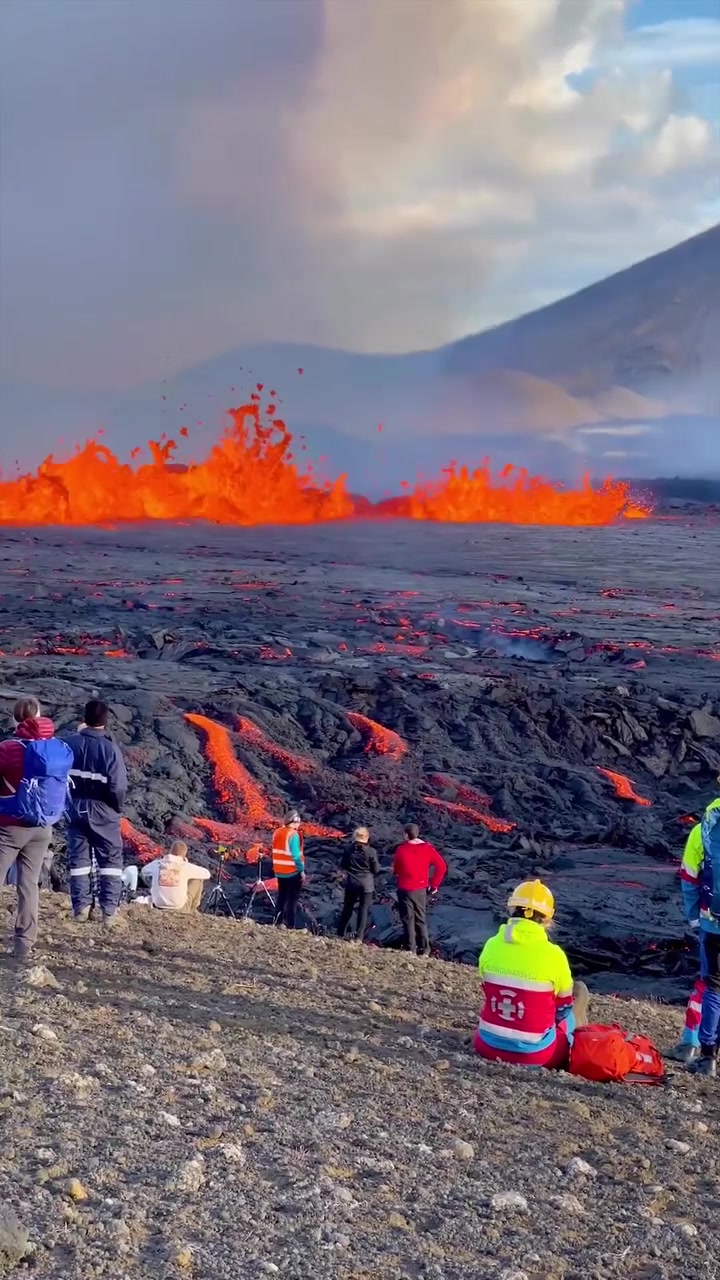
In Iceland, a breathtaking sight unfolds. Glaciers and ash clouds are transposed by molten lava as a volcanic eruption lights up the night, complete with visitors observing in safe proximity. The explosion of volcanic energy is a vivid reminder of the Earth's dynamic nature.
A Natural Spectacle
Volcanic eruptions are geologic events where magma, rock fragments, ash, and gases escape from a volcano's vent. Magma, molten rock that forms beneath the surface, rises and expands beneath the ground. When the pressure becomes too much, an eruption occurs, releasing the magma and creating a display of smoke, ash, and molten debris. Molten lava from Iceland's volcanic eruption is an explosive experience that is both perilous and captivating. Volcanic eruptions in Iceland often occur in an area called the Mid-Atlantic Ridge, where the Eurasian and North American tectonic plates separate, creating openings for magma to reach the surface. The earth there is young, thin, and hot, facilitating this geological process.
Man and Nature in Dialogue
The volcanic eruption highlights Iceland's position as a volcanic hotspot, but it also presents an opportunity for geologists and curious tourists to study and appreciate. Iceland's volcanoes are not only geological attractions but significant cultural markers. Iceland has over 130 volcanic mountains that towers over 100 meters (330 feet) in height, providing the over ten million tourists that visit each year with a once in a lifetime experience. Its remote location, combined with its unique geological formations, makes it a prime destination for both local and foreign scientists and visitors to get up close, but safely, to the volcanoes.
The Dynamic World of Volcanoes
The Power of Volcanic Eruptions
These geological events are no stranger to Iceland, an island nation with more than 130 volcanoes, the most recent eruption occurring in 2021. Volcanic eruptions in Iceland are often accompanied by earthquakes and other seismic activity, as the land shifts and settles. In a matter of seconds, volcanic eruptions release toxic gases that become deadly and form massive plumes of smoke and ash that rise to over 10,000 meters (33,0000 feet) into the atmosphere. Icelandic scientists believe that the lava flows observed at this eruption may have traveled over 4.9 miles (8 kilometers) from the eruption site.
The Hike to Observation
To get to the observation site, Icelandic scientists and visitors have to cover miles of dangerous terrain in full geothermal gear before arriving at a safe area to capture images of Iceland's volcanic eruption. The process requires dedicated preparation and expertise to keep the scientists and visitors safe. The people observing the eruption are a mix of geologists and tourists who have the best vantage point observing from a safe distance. The lava flow and smoke plumes were accompanied by a roaring noise that could be heard clearly.
Emissions and Ashfall
When a volcano erupts, it can release a mix of lava, ash, and toxic gases. The ashfall is one of the more sinister consequences of volcanic eruptions. When harmful gases combine with water vapor and fine ash, it creates a hazardous cloud of hydrofluoric and sulfuric acid that can travel miles on the wind. People who are caught in the ashfall often suffer respiratory issues due to ash getting into the sinus, mouth, eyes, ears and nose.
How to Witness Iceland's Volcanic Eruptions
Stay Safe
The explorers are wearing special gear to capture the eruption. When observing a volcanic eruption, individuals in close proximity should always wear protective clothing. Grasp the terrain: Stay away from loose or unstable surfaces, as they can shift and become dangerous in an instant. Always follow guided trails. Personal Protection: Wear safety gear, including a helmet and safety vest. You should also bring a hard hat, safety vest, and protective glasses to protect yourself from falling debris. Preparedness: Carry a whistle, first-aid kit, and flashlight on you at all times. Always check the weather and the ground conditions before proceeding. Respect the limits: Do not cross safety lines or barriers. Always stay in the designated zone for visitors and listen to the guidance of experts.
Watch the Reel
Questions readers ask
What exactly causes a volcanic eruption in Iceland?
Volcanic eruptions in Iceland are primarily caused by the separation of the Eurasian and North American tectonic plates along the Mid-Atlantic Ridge. This creates openings for magma to reach the surface, leading to the release of molten rock, ash, and gases.
How dangerous is it to observe a volcanic eruption in Iceland?
Observing a volcanic eruption in Iceland can be both safe and dangerous, depending on the precautions taken. Visitors and scientists often wear full geothermal gear and follow specific paths to ensure safety. However, the terrain is hazardous, and the eruption itself releases toxic gases and ash, so proper preparation and expertise are crucial.
What makes Iceland a unique place for volcanic activity?
Iceland's unique geological makeup, including its position on the Mid-Atlantic Ridge and its abundance of over 130 volcanic mountains, makes it a prime location for volcanic activity. The country's remote location and thin, hot earth facilitate frequent eruptions, offering both scientific and tourist opportunities.
What kind of gases are released during a volcanic eruption, and why are they harmful?
Volcanic eruptions release a mix of toxic gases, including sulfur dioxide, hydrogen sulfide, and carbon dioxide. These gases can be lethal when inhaled, and they also contribute to the formation of harmful ash plumes that can rise high into the atmosphere, posing a threat to both human health and the environment.
How far can lava flows travel during an eruption in Iceland?
The lava flows observed during recent eruptions in Iceland have been known to travel significant distances, sometimes over 4.9 miles (8 kilometers) from the eruption site. This highlights the immense power and reach of volcanic activity in the region.
What kind of preparation is needed for scientists and tourists to safely observe a volcanic eruption in Iceland?
To safely observe a volcanic eruption, scientists and tourists must cover miles of dangerous terrain in full geothermal gear. This process requires dedicated preparation, including proper clothing, knowledge of safe routes, and often the accompaniment of experienced guides to ensure safety.
Related deep dives
Similar reads based on topic and creator.



Recent articles
Fresh deep dives from the latest Reels we unpacked.


Comments
Be the first to comment.