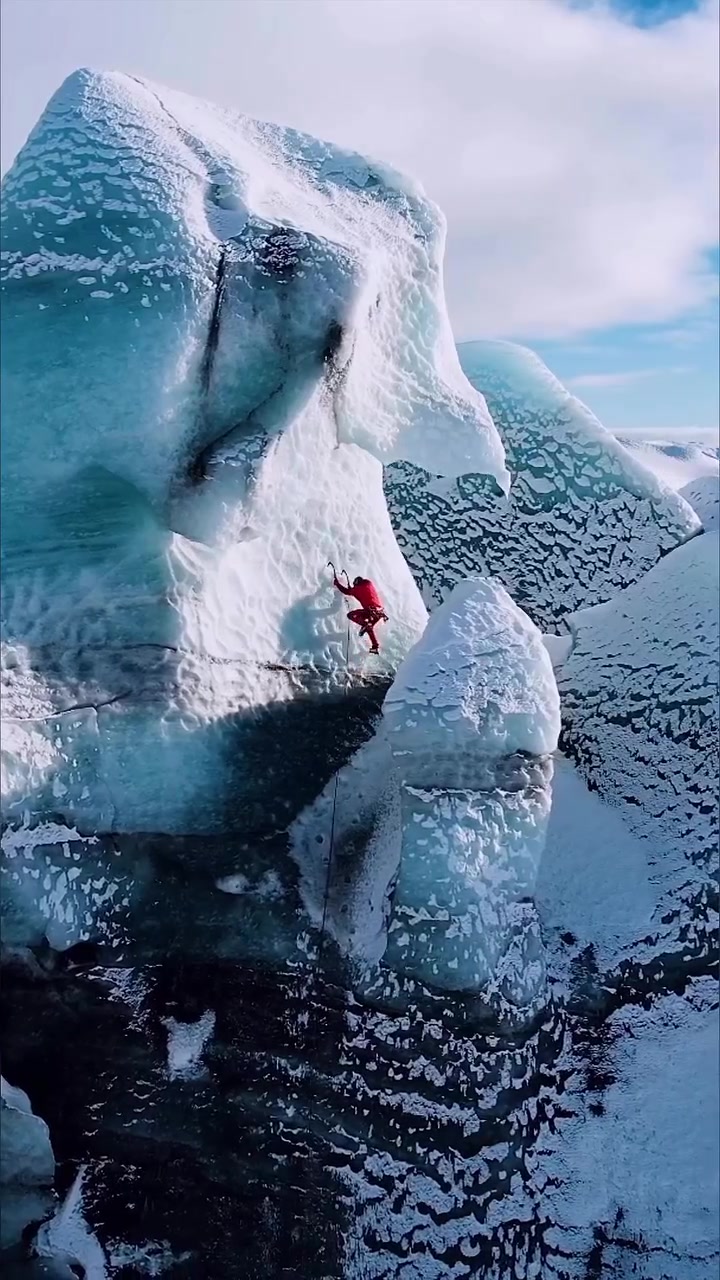
The free solo climber, dressed in a bright red suit to stand out against the frozen blue, ascends a multi-story, jagged ice spire. They move with the same calm rhythm and precision as climbers navigating rock, but the tools and risks are very different. Ice climbing requires dexterity and mental determination. It is climbing on ice with crampons, ice axes, ice screws, and ropes. Ice climbing matters to people who seek extreme adrenaline. It is not for the faint of heart. Ice climbing is like combined skiing and rock climbing, but with more danger.
The fundamental challenge
Ice climbing is an extreme sport that involves ascending frozen waterfalls, cliffs, and other ice formations using ice axes and crampons. Climbers wear a harness and are secured by a rope. Ice climbing isn’t confined to a single season. It can be done in sunny weather during winter. The sport's appeal lies in the combination of physical and mental challenges. Like bouldering or ski mountaineering climbers are almost always at risk of falling and sustaining serious injuries. Ice climbing differs from other types of climbing because it often takes place in harsh, remote environments. The terrain isn't fixed. This poses unique risks, including the danger of falling into icy water.
The Dangers of Ice Climbing
Ice climbing is not for the faint-hearted. While rewarding, the sport carries significant risks, including frostbite and avalanches, falling ice, and hypothermia. It is performed in cold, remote, and sometimes windy weather. Ice climbing requires constant physical exertion, which can lead to exhaustion. When the sun shines, lighting conditions make it hard to see, placing climbers in danger. The risk of fall-related, injuries can increase with perceptual and psychomotor impairments. The danger of falling into icy water makes the sport a challenge.
Pick your axis
Ice axes are essential tools in ice climbing. Climbers use them to chop handholds and footholds into the ice. Ice axes have spikes at the end for better grip. Pick axes are considered more versatile, two-point, and easier to use than straight axes. Ice axes come in many sizes. They come in lengths from 50 to 75 cm for beginners. Experienced climbers choose the height based on the steepness of the climb and their body size.
Grip to glory
Rising to the top needs grips. Climbers use crampons, which are metal spikes attached to their boots. They provide traction on slick ice surfaces and keep the climber secure. A helmet protects the head from falling ice or hard falls. Climbers also carry ice screws, used to secure ropes and belay as they ascend.
Balancing the ascent
Climbing the ice takes a lot of strength, balance, and endurance. Climbers must constantly manage their balance as they chop into the ice. As climbers ascend, the ice can get steeper, making it harder to maintain balance. Mental endurance is crucial. Climbers must stay calm and focused to manage the risks and challenges of ice climbing. Equally critical is physical strength. Climbers must have strong arms, legs, and core muscles to hold themselves up and chop into the ice. Ice climbing can also be hard on the body. Climbers must stay hydrated and fueled. They should have a reliable hydration system. Nutrition is essential.
Redding the risks
Ice climbing is dangerous, especially for beginners. Climbers must stay hydrated and fueled. Climbers should take adequate food and drink. They should have a reliable hydration system. Nutrition is essential. Climbers must be aware of the weather. Climbers must check the weather forecast before going out. Climbing in poor weather conditions can be dangerous. Climbers should also be aware of the risk of avalanches, especially in mountainous areas. Climbers should always climb with a partner. Climbers should also check the route and weather forecast before heading out. Ice climbing with a partner increases safety. Staying calm and focused helps manage the risks and challenges of ice climbing.
Lock your Knot
Placing the knot correctly is crucial. Climbers typically use the figure eight knot. Knots secure to the harness and carabiner. A knotted rope can slip and cause a fall. Climbers should constantly pay attention to their knots. Ice climbing is a challenging sport and should only be for the most experienced. Ice climbers should also be aware of the quality of ice. They control their climbs by the quality of ice. Safe climbing makes them happy.
Ready to Climb
Before you take the route, make sure you're physically and mentally prepared. Ice climbing requires strength, endurance, and a cool head. Building strong arms, legs, and core muscles will help. Start with shorter climbs and gradually work your way up to more challenging routes.
Safety First: Train, Gear Up, and Plan
Climbers need to know how to climb safely. S
- Safety Check: Always double-check your gear. Wear a helmet, ice axes, crampons, and a harness.
- Know your route: Be aware of the route's difficulty, weather conditions, and potential hazards.
- Stay Hydrated and Fueled: Drink plenty of water and eat high-energy snacks to keep your energy levels up. Stepping into the world of ice climbing is not just about the thrill of the ascent.
Watch the Reel
Questions readers ask
What exactly makes ice climbing different from other types of climbing like rock climbing or mountaineering?
Ice climbing is unique because it involves ascending frozen waterfalls and cliffs using specialized tools like crampons and ice axes. Unlike rock climbing, where the terrain is fixed, ice climbing often takes place in harsh, remote environments where the ice can shift or melt, posing unique risks. The constant physical exertion, combined with the cold and potential for falling into icy water, makes it particularly challenging and dangerous.
What kind of physical and mental preparation do I need before attempting ice climbing?
Ice climbing requires a high level of physical strength and endurance, particularly in the arms, legs, and core. Mental preparation is equally important. Climbers need to stay calm and focused to manage the risks and challenges, including the constant threat of falling and the harsh environmental conditions.
How important are the tools like ice axes and crampons in ice climbing, and do they come in different types and sizes?
Ice axes and crampons are essential for ice climbing. They allow climbers to chop handholds and footholds into the ice and provide traction on slick surfaces. Ice axes come in different lengths, typically ranging from 50 to 75 cm, and crampons can vary in design and spike length. Experienced climbers choose their tools based on the steepness of the climb and their body size.
What are some of the specific dangers associated with ice climbing, and how can climbers mitigate these risks?
Ice climbing carries significant risks, including frostbite, avalanches, falling ice, and hypothermia. Climbers must be aware of these dangers and take precautions, such as wearing appropriate protective gear, staying hydrated, and being mindful of weather conditions. Climbing with a partner and using a rope and harness can also help mitigate some of the risks.
Can beginners try ice climbing, and what kind of training or experience do they need before starting?
Ice climbing is not recommended for beginners due to its high level of risk and the specialized skills required. Those interested in trying ice climbing should first gain experience in other types of climbing, such as rock climbing or mountaineering, and then seek out professional instruction and guided climbs. It's crucial to build a solid foundation of physical strength, balance, and mental endurance before attempting ice climbing.
What does the ascent of a frozen spire look like for an ice climber? What techniques and equipment are used?
Ascending a frozen spire involves using ice axes to chop handholds and footholds into the ice, while crampons provide traction. Climbers wear a harness and are secured by a rope, which helps to manage the risks of falling. The ascent requires constant physical exertion and mental focus to maintain balance and manage the risks associated with the climb.
What is the typical duration of an ice climbing expedition, and what kind of physical demands does it place on the climber?
The duration of an ice climbing expedition can vary greatly depending on the route and conditions, but it often takes several hours to a full day. The physical demands are significant, requiring strong arms, legs, and core muscles to hold oneself up and chop into the ice. Climbers must also manage their balance and endurance as they ascend, and stay hydrated to prevent exhaustion.
Related deep dives
Similar reads based on topic and creator.


Recent articles
Fresh deep dives from the latest Reels we unpacked.


Comments
Be the first to comment.