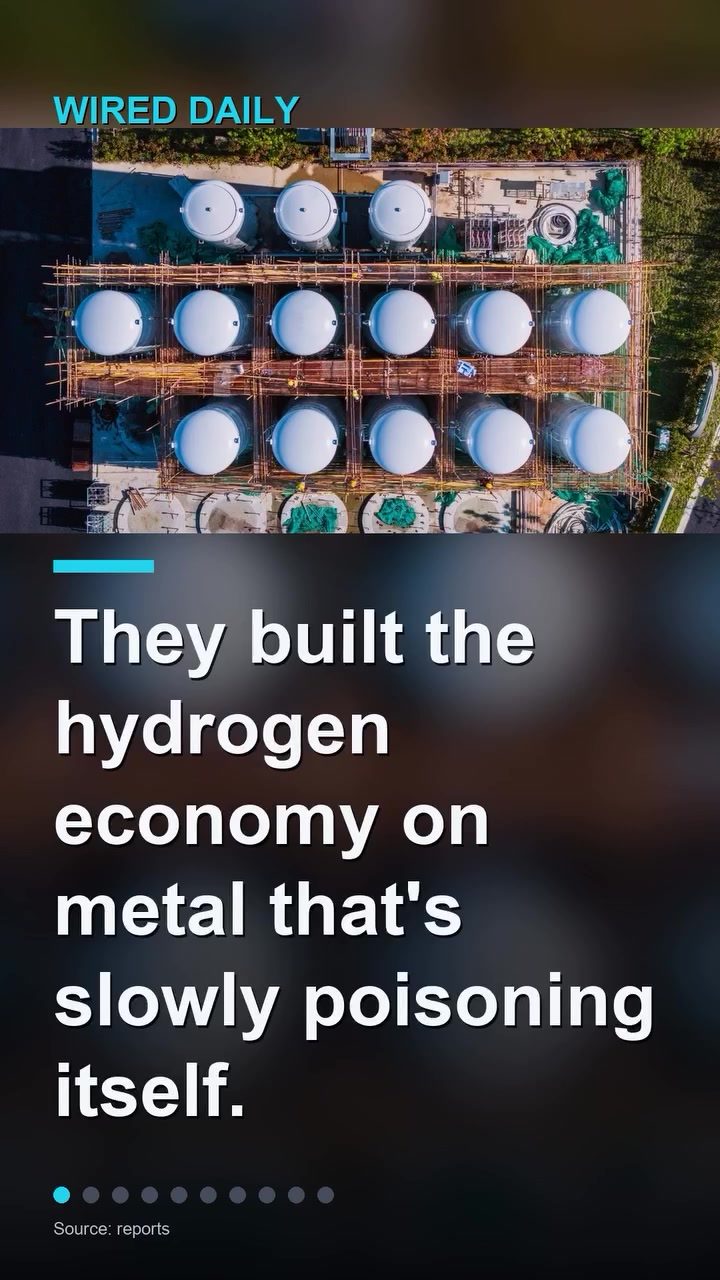
The hydrogen economy, seen as a promising pathway to clean energy, faces significant challenges rooted in the materials used for hydrogen transport and storage. The metal pipes and tanks integral to this infrastructure are degrading, raising concerns about the viability of hydrogen as a fuel source.
Context / Why This Matters
The hydrogen economy is built on the promise of a zero-emission fuel that can power everything from vehicles to industrial processes. However, recent findings have shed light on a critical issue: the materials currently used in hydrogen infrastructure are not up to the task. This problem is not just theoretical but has real-world implications, as companies have already experienced failures in hydrogen transport and storage.
Material Degradation
The heart of the problem lies in the materials used to construct the pipes and tanks that transport and store hydrogen. Hydrogen molecules are incredibly small and can infiltrate steel and nickel alloys, which are commonly used in these applications. This infiltration causes the materials to become brittle, leading to structural weakness and potential failure.
This issue is exacerbated at high temperatures. Inside turbines, temperatures can reach up to 600 degrees Celsius (1,112 degrees Fahrenheit). At these temperatures, the damage to the materials doesn't just occur; it accelerates rapidly. The damage to materials at high temperatures doubles, making the situation even more dire.
Industry-standard materials, like the nickel-base superalloy IN718, are particularly vulnerable. These alloys, which are used in gas turbines, crumble under the stress of hydrogen, making them unsuitable for the hydrogen economy as it currently stands.
Real-World Implications
The degradation of materials in the hydrogen infrastructure is not a hypothetical scenario. Companies across the United States have already faced failures in hydrogen transport and storage. These failures highlight the urgent need for new materials that can withstand the challenges posed by hydrogen.
The issue is so severe that replacing the existing infrastructure is not as simple as swapping out pipes and tanks. The turbines themselves, which are integral to hydrogen production and use, would also need to be replaced. This requirement for an overhaul of the entire infrastructure poses significant economic and logistical challenges.
Impact on the Hydrogen Revolution
The hydrogen economy, often hailed as the next big thing in clean energy, is facing significant barriers. The problems with existing materials and infrastructure are not insurmountable, but they do require a concerted effort to develop new solutions. Emre Gençer, an energy scientist at MIT, warned back in 2023 that integrating hydrogen into the existing infrastructure is not as straightforward as it might seem.
Practical Tips
To overcome these challenges, the industry needs to focus on developing new materials that can withstand the unique properties of hydrogen. This includes:
- Investment in Research and Development: Companies and governments need to invest heavily in R&D to develop new materials that can handle hydrogen without degradation.
- Collaboration: Collaboration between industry, academia, and government is crucial. Sharing knowledge and resources can accelerate the development of new solutions.
- Regulatory Support: Regulatory bodies need to create policies that support the transition to a hydrogen economy, including incentives for developing new materials and infrastructure.
- Public Awareness: Raising awareness about the challenges and potential solutions can garner public support and encourage innovation.
Important Takeaways
The hydrogen economy faces significant hurdles due to the degradation of materials in hydrogen infrastructure. The current materials used in pipes, tanks, and turbines are not suitable for hydrogen transport and storage, especially at high temperatures.
Addressing these issues requires a multi-pronged approach, including investment in R&D, collaboration, regulatory support, and public awareness. The future of the hydrogen economy depends on overcoming these challenges to create a robust and sustainable infrastructure.
Conclusion
The hydrogen economy is at a critical juncture. While it holds great promise as a clean energy solution, the degradation of materials in current infrastructure poses significant challenges. By focusing on developing new materials and overcoming these hurdles, the industry can pave the way for a sustainable hydrogen future. The path forward requires innovation, collaboration, and a commitment to solving these pressing issues.
Watch the Reel
Questions readers ask
What is hydrogen embrittlement and why is it a concern for the hydrogen economy?
Hydrogen embrittlement is a process where hydrogen molecules cause materials like steel and nickel alloys to become brittle and crack. This is a significant concern for the hydrogen economy because it compromises the integrity of storage tanks and pipelines, leading to leaks, structural failures, and safety hazards. The issue is exacerbated at high temperatures, making long-term storage and transport particularly challenging.
Which materials are most affected by hydrogen embrittlement in infrastructure?
The primary materials affected by hydrogen embrittlement in hydrogen infrastructure are steel and nickel alloys. These materials are commonly used in the construction of hydrogen pipelines and storage tanks. However, the small size of hydrogen molecules allows them to permeate these metals, causing internal pressure and microscopic cracks that weaken the structure.
What are the main challenges facing hydrogen transport infrastructure?
The main challenges facing hydrogen transport infrastructure include hydrogen embrittlement, which leads to material degradation and failures, and hydrogen-induced corrosion, which can occur in steel pipelines and tanks. Additionally, the infrastructure must withstand high-pressure and high-temperature conditions, which further accelerates material degradation. These issues collectively raise concerns about the reliability and safety of daily hydrogen energy solutions.
What factors contribute to high-temperature hydrogen damage in infrastructure?
High-temperature hydrogen damage in infrastructure is primarily caused by the combination of elevated temperatures and the unique properties of hydrogen. At high temperatures, hydrogen molecules become more active, increasing their penetration into materials like steel and nickel alloys. This accelerates the embrittlement process and exacerbates material degradation, leading to structural weaknesses and potential failures in hydrogen pipelines and storage tanks.
What are the implications of hydrogen embrittlement on the viability of the hydrogen fuel economy?
Hydrogen embrittlement poses a significant threat to the viability of the hydrogen fuel economy. It undermines the long-term stability of the infrastructure needed for hydrogen transport and storage, leading to frequent maintenance needs and potential safety risks. Companies and researchers are actively seeking alternative materials and solutions to address this challenge, but it remains a critical hurdle for widespread adoption of hydrogen as a zero-emission fuel.
How do companies address hydrogen infrastructure weaknesses due to material degradation?
Companies are exploring several strategies to address hydrogen infrastructure weaknesses caused by material degradation. These include developing new alloys and composite materials that are more resistant to hydrogen embrittlement, implementing advanced coatings and surface treatments to protect existing materials, and enhancing monitoring and maintenance protocols to detect and mitigate issues early. Additionally, research into alternative hydrogen storage methods, such as metal hydrides or liquid organic hydrogen carriers, is ongoing to overcome current infrastructure challenges.
What are some alternative materials being considered for hydrogen pipeline materials?
Alternative materials being considered for hydrogen pipeline materials include advanced high-strength steels, nickel-free alloys, and composite materials. Researchers and companies are also exploring the use of polymers and carbon fiber-reinforced composites, which are less susceptible to hydrogen embrittlement. Additionally, coatings and surface treatments, such as nanocrystalline coatings and amorphous metals, are being developed to enhance the resistance of traditional materials to hydrogen-induced degradation.
Related deep dives
Similar reads based on topic and creator.




Recent articles
Fresh deep dives from the latest Reels we unpacked.




Comments
Be the first to comment.