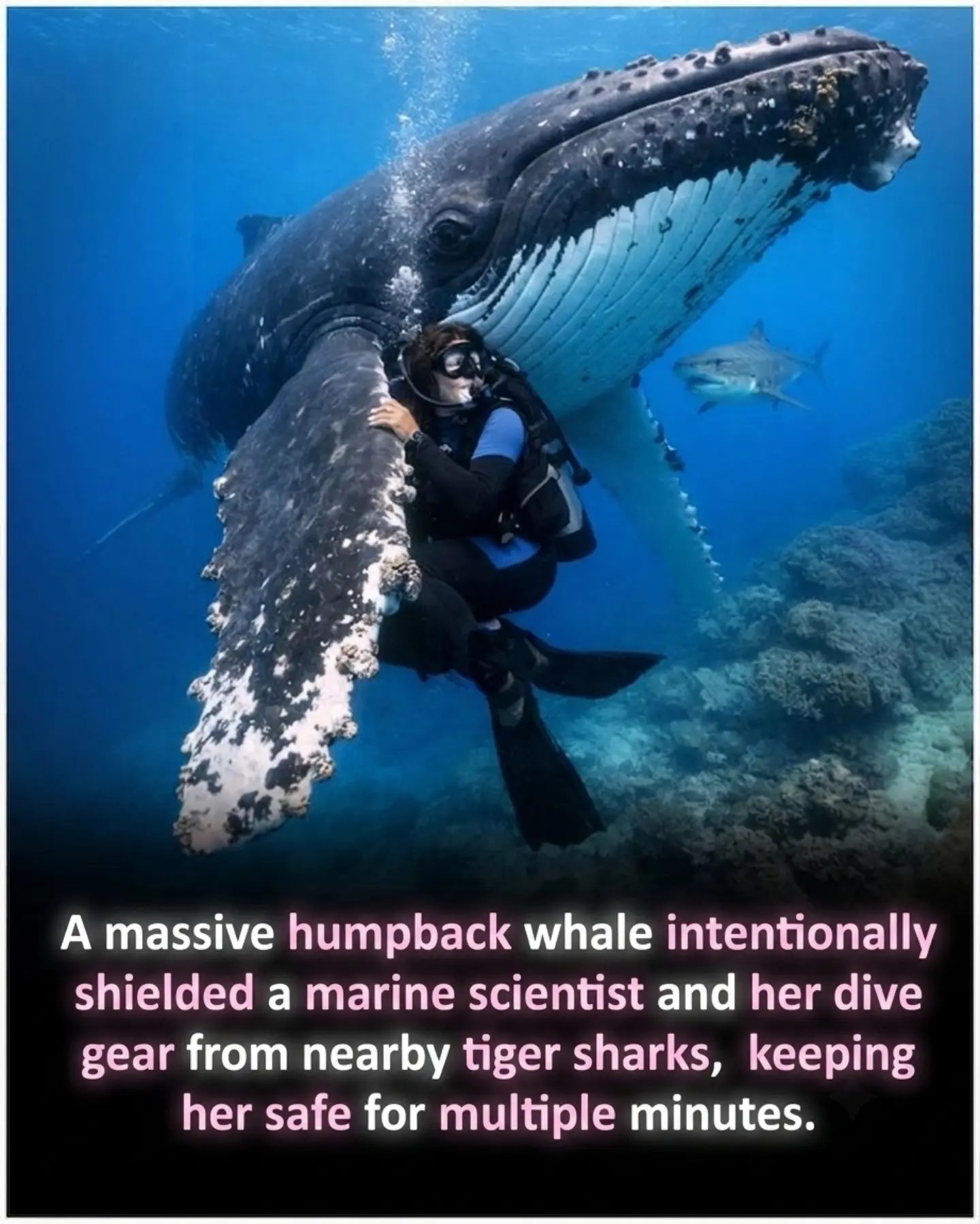
Humpback Whale Protection
In September 2017, marine biologist Nan Hauser experienced an extraordinary encounter off the coast of the Cook Islands. While filming underwater, a 50,000-pound humpback whale suddenly intervened, aggressively pushing, nudging, and hoisting her on its pectoral fins. At first, Hauser feared for her life, but the whale's intentions became clear when an 18-foot tiger shark in attack mode appeared in the distance. For nearly 10 minutes, the humpback whale intentionally positioned itself between Hauser and the shark, shielding her under its fins and lifting her out of the water until she could safely climb back onto her research boat. This remarkable display of interspecific altruism — where an animal acts to protect another species without gaining any benefit — showcases the complex and often mysterious behavior of these gentle giants and has left scientists and marine enthusiasts alike in awe.
Context / Why this matters
Humpback whales have long been known for their gentle demeanor and fascinating behaviors. They are one of the most acrobatic of all whales, known for their spectacular breaches and tail slaps, as well as their complex songs. However, their protective instincts, particularly towards humans, are less commonly documented. This incident highlights the potential for deep, unexpected connections between humans and marine life, and raises questions about the motivations behind such selfless acts.
Understanding such behavior is crucial for advancing our knowledge of marine ecosystems and fostering a greater appreciation for the intricate web of life beneath the ocean's surface. This encounter not only underscores the protective instincts of humpback whales but also emphasizes the importance of conserving these magnificent creatures and their habitats. Interspecies altruism, as demonstrated by the humpback whale, is a rare and captivating phenomenon that adds to the wonder and mystery of the natural world.
Main discussion
The Encounter
The day Nan Hauser met her unexpected protector began like any other in her line of work. As a marine biologist, she was accustomed to the wonders and dangers of the ocean. However, nothing could have prepared her for the life-threatening encounter that unfolded that day. While filming underwater, she was suddenly approached by a massive humpback whale. The whale, displaying what initially seemed like aggressive behavior, began pushing, nudging, and hoisting her.
Hauser's surprise turned to sheer terror as she feared for her life. This fear was short-lived, however, when she spotted the real danger in the distance: an 18-foot tiger shark in attack mode, swiftly approaching their location. Suddenly, the whale's behavior made sense. The humpback whale was not aggressing; it was protecting.
For nearly 10 minutes, the whale intentionally kept itself between Hauser and the shark, shielding her under its enormous fins. During this time, the whale also lifted her out of the water, allowing her to safely climb back onto her research boat. This extraordinary act of interspecies altruism left Hauser stunned and grateful.
Interspecific Altruism
Interspecific altruism, where an animal acts to protect another species without gaining any benefit, is a rare and fascinating phenomenon. This concept is particularly intriguing when it involves large, powerful marine animals like humpback whales. Scientists call this behavior altruistic because the whale received no apparent benefit from its actions. The whale put itself at risk to protect a human scientist, demonstrating a level of empathy and selflessness that is truly remarkable.
This selfless act can be seen as a particularly dramatic example of the complex social structures and emotional capabilities of humpback whales. These gentle giants are known for their playful and curious nature, often interacting with humans and other marine animals in ways that seem to defy typical predatory instincts. Their protective instincts, as shown in this encounter, highlight the depth of their emotional intelligence and their role as guardians of the ocean.
A Repeat Appearance
In a further twist, the same humpback whale returned to Nan Hauser's boat a year and 15 days later to say hello again, leaving onlookers in awe. This second encounter adds an even deeper layer of mystery to the whale's behavior, suggesting that it may have recognized Hauser or responded to some unseen cue. This phenomenon, known as recognition and memory, is another intriguing aspect of whale behavior.
Whales are known for their long lifespans and complex social structures, which allow them to form deep bonds and remember individuals over long periods. While this behavior can be attributed to their highly developed brains and social interactions, it remains a topic of ongoing research and fascination for marine biologists.
Practical tips
Experiencing such an event does come with practical considerations. The ocean is a vast and unpredictable environment, and encounters with marine life can be unforeseen. Here are a few tips for those who find themselves in similar situations:
- Stay Calm: Patience is essential. Panicking can cause unpredictable reactions and may worsen the situation.
- Assess the Environment: Always be aware of your surroundings. Look for potential threats and assess the behavior of the marine animals around you.
- Communicate: If you’re with a group, communicate clearly and stay together. If you’re alone, consider using signaling devices to alert others to your situation.
- Respect and Observe: Remember that you are in the animals' environment. Observe from a safe distance and avoid actions that could provoke or alarm them.
Understanding and respecting marine life is crucial for both your safety and their well-being. This encounter highlights the importance of maintaining a safe and respectful distance from marine animals, and being prepared for unexpected situations.
Important takeaways
The humpback whale’s protective behavior towards Nan Hauser offers several important takeaways:
- Incredible Altruism: The whale demonstrated a level of altruism that transcends species boundaries, showcasing the deep emotional intelligence of these animals.
- Complex Behavior: This encounter underscores the complexity of marine life, highlighting behaviors that are still not fully understood by scientists.
- Environmental Importance: Protecting these natural habitats and the animals that inhabit them is crucial for preserving such remarkable and unexpected interactions.
Conclusion
The extraordinary encounter between Nan Hauser and the humpback whale off the coast of the Cook Islands highlights the profound and often mysterious behavior of these magnificent creatures. Their altruistic actions, even in the face of danger, offer a glimpse into the complex social structures and emotional intelligence of marine life. This encounter not only underscores the importance of ocean conservation but also serves as a reminder of the incredible and unexpected connections that can form between humans and the natural world. The humpback whale's actions that day are a testament to the wonders of the ocean and the deep bonds of nature that exist beneath the waves.
Watch the Reel
Questions readers ask
How did the humpback whale protect the marine biologist?
The humpback whale protected the marine biologist by positioning itself between her and the tiger shark. It used aggressive pushing, nudging, and hoisting her on its pectoral fins, and shielded her until she could safely return to her research boat.
Why did the humpback whale help the marine biologist?
The humpback whale's actions were an example of interspecific altruism, where an animal acts to protect another species without gaining any benefit. The whale's protective instincts likely played a significant role in this extraordinary act.
What was the size difference between the humpback whale and the tiger shark?
The humpback whale was significantly larger, weighing 50,000 pounds, compared to the 18-foot tiger shark.
What were the first actions taken by the humpback whale?
The humpback whale initially pushed, nudged, and hoisted the marine biologist onto its pectoral fins. It was not clear what kind of assistance the whale would provide.
How long did the humpback whale protect the marine biologist?
The humpback whale protected the marine biologist for nearly 10 minutes, intentionally positioning itself between her and the tiger shark to ensure her safety.
How did the marine biologist react to the whale's actions?
At first, the marine biologist feared for her life. However, her fear subsided as the whale's intentions became clear and she recognized the protection it was providing from the tiger shark.
What can we learn from this humpback whale's actions?
This event offers insight into the complex behaviors and protective instincts of humpback whales. It also highlights the mysterious connections that can exist between humans and marine life.
Related deep dives
Similar reads based on topic and creator.



Recent articles
Fresh deep dives from the latest Reels we unpacked.




Comments
Be the first to comment.