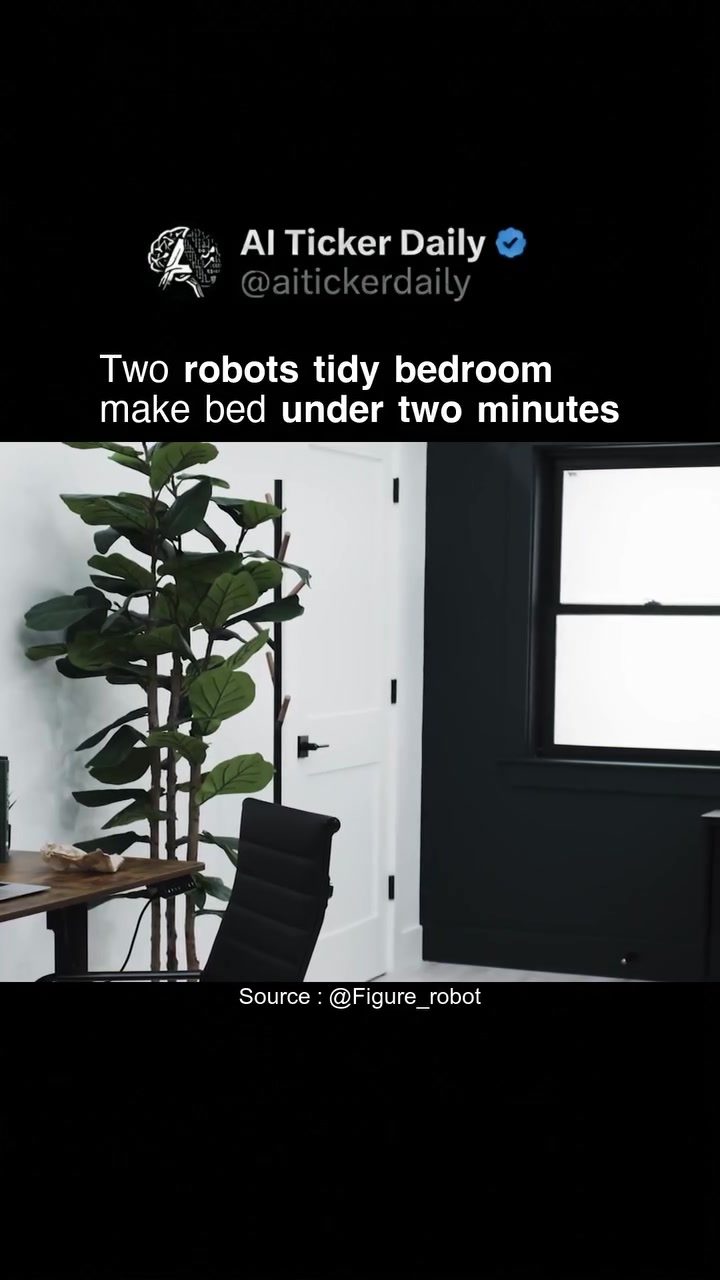
Robots and Automated Household Cleaning
Humanoid robots, like the Figure F.03 models, are transforming how we approach household chores. These robots can tidy a bedroom and make the bed, showcasing the potential of automated solutions for daily tasks. They navigate spaces, fold clothes, and clean surfaces, all without the need for teleoperation.
The Rise of Household Robots
Household robots are no longer a fantasy from science fiction movies. They are now a practical solution for automating everyday tasks, freeing up time for other activities. The Figure F.03 humanoid robots, for instance, are designed to manage chores that might otherwise take up a significant portion of a person's day. These robots can handle tasks like tidying a bedroom or making a bed, which typically require human dexterity and judgment.
In a recent demonstration, two Figure F.03 robots were able to clean surfaces, straighten the space, and make a bed in under two minutes. This efficiency highlights the capability of modern robotics to handle complex tasks quickly and effectively.
The Role of Autonomous Technology
The ability of these robots to operate fully autonomously is a significant advancement. Autonomous robots can operate without constant supervision or manual control, thanks to sophisticated sensors, AI, and machine learning algorithms. These robots can interpret their surroundings and make real-time decisions, allowing them to perform a variety of tasks with minimal human intervention. This autonomy makes them suitable for household environments, where tasks and conditions can vary widely.
Autonomous robots are particularly useful in environments where consistency and efficiency are crucial. For example, they can ensure that a bedroom is kept tidy every day, reducing the need for manual labor and improving overall hygiene.
Challenges and Limitations
Despite their capabilities, household robots like the Figure F.03 still face several challenges. For instance, while they can make a bed and tidy a room, they may struggle with tasks that require more nuanced decision-making or dexterity. Additionally, the initial setup and programming of these robots can be complex, requiring specialized knowledge and tools.
Another challenge is the public's comfort with automated solutions in household settings. Many people may be hesitant to trust robots with daily tasks, fearing malfunctions or privacy concerns. However, as the technology advances and becomes more reliable, these concerns are likely to diminish.
Practical Tips for Using Household Robots
To make the most of household robots, consider the following tips:
-
Define Clear Tasks: Determine specific tasks that the robot will handle. For instance, if you want the robot to make the bed and tidy the bedroom, ensure it has a clear routine and understands the desired outcome.
-
Regular Maintenance: Like any other appliance, robots require regular maintenance. Check for updates, clean sensors, and ensure all mechanical parts are in good working order.
-
Gradual Integration: Start by assigning simpler tasks to the robot and gradually increase the complexity as you become more comfortable with its capabilities.
-
Monitor Performance: Keep an eye on the robot's performance to identify any issues early. Most modern robots come with monitoring features that allow you to track their activities and performance.
-
Safety Features: Ensure that the robot has safety features like obstacle detection and emergency stop functions to prevent accidents.
Important Takeaways
Investing in household robots can significantly enhance productivity and efficiency. These robots can handle a variety of tasks, from tidying a room to making a bed, allowing humans to focus on more critical activities. The autonomous nature of these robots makes them particularly valuable, as they can operate independently without constant supervision.
However, it is essential to consider the initial setup challenges and ongoing maintenance requirements. Additionally, understanding the robot's capabilities and limitations will help in setting realistic expectations and achieving the best results.
Conclusion
The rise of household robots like the Figure F.03 models marks a significant shift in how we approach daily tasks. These robots can automate mundane chores, freeing up time and effort for more meaningful activities. As technology continues to evolve, the potential for these robots to transform our daily lives will only grow. Embracing this technology and understanding its capabilities can lead to more efficient and enjoyable living spaces.
Watch the Reel
Questions readers ask
How do humanoid robots like the Figure F.03 models tidy a bedroom in under two minutes?
These robots use advanced algorithms and sensors to navigate the room, identify clutter, and efficiently put items back in their designated places. They can also fold clothes and make the bed, all within a short time frame.
What specific tasks can these robots perform in a bedroom?
Humanoid robots such as the Figure F.03 can tidy up by putting items away, fold clothes, and make the bed. They operate autonomously, eliminating the need for human intervention during these tasks.
Are these robots able to fold clothes effectively?
Yes, these robots are equipped with sophisticated mechanics and vision systems that allow them to fold clothes of various types and sizes. They can distinguish between different fabrics and garments to ensure proper folding.
Can these robots be used on a daily basis for bedroom tidying?
Absolutely. The Figure F.03 robots are designed for daily use and can handle the tasks assigned to them multiple times a week. Their efficiency and autonomous operation make them ideal for weekday tidying.
How do these robots navigate and clean surfaces in a bedroom?
Humanoid robots use a combination of sensors, cameras, and mapping technology to navigate the room and identify surfaces that need cleaning. They can dust, wipe, and sanitize various surfaces in a bedroom, ensuring thorough cleaning.
What benefits do humanoid robots offer for daily task automation?
Humanoid robots free up significant time by handling daily chores like bed making, tidying, and folding clothes. By automating these tasks, they allow users to focus on other activities, enhancing productivity and reducing the time spent on maintenance routines.
Related deep dives
Similar reads based on topic and creator.




Recent articles
Fresh deep dives from the latest Reels we unpacked.




Comments
Be the first to comment.