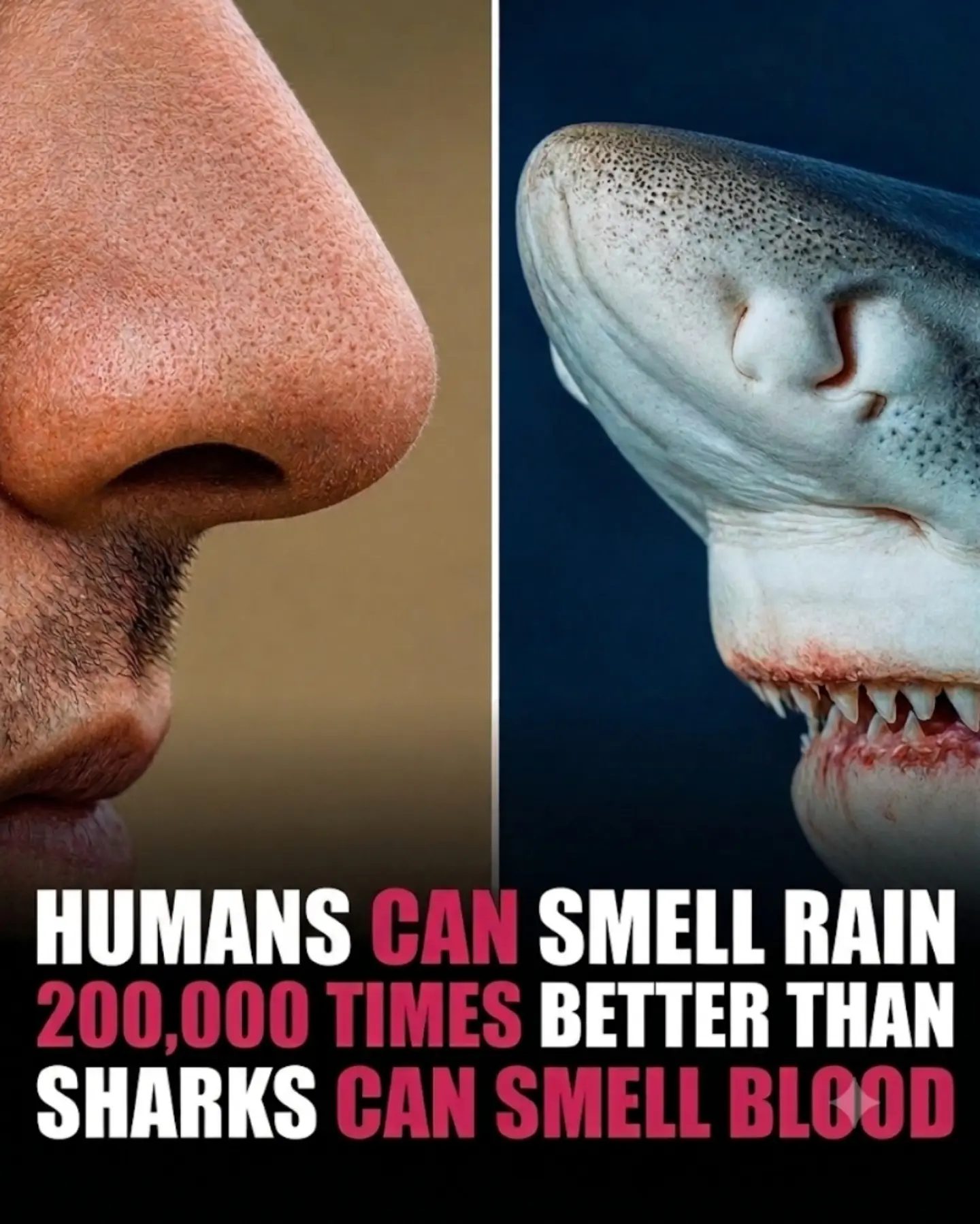
Human vs. Shark Senses: A Fascinating Comparison
Humans and sharks both possess remarkable sensory capabilities, but when it comes to smell, humans have a distinct advantage. Our olfactory system is incredibly sensitive to certain compounds, particularly geosmin, which is responsible for the distinctive earthy scent of rain known as petrichor.
Geosmin is an organic compound produced by certain bacteria and fungi in soil. It is released into the air when rain falls, creating the familiar and comforting scent that many people associate with fresh rain. The human nose can detect geosmin at an incredibly low concentration—just five parts per trillion. This heightened sensitivity is not just a curiosity; it has significant implications for our evolutionary history.
Context: Why this matters
Understanding the differences in sensory capabilities between humans and sharks provides a deeper appreciation for the unique adaptations each species has developed. While sharks are renowned for their ability to detect blood in the water, humans have evolved an exceptional sensitivity to geosmin, which has played a crucial role in our survival.
This comparison underscores the fascinating ways in which different species have adapted to their environments. For sharks, the ability to detect minute amounts of blood is essential for hunting and survival in marine ecosystems. For humans, detecting geosmin has helped us locate freshwater sources and track weather patterns, both of which are vital for survival.
Main discussion
The Science of Smell
The sense of smell, or olfaction, is one of the most primal and powerful senses. It allows organisms to detect and respond to their environment in ways that sight or hearing cannot. For humans, the ability to detect geosmin is a testament to the incredible sensitivity and complexity of our olfactory system.
Geosmin and Petrichor
Geosmin, the compound responsible for the scent of petrichor, is produced by certain bacteria and fungi in soil. When rain falls, it releases this compound into the air, creating the distinctive earthy scent. Humans can detect geosmin at concentrations as low as five parts per trillion, which is an astonishing feat. This sensitivity has evolved over time, helping early human ancestors locate freshwater sources and track weather patterns.
Shark Senses: Blood in the Water
Sharks, on the other hand, are known for their remarkable ability to detect blood in the water. This ability is crucial for their survival as apex predators. However, the extent of this ability is often exaggerated in popular culture. In reality, sharks can detect blood at concentrations ranging from one part per million to one part per billion. While this is still an impressive feat, it pales in comparison to the human ability to detect geosmin.
Practical tips
While the comparison between human and shark senses is fascinating, it also offers practical insights. For instance, understanding the science behind the sense of smell can help in various fields, from environmental science to medicine.
Environmental Science
Knowing how different organisms detect specific compounds can help in monitoring environmental health. For example, studying how bacteria produce geosmin can provide insights into soil health and the impact of environmental changes on bacterial communities.
Medicine
Understanding the human olfactory system can also have medical applications. For instance, the ability to detect low concentrations of certain compounds could be used in developing more sensitive diagnostic tools for diseases that affect the sense of smell, such as Parkinson's disease.
Important takeaways
The comparison between human and shark senses highlights the unique adaptations each species has developed. Humans are exceptionally sensitive to geosmin, which has played a crucial role in our evolutionary history. Sharks, on the other hand, have developed the ability to detect blood in the water, which is essential for their survival as predators.
This comparison underscores the importance of understanding sensory capabilities in different species. It also highlights the fascinating ways in which organisms have adapted to their environments over time.
Conclusion
The comparison between human and shark senses is a testament to the incredible diversity of sensory capabilities in the natural world. While sharks possess a remarkable ability to detect blood in the water, humans have evolved an exceptional sensitivity to geosmin, the compound responsible for the scent of petrichor. This heightened sensitivity has played a crucial role in our evolutionary history, helping early human ancestors locate freshwater sources and track weather patterns. Understanding these differences not only deepens our appreciation for the natural world but also offers practical insights into various fields, from environmental science to medicine.
Watch the Reel
Questions readers ask
How do humans detect the scent of rain?
Humans detect the scent of rain through a compound called geosmin, which is produced by bacteria and fungi in the soil. When rain falls, it releases geosmin into the air, and our highly sensitive olfactory system can pick up on this compound at concentrations as low as five parts per trillion. This ability has been crucial for humans in locating water sources and predicting weather patterns.
Can sharks really smell blood in water?
Yes, sharks are renowned for their ability to detect blood in water. Their sense of smell is incredibly keen, allowing them to sense even minuscule amounts of blood from long distances. This adaptation helps them to locate prey efficiently, making it a vital part of their hunting strategy.
Why is the ability to detect geosmin important for humans?
The ability to detect geosmin is important for humans because it helps us locate water sources and predict weather patterns. This skill has been vital for our survival, as it allows us to find essential resources and prepare for environmental changes, showcasing a unique evolutionary adaptation.
How does the human sense of smell compare to a shark's sense of smell?
The human sense of smell is highly specialized, particularly in detecting compounds like geosmin, which signals rain. In contrast, sharks' sense of smell is exceptionally sensitive to chemicals in water, such as blood, which aids in their predatory behavior. Both are highly developed but serve different evolutionary purposes.
What is petrichor and how is it related to the scent of rain?
Petrichor is the term used to describe the distinctive, earthy scent that accompanies rain. It is caused by the release of geosmin, an organic compound produced by bacteria and fungi in the soil, into the air when rain falls. This scent is instantly recognizable and has a comforting effect on many people.
Related deep dives
Similar reads based on topic and creator.




Recent articles
Fresh deep dives from the latest Reels we unpacked.




Comments
Be the first to comment.