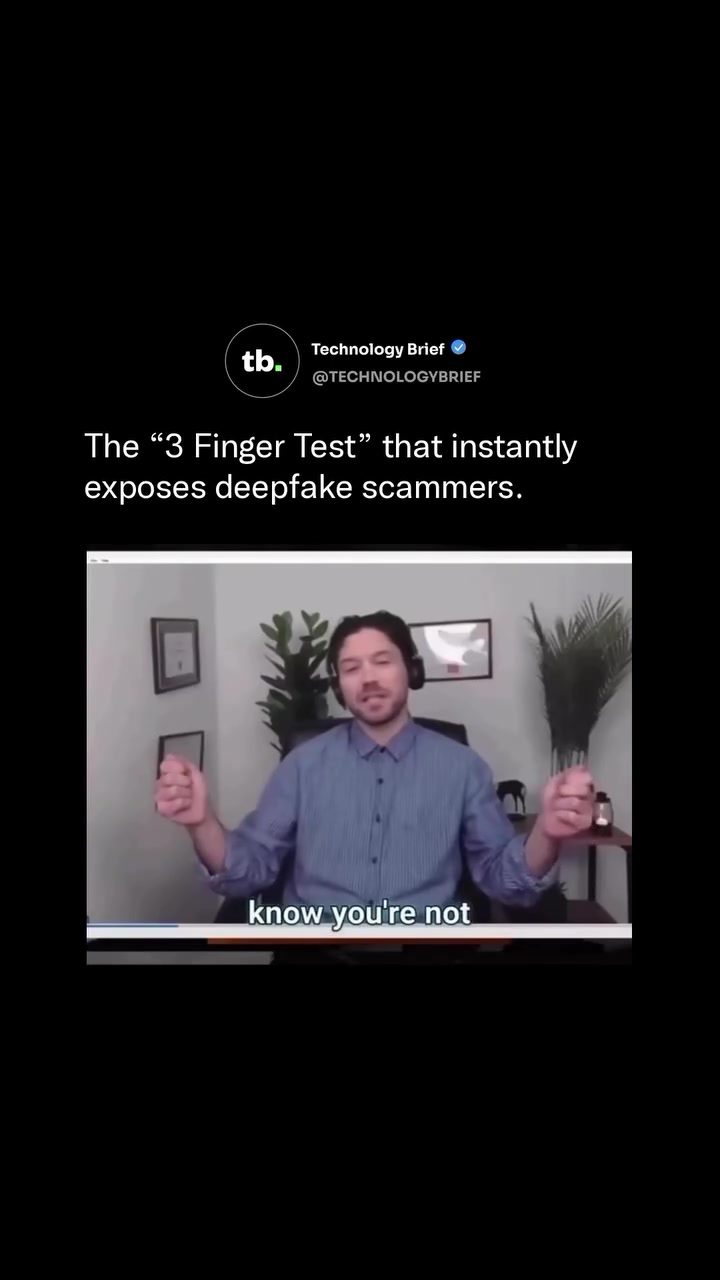
Deepfake Detection: The 3-Finger Test
Detecting deepfakes, especially during live video calls, has become a growing concern in the age of advanced AI. Cybersecurity researcher Jim Browning, known for his undercover work in scam call centers, recently encountered a fraudster using a real-time AI deepfake face overlay. This encounter highlighted a simple yet effective method to expose deepfakes: the 3-Finger Test.
Context / Why This Matters
Deepfakes are increasingly sophisticated, making it challenging to distinguish between genuine video calls and AI-generated impostors. The 3-Finger Test offers a straightforward way to verify the authenticity of a video call participant. This test works because current AI face-swap software struggles with occlusion—when an object, like a hand, passes in front of the face. This limitation can cause the software to glitch or break the illusion, revealing the deception.
Main Discussion
The 3-Finger Test: How It Works
The 3-Finger Test involves asking the person on the video call to hold up three fingers directly in front of their face. This action is designed to exploit the weaknesses of low-quality deepfake tools. When a hand obstructs part of the face, the AI often fails to render the scene correctly, causing visible artifacts or distortions.
During his encounter, Browning asked the suspected scammer to perform this test. The scammer's reluctance and eventual refusal to comply raised suspicions, ultimately leading to the exposure of the deepfake. This real-time test demonstrated the effectiveness of a simple, non-technical method in identifying deepfakes.
The Viral Clip and Its Impact
The clip of Browning's encounter, produced in collaboration with cybersecurity firm Huntress, went viral. It showcased a practical, on-the-spot test for deepfake video calls. The test's simplicity and effectiveness resonated with viewers, sparking widespread interest and discussion about deepfake detection.
Limitations and Evolving Threats
While the 3-Finger Test has proven effective, experts warn that it is becoming outdated. As the test gains popularity, scammers are adapting their techniques to counteract it. Huntress security researchers note that deepfake tools are being specifically trained to handle occlusion, thereby reducing the test's reliability.
The evolving nature of deepfake technology underscores the need for continuous vigilance and innovation in detection methods. Relying solely on a single test may not be sufficient in the long term.
Practical Tips
To protect yourself from deepfake scams, consider the following practical tips:
-
Use Multiple Verification Steps: Implement multiple verification steps before engaging in sensitive conversations or transactions. This could include requiring a callback on a known number or two-person approval for financial requests.
-
Observe for Inconsistencies: Pay attention to any unusual behaviors or inconsistencies during video calls. Deepfakes often struggle with natural movements and expressions, which can be telltale signs of a fake.
-
Stay Updated on New Detection Methods: Keep yourself informed about the latest developments in deepfake detection. As technology advances, new methods and tools are constantly being developed to counter deepfakes.
-
Verify Identities Through Multiple Channels: If possible, verify the identity of the person you are communicating with through multiple channels, such as email, phone, and in-person meetings.
Important Takeaways
- The 3-Finger Test is a simple yet effective method for detecting deepfakes during video calls.
- Deepfake technology is evolving, and scammers are adapting to counter detection methods like the 3-Finger Test.
- Implementing multiple verification steps and staying informed about new detection methods are crucial for safeguarding against deepfake scams.
Conclusion
As deepfake technology continues to advance, staying one step ahead of potential scammers is essential. The 3-Finger Test serves as a reminder that simple, non-technical methods can sometimes be the most effective in identifying deepfakes. However, relying on a single test is not enough. By combining multiple verification steps and staying informed, you can better protect yourself from the growing threat of deepfakes.
Watch the Reel
Questions readers ask
What is the 3 Finger Test and how does it help in exposing deepfake scammers?
The 3 Finger Test is a practical method used to identify deepfakes during live video calls. It involves manipulating a hand in front of the face and observing the AI's response. This test helps expose deepfake scammers by exploiting weaknesses in AI face-swap software, specifically its struggle with occlusion.
Why is the 3 Finger Test effective against deepfakes?
The 3 Finger Test is effective because current AI face-swap technologies have difficulty handling occlusion, which occurs when an object, like a hand, partially or fully covers the face. By moving three fingers in unique patterns, users can observe how the AI responds, providing clues to its authenticity.
Can the 3 Finger Test be used on any video call platform?
Yes, the 3 Finger Test can be applied on any video call platform that supports live video. Whether you are using Zoom, Skype, FaceTime, or any other platform, you can perform the 3 Finger Test to help verify the authenticity of the person you are communicating with.
What should I do if the 3 Finger Test indicates a deepfake during a video call?
If the 3 Finger Test suggests that the person on the call is a deepfake, it is important to terminate the call immediately. Do not share any personal or sensitive information. Instead, try to verify the person's identity through other means, such as a phone call or in-person meeting.
Are there other methods to detect deepfakes besides the 3 Finger Test?
While the 3 Finger Test is a simple and effective method for live video calls, there are other techniques to detect deepfakes. These include looking for inconsistencies in the video, such as unnatural blinking, lighting issues, or distorted facial expressions. Additionally, some software tools can help analyze videos for signs of deepfakes, but these may not always be accessible or reliable.
How reliable is the 3 Finger Test in detecting deepfakes?
The 3 Finger Test is highly reliable for detecting deepfakes in real-time video calls. AI face-swap software currently struggles with real-time occlusion, making it a robust method to expose deepfake scammers. However, as technology advances, it is essential to stay updated with the latest detection methods to ensure continued effectiveness.
Can the 3 Finger Test be used by anyone, regardless of technical skill?
Yes, the 3 Finger Test is designed to be simple and easy to use, requiring no specialized technical skills. Anyone can perform the test during a video call by moving their fingers in a specific pattern and observing the response. This makes it a widely accessible method for detecting deepfakes.
Related deep dives
Similar reads based on topic and creator.




Recent articles
Fresh deep dives from the latest Reels we unpacked.




Comments
Be the first to comment.