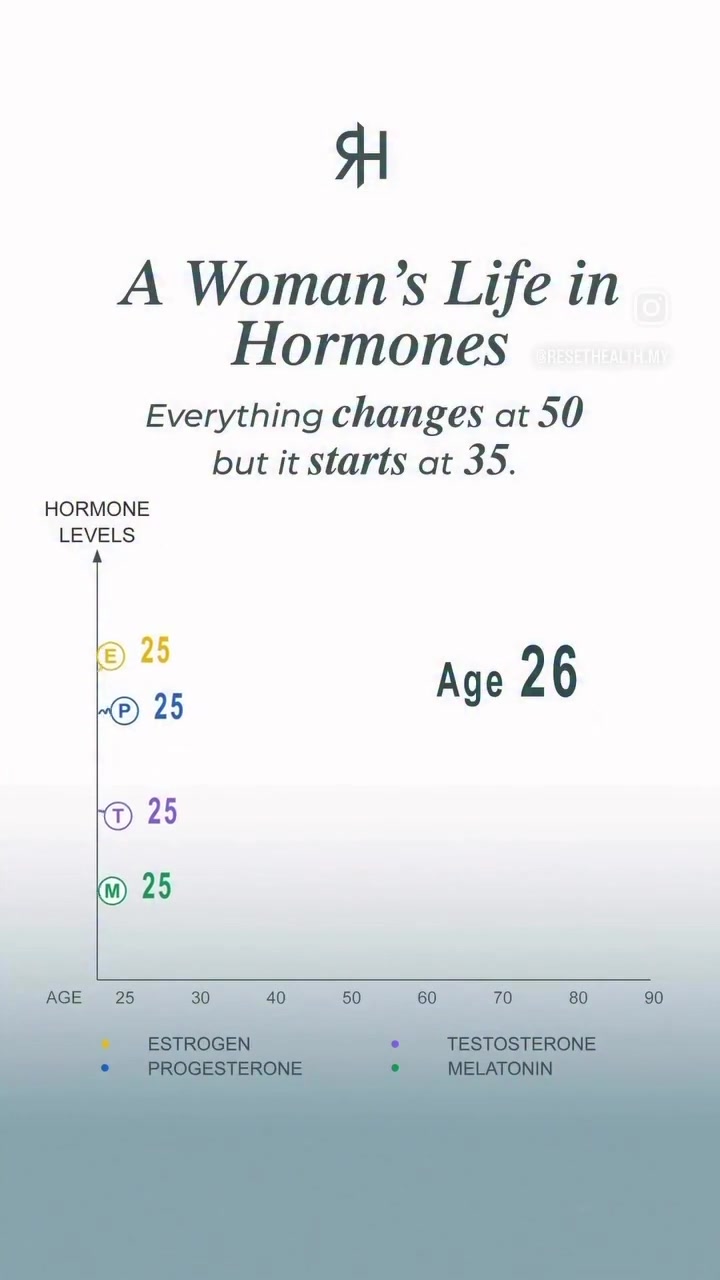
Hormone levels surge and ebb throughout a woman's life, but did you know the first significant shifts can begin around age 35? At 50, things take an even steeper turn.
Mapping of a woman's life journey through hormones
Female hormones fluctuate over the lifespan, set to a rhythm of falling and rising, with periods of tranquility between. Levels of estrogen, progesterone, testosterone, and melatonin, mark a woman’s journey from her late twenties. Four primary hormones come in and out of focus. Estrogen is the first to rise. Estrogen defines the 20s and 30s with a notable peak around 30. Progesterone and testosterone level off early, losing stability around 45. By 50 the notable decline of all four hormones begins, with melatonin holding steady. The journey begins early — but things pick up around 25, when estrogen starts climbing. Age 35 is the first significant inflection point, peaking for estrogen, progesterone, and testosterone. At 50, hormone levels begin a steep drop, hitting another critical phase.
The frame of 2 hours
The shifts in hormone levels tie into broader issues of health and well-being, especially since many women may not feel symptoms until perimenopause. In fact, premenopausal symptoms can occur as early as 35. The transitions can affect everything from sleep and weight, to mood and libido. Female vitality often depends on hormone levels, not just in terms of fertility, but for overall health. Hormone changes can affect bone density, heart health, and even the risk of cancer. Those early drops can mean a variation in menstrual flow, a change in period regularity, or even spotting in between. Regular monitoring and understanding those changes can help manage the symptoms.
Early Fluctuations
Did you know that estrogen begins declining as early as 35? You might not feel it then. Many women don't experience the telltale menopausal hot flashes, night sweats, and heavy bleeding, until later. These instabilities can lead to confusion. Women are often unprepared for the fluctuations. Early monitoring can help adjust expectations, and help address those changes. Women tend to hit a wall in their 50s, when everything changes. But that's the second inflection. Hormone levels start to drop as early as 35 or 40. Without awareness, many miss their first warning signs.
The Five Hormone Timeline
Key hormonal milestones occur at 35 and 50. The peak for testosterone and progesterone falls at 35. At 50, estrogen, progesterone, and testosterone all begin a significant decline. Being aware of these shifts can help manage symptoms. Hormone levels do not drop in a straight line. The fluctuations can not only vary month to month, but day to day. If you notice something concerning, try tracking your symptoms.
Not just the hot flashes
How do women navigate the shifts? Hormone replacement therapy (HRT) has always been a go-to for combatting menopausal symptoms. But there are relatively new options to counter the changes, like bio-identical hormone therapy , which aims to replace only what the body has lost. HRT is not the only option. Regular exercise and a healthy diet can also help tremendously in those times.
Start Early, Slow Down
Don’t wait for symptoms to show up. Being cognizant of the shift and making appropriate adjustments can cushion the impact of symptoms. Monitor and track your symptoms — and be honest. Hormone level changes can affect sleep, appetite, and energy levels. Some women notice shifts in skin and hair. Regular exercise and a balanced diet keep you on track.
- Log your symptoms. Even if you don't see them as concerning, timing them daily can give you insight.
- Ask for help. It’s easy to write off changes as normal aging, but having a doctor in your corner can help you navigate those changes.
- Maintain a healthy lifestyle. Exercise and mindfulness are great ways to keep healthy, but they also help you adapt to changes.
Afterword
It is not just the culmination of female energy. Changing hormones affect everything from sleep to weight, from mood to sex drive. A woman's relationship with her hormones isn't linear, and neither is it binary. Shifts in hormone levels can affect a woman's entire life.
Watch the Reel
Questions readers ask
At what age do the first significant hormonal changes start to occur in women?
The first significant hormonal changes in women can start to occur around age 35. This is when estrogen, progesterone, and testosterone levels peak, marking a key turning point in a woman's hormonal journey.
What are the key hormonal milestones at 50?
At 50, estrogen, progesterone, and testosterone all begin a significant decline. This is a critical phase where hormone levels start to drop more steeply.
How do hormone fluctuations affect a woman's health beyond fertility?
Hormone fluctuations can affect various aspects of a woman's health, including bone density, heart health, and even the risk of cancer. They can also impact sleep, weight, mood, and libido.
What are some early signs of hormonal changes that women might experience?
Early signs of hormonal changes can include variations in menstrual flow, changes in period regularity, or even spotting in between periods. These changes can occur as early as 35, although many women may not experience the more noticeable symptoms like hot flashes and night sweats until later.
Is there a difference between hormone replacement therapy (HRT) and bio-identical hormone therapy?
Yes, while hormone replacement therapy (HRT) has traditionally been used to combat menopausal symptoms, bio-identical hormone therapy is a relatively new option that aims to replace only what the body has lost, providing a more tailored approach to hormone management.
Can regular exercise and a healthy diet help manage hormonal changes?
Yes, regular exercise and a healthy diet can significantly help manage the symptoms associated with hormonal changes. While hormone replacement therapy (HRT) and bio-identical hormone therapy are options, lifestyle changes can also play a crucial role in maintaining overall health during these transitions.
What should women do if they notice concerning changes in their hormone levels?
If you notice something concerning, it can be helpful to track your symptoms. This can provide valuable information for healthcare providers and help in managing the fluctuations more effectively. Regular monitoring and understanding these changes can also help adjust expectations and address potential issues early on.
Related deep dives
Similar reads based on topic and creator.

Recent articles
Fresh deep dives from the latest Reels we unpacked.




Comments
Be the first to comment.