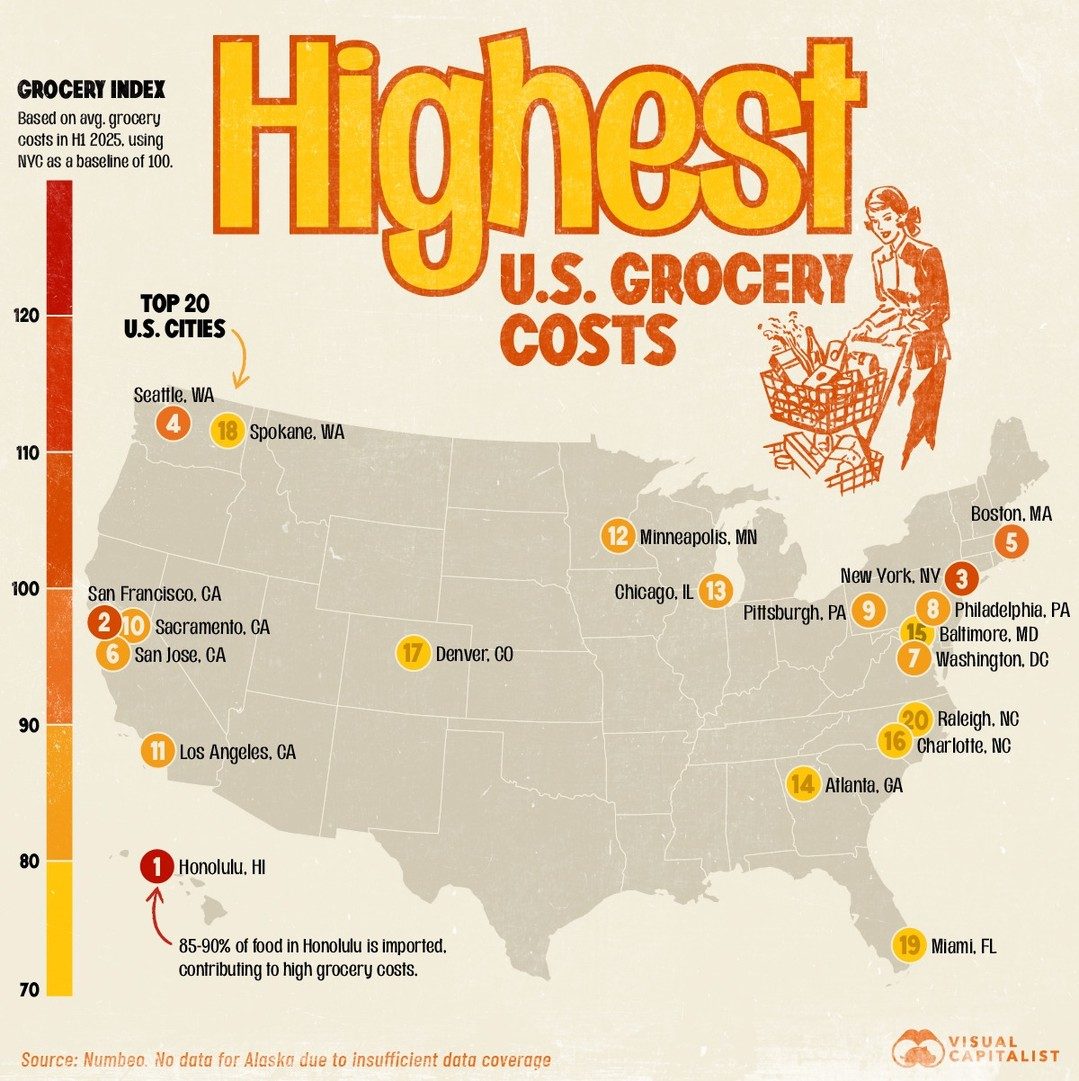
U.S. Grocery Costs
Groceries are a significant part of any household budget, but the cost of groceries can vary greatly depending on where you live in the United States. Honolulu, Hawaii, tops the list with the highest grocery costs in the nation. As an island state, Hawaii faces unique challenges with import and transportation costs, which significantly drive up the price of food staples.
Why This Matters
Understanding the regional differences in grocery costs can help consumers make more informed financial decisions. Whether you're planning a move, budgeting for a trip, or simply curious about the cost of living, knowing which cities have the highest grocery expenses can provide valuable insights.
Main Discussion
Factors Influencing Grocery Costs
Several factors contribute to the variability in grocery costs across the United States. These include:
- Transportation and Import Costs: In states like Hawaii, the majority of food products must be imported, leading to higher costs.
- Local Economy and Taxes: States with higher taxes and a more robust local economy often see higher grocery prices.
- Demand and Supply: Urban areas with higher populations tend to have higher demand, which can drive up prices.
The Impact of Geography
Geography plays a crucial role in determining grocery costs. Island states and remote areas generally face higher costs due to the challenges of transportation and logistics. Honolulu, for instance, imports 85-90% of its food, making it one of the most expensive places to buy groceries. Similarly, cities with limited agricultural production or that rely heavily on imports, such as Seattle and Minneapolis, also experience higher grocery costs.
Ranking the Top 20 Cities
Based on data from Numbeo, here is a breakdown of the top 20 American cities with the highest cost of groceries:
- Honolulu, HI: Honolulu leads the list with the highest grocery costs, largely due to its reliance on imported food.
- New York, NY: New York City is a close second, with its high cost of living and dense population driving up prices.
- Seattle, WA: Seattle's cost of groceries is significantly higher than the national average, influenced by its remote location and urban demand.
- Spokane, WA: Spokane follows Seattle with notably higher grocery costs compared to other cities in the U.S.
- Minneapolis, MN: Minneapolis rounds out the top five, with higher costs due to its northern location and urban economy.
- Boston, MA: Boston's grocery prices are influenced by its high cost of living and local demand.
- Raleigh, NC: Raleigh's costs are driven by its growing population and urban development.
- Washington, DC: The nation's capital has higher grocery prices due to its urban environment and economic status.
- Philadelphia, PA: Philadelphia's grocery costs are influenced by its large population and urban economy.
- Pittsburgh, PA: Pittsburgh's costs are relatively high compared to other cities in the region.
- Denver, CO: Denver's grocery prices are influenced by its mountain location and urban demand.
- Charlotte, NC: Charlotte's costs are driven by its growing population and urban development.
- Atlanta, GA: Atlanta's grocery prices are influenced by its urban environment and local demand.
- Miami, FL: Miami's costs are influenced by its tropical location and reliance on imports.
- San Francisco, CA: San Francisco's high cost of living and urban demand drive up grocery prices.
- Sacramento, CA: Sacramento's costs are relatively high, influenced by its proximity to urban areas and agricultural production.
- San Jose, CA: San Jose's grocery prices are influenced by its high-tech economy and urban environment.
- Los Angeles, CA: Los Angeles' costs are driven by its large population and urban demand.
- Las Vegas, NV: Las Vegas' grocery prices are influenced by its desert location and reliance on imports.
- Chicago, IL: Chicago's costs are driven by its large population and urban economy.
Understanding the Data
The data used in this ranking is sourced from Numbeo, a crowdsourced database of statistics. It's important to note that the data for Alaska is insufficient due to limited coverage, making it difficult to compare with other states. However, the general trends and insights provided by this data offer a clear picture of the variability in grocery costs across the U.S.
Practical Tips
When living in or moving to cities with high grocery costs, consider the following tips to manage your budget:
- Plan Ahead: Plan your meals and make a grocery list to avoid impulse buys. This can help you stick to your budget and reduce waste.
- Buy in Bulk: Buying non-perishable items in bulk can save money in the long run. Look for sales and use coupons to maximize savings.
- Support Local Markets: Buying fresh produce from local farmers' markets can sometimes be more cost-effective and support local economies. This is especially relevant in areas with high import costs.
- Shop Around: Compare prices at different stores to find the best deals. Online shopping and price comparison tools can be helpful.
- Use Store Loyalty Programs: Many stores offer loyalty programs and discounts for regular shoppers. Take advantage of these to save money.
- Consider Substitutions: Look for cheaper alternatives to your favorite brands or ingredients. For example, switching to store-brand products or buying in-season produce can save you money.
Important Takeaways
The cost of groceries can vary significantly depending on the city and state. Honolulu, Hawaii, stands out as the most expensive city for groceries in the U.S., largely due to its remote location and reliance on imports. Other cities like Seattle, Minneapolis, and New York also rank high in grocery costs. Understanding these regional differences can help consumers make informed decisions about where to live and how to manage their budgets. By planning ahead, buying in bulk, supporting local markets, and shopping around, consumers can navigate high grocery costs more effectively.
Conclusion
Knowing the cost of groceries in different American cities is essential for budgeting and financial planning. Honolulu's high grocery costs serve as a reminder of the unique challenges faced by island states. By understanding the factors that influence grocery prices and taking practical steps to manage your budget, you can navigate the variability in costs and make the most of your shopping habits.
Watch the Reel
Questions readers ask
Why does Honolulu have the highest grocery costs in the U.S.?
Honolulu's high grocery costs are primarily due to Hawaii's geographic isolation, which makes it reliant on imports for many food items. The transportation and logistics of shipping goods to an island state significantly increase the price of groceries.
How do Hawaii's food costs compare to other cities like Seattle?
Honolulu's grocery prices are notably higher than those in Seattle. While both cities have higher-than-average food expenses, Honolulu's reliance on imports and the challenges of shipping goods to an island drive up costs, making it more expensive to buy groceries than in Seattle.
What are some of the cheapest cities for groceries in the U.S.?
Cities with lower grocery costs tend to be those with easy access to farms and local produce. Some of the more affordable cities for groceries include Toledo, Ohio; Wichita, Kansas; and Indianapolis, Indiana, where local agriculture and lower transportation costs help keep prices down.
Which cities are the most expensive for groceries in the U.S.?
Honolulu, Hawaii, is the most expensive for groceries, followed by other cities with high living costs and limited access to local produce, such as San Francisco, California and New York, New York. The high cost of living and transportation challenges are common factors in these cities.
How can understanding regional differences in grocery costs help consumers?
Being aware of regional grocery cost differences can help consumers make informed financial decisions, especially when planning a move or budgeting for a trip. Knowing which cities have higher grocery expenses can guide better financial planning and smart shopping choices.
What factors influence grocery costs in different U.S. cities?
Several factors influence grocery costs, including geography, local economy, and access to local produce. Cities that are more isolated or have higher living costs tend to have higher grocery prices, while those with easy access to local farms and cost-effective transportation may have lower prices.
Related deep dives
Similar reads based on topic and creator.




Recent articles
Fresh deep dives from the latest Reels we unpacked.




Comments
Be the first to comment.