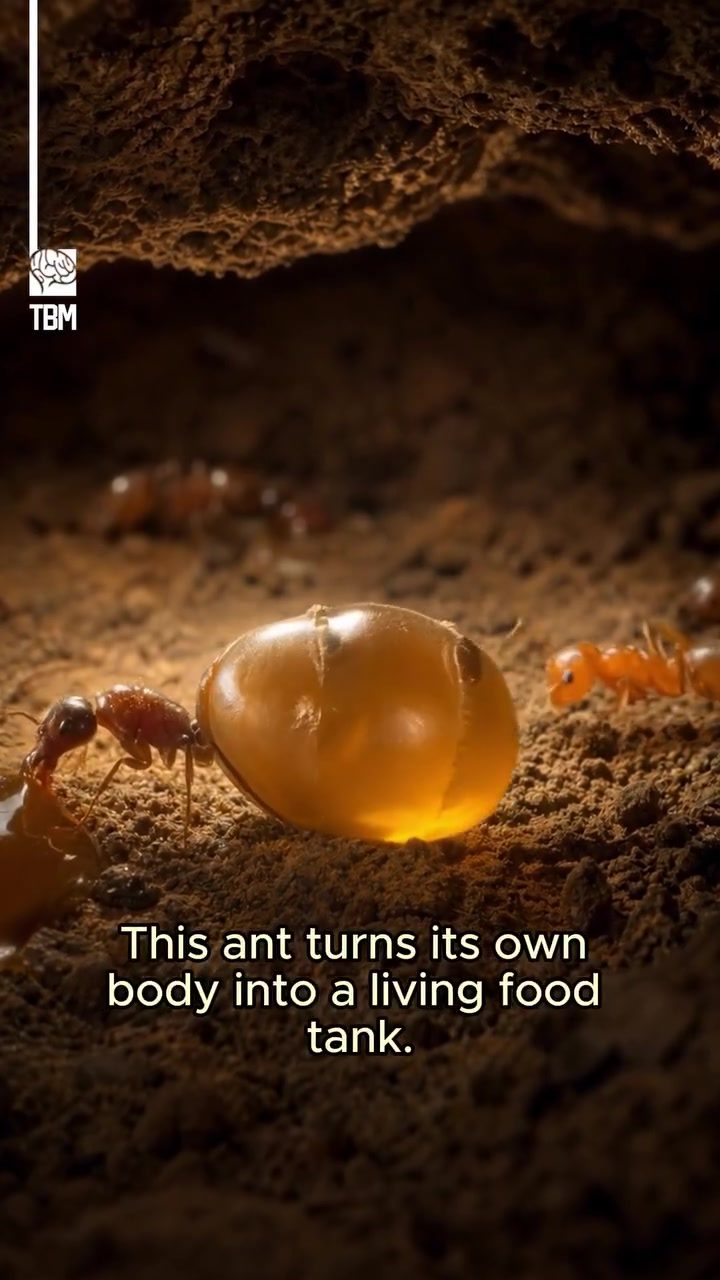
The Honeypot Ant: Nature's Living Food Tank
The honeypot ant is a fascinating example of nature's ingenuity, particularly in how it adapts to survive harsh conditions. These ants turn their bodies into living food storage units, ensuring the survival of the entire colony during times of scarcity. This remarkable behavior is a testament to the complex social structures and adaptive mechanisms found in ant colonies.
Why This Matters
Understanding the honeypot ant's unique behavior provides insights into the broader world of ant colonies and their survival strategies. This knowledge can help scientists and researchers better understand the ecological roles of ants and how they adapt to changing environments. Moreover, it highlights the importance of social cooperation and specialized roles within insect societies, which can inspire innovations in human fields like logistics and resource management.
The Honeypot Ant
The Role of Repletes
In certain ant colonies, specific worker ants, known as repletes, are responsible for storing food. These ants gorge themselves on nectar and sugary liquids until their abdomens swell into giant, translucent spheres. These swollen abdomens act as living storage tanks, storing the liquid for later use.
The Storage Process
The process of storing liquid involves these replete ants hanging motionless from the ceiling of underground chambers. They are essentially tiny biological storage jars, hanging motionless and ready to dispense the stored liquid when needed. This process is a critical adaptation that ensures the colony's survival during periods of food scarcity.
Regurgitation and Distribution
When food becomes scarce, other ants in the colony gently stroke the repletes with their antennae. This action triggers the repletes to regurgitate the stored liquid, which is then distributed to the rest of the colony. This behavior is a stark example of the intricate social dynamics within ant colonies, where different roles are assigned to ensure the group's survival.
Honeypot Ants as a Food Source
Nature's Emergency Pantry
The honeypot ant is often referred to as "nature's emergency pantry." By storing food in their abdomens, these ants sacrifice their mobility to ensure the colony's survival. This selfless behavior highlights the importance of individual sacrifice for the greater good within ant colonies.
Colonies
The honeypot ant's behavior is a critical component of the colony's survival strategy. By turning their bodies into food storage units, these ants ensure that the colony has a reliable food source even during the leanest times. This behavior is a testament to the intricate social structures and specialized roles within ant colonies.
Practical Tips
Observing Ant Colonies
For those interested in observing honeypot ants and their unique behavior, it's essential to approach ant colonies with caution and respect. Honeypot ants are typically found in arid regions, and their colonies are often underground. Observing these colonies without disturbing them can provide valuable insights into their behavior and social structures.
Appreciating Nature's Ingenuity
The honeypot ant's behavior is a reminder of the incredible adaptations found in the natural world. By turning their bodies into living food storage units, these ants demonstrate the ingenuity and complexity of insect societies. This behavior also highlights the importance of cooperation and specialization within these societies, which can inspire innovations in various fields.
Important Takeaways
The honeypot ant is a remarkable example of nature's ingenuity and the complex social structures found within ant colonies. By turning their bodies into living food storage units, these ants ensure the survival of their colonies during times of scarcity. This behavior highlights the importance of individual sacrifice for the greater good and the intricate social dynamics within insect societies.
Conclusion
The honeypot ant's unique behavior of turning its body into a living food tank is a fascinating example of nature's adaptability. This behavior not only ensures the survival of the colony during harsh times but also provides valuable insights into the complex social structures and specialized roles within ant societies. Observing and understanding these behaviors can inspire innovations in various fields and deepen our appreciation for the natural world.
Watch the Reel
Questions readers ask
What are honeypot ants and what makes them unique?
Honeypot ants are a type of ant known for their unique survival strategy. They transform certain members of their colony, called repletes, into living food storage units. These ants store liquid food in their swollen abdomens, providing a critical food supply for the colony during times of scarcity.
How do honeypot ants store food in their abdomens?
Honeypot ants store food by filling the abdomen of repletes with liquid food, such as nectar. These ants can consume large quantities of liquid food and store it within their bodies, which allows the colony to have a food supply for later when resources are scarce.
What role do replete ants play in the colony?
Replete ants serve as the colony's food storage system. These ants are essentially living food tanks, storing liquid food in their swollen abdomens to ensure the colony has a food supply during lean periods. Their specialized role helps the colony survive in harsh conditions.
How does the honeypot ant's behavior benefit the whole colony?
The honeypot ant's behavior ensures the survival of the entire colony by providing a reliable food source during times of need. This cooperative strategy allows the colony to adapt to environmental changes and survive periods of food scarcity.
Can other ant species exhibit similar food storage behaviors?
While the honeypot ant's strategy is unique, other ant species also exhibit food storage behaviors. For example, some ants store food in their nests or seeds. However, the honeypot ant's use of living food storage units is particularly notable for its efficiency and adaptability.
How does understanding honeypot ants help in studying other ant colonies?
Studying honeypot ants provides valuable insights into the broader world of ant colonies and their survival strategies. This knowledge can help researchers better understand the ecological roles of ants and how they adapt to changing environments, highlighting the importance of social cooperation and specialized roles within colonies.
Related deep dives
Similar reads based on topic and creator.




Recent articles
Fresh deep dives from the latest Reels we unpacked.




Comments
Be the first to comment.