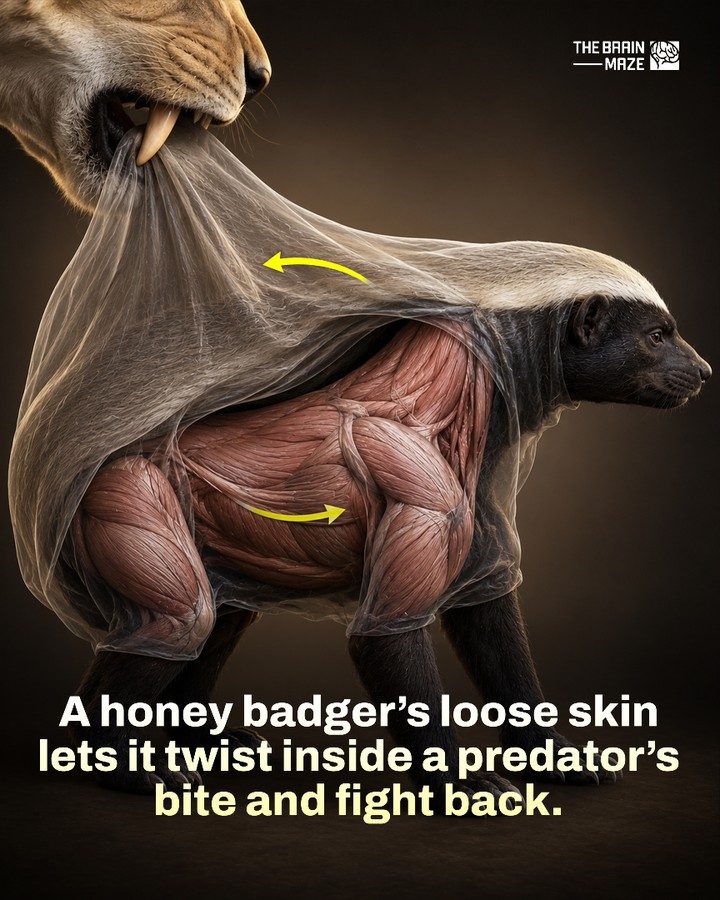
Honey Badger Anatomy: The Secret of Their Resilience
A honey badger's skin is one of its most remarkable survival adaptations. Unlike most mammals, its skin is exceptionally loose and thick, allowing the body to rotate freely inside the outer layer even when a predator has a firm grip. This flexibility lets the honey badger turn and defend itself while remaining difficult to restrain. Combined with remarkable toughness and fearlessness, this unique adaptation makes it one of nature's most resilient mammals.
Why This Matters
Understanding the unique adaptations of the honey badger provides insight into the incredible diversity of survival strategies in the animal kingdom. The honey badger's loose skin is not just a curiosity; it's a critical component of its survival toolkit. By examining this adaptation, we can appreciate the intricate ways in which animals evolve to thrive in challenging environments.
Main Discussion
The Unique Skin Adaptation
The honey badger's skin is exceptionally loose, which allows it to twist and maneuver within a predator's bite. This loose skin is thicker than that of most mammals, providing an additional layer of protection. The ability to rotate freely inside the outer layer means that even if a predator has a firm grip, the honey badger can still turn and defend itself. This is a critical advantage in the wild, where predators are a constant threat.
Muscular Structure and Flexibility
The honey badger's muscular structure complements its loose skin, allowing for a high degree of flexibility and maneuverability. When a predator bites down, the badger can twist its body, making it difficult for the predator to maintain a grip. This flexibility is not just about evading predators; it also helps the honey badger in other aspects of its life, such as foraging and navigating through dense vegetation.
Behavior and Fearlessness
The honey badger's remarkable toughness and fearlessness are as important as its physical adaptations. These animals are known for their aggressive behavior when threatened, using their loose skin and muscular structure to fight back against much larger predators. This fearlessness, combined with their physical adaptations, makes them formidable opponents in the wild.
Survival Strategies
The combination of loose skin, muscular flexibility, and fearless behavior makes the honey badger one of nature's most resilient mammals. These adaptations allow it to survive in a variety of environments and against a wide range of predators. The honey badger's survival strategies are a testament to the power of evolution and the incredible diversity of life on Earth.
Practical Tips
While observing honey badgers in their natural habitat can be challenging, there are several ways to learn more about these remarkable animals. Here are some practical tips for those interested in studying honey badgers:
- Visit Wildlife Sanctuaries: Many wildlife sanctuaries and reserves have honey badgers, providing an opportunity to observe them in a controlled environment.
- Read Scientific Literature: There are numerous scientific studies and articles on honey badgers that can provide in-depth knowledge about their adaptations and behaviors.
- Join Conservation Organizations: Organizations focused on wildlife conservation often have programs and resources for learning about and protecting honey badgers.
Important Takeaways
The honey badger's loose skin is a critical adaptation that allows it to survive in the wild. This loose skin, combined with its muscular structure and fearless behavior, makes it a formidable opponent against predators. Understanding these adaptations provides valuable insights into the diversity of survival strategies in the animal kingdom.
Conclusion
Honey badgers are a testament to the incredible ways in which animals adapt to survive in challenging environments. Their loose skin, muscular flexibility, and fearless behavior make them one of nature's most resilient mammals. By studying these adaptations, we can appreciate the complexity and diversity of life on Earth, highlighting the importance of conservation efforts to protect these remarkable animals and their habitats.
Watch the Reel
Questions readers ask
How does the honey badger's skin help it survive predator attacks?
The honey badger's exceptionally loose and thick skin allows it to twist and turn even when a predator has a firm grip. This flexibility enables the badger to defend itself and makes it difficult for predators to restrain it.
What makes the honey badger one of the most resilient mammals?
The combination of the honey badger's loose skin, remarkable toughness, and fearless behavior makes it exceptionally resilient. These traits allow it to effectively defend itself against predators and thrive in the wild.
Are there other animals with loose skin like the honey badger?
While the honey badger's skin is uniquely adapted for survival, other animals like sloths and some species of frogs also have loose skin, which serves different purposes, such as regulating temperature and aiding in movement.
How does the honey badger's loose skin help it to fight back against predators?
The honey badger's loose skin allows it to rotate its body freely inside the outer layer, even when gripped by a predator. This enables the badger to turn and bite its attacker, increasing its chances of escaping or driving the predator away.
Why is the honey badger's loose skin considered a critical survival tool?
The honey badger's loose skin is a critical survival tool because it enhances the badger's ability to evade and defend against predators. This adaptation, combined with its fearless behavior, makes the honey badger one of the most resilient mammals in the wild.
Can the honey badger's adaptations be found in other badger species?
The honey badger's unique loose skin and fearless behavior are not commonly found in other badger species. While other badgers may have tough skin and strong claws, the honey badger's specific adaptations are what set it apart in terms of predator resistance and resilience.
Recent articles
Fresh deep dives from the latest Reels we unpacked.




Comments
Be the first to comment.