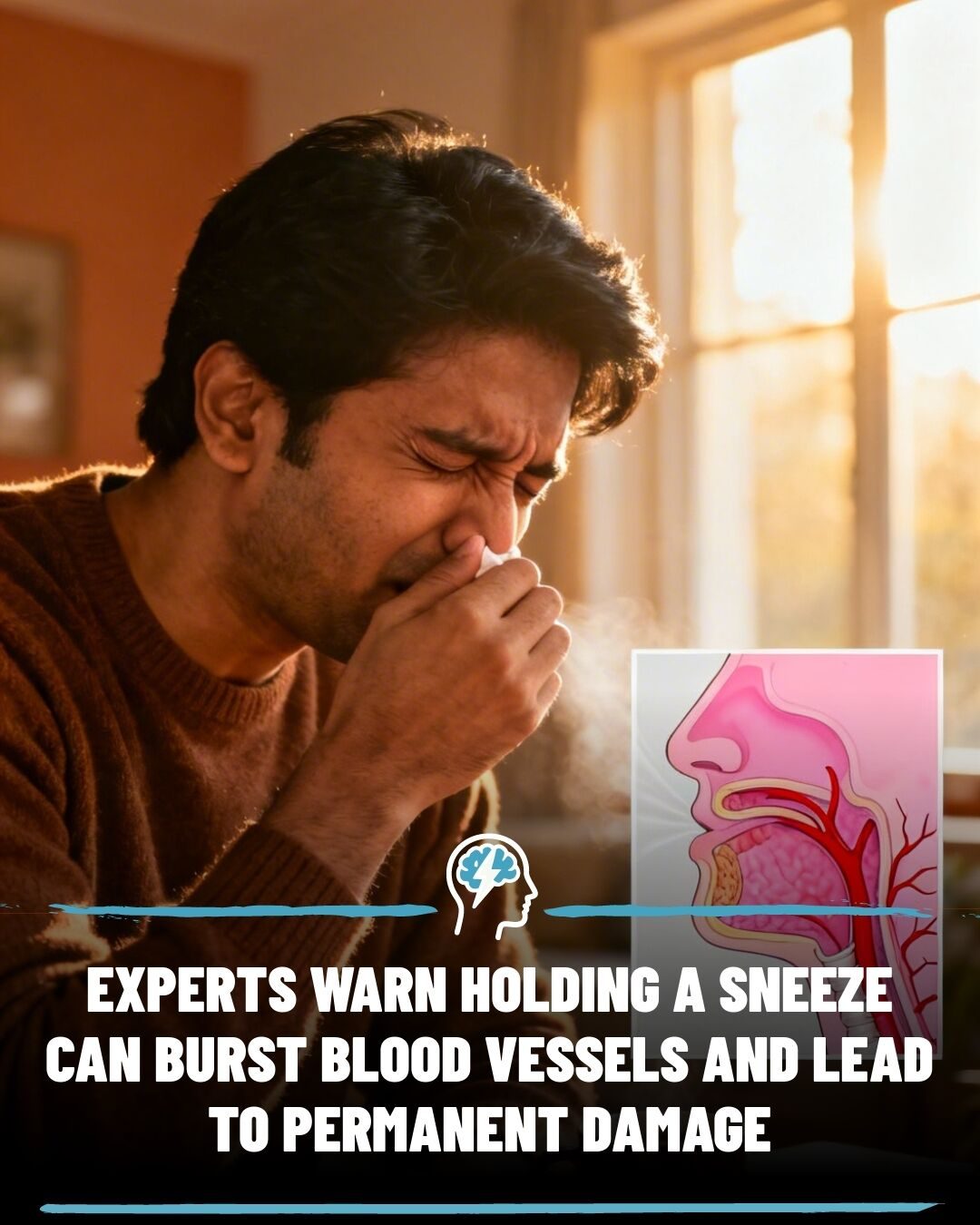
The Hidden Dangers of Holding Back a Sneeze
Every day, our bodies go through a multitude of automatic responses designed to protect us from harm. One of the most common responses is a sneeze. It's an automatic reaction that can clear your nasal pathways of irritants, allergens, and bacteria. However, many people habitually hold back their sneezes, especially in quiet or social settings. Unfortunately, holding in a sneeze can have unintended consequences.
Why This Matters
Suppressing a sneeze might seem like a minor inconvenience, but it can actually put your body under significant stress. When you hold back a sneeze, the pressure that would normally be released outward gets redirected inward, potentially causing damage to delicate blood vessels and other structures.
The Pressure Problem
When you let a sneeze fly naturally, air exits your body at speeds of up to 100 miles per hour. This forceful expulsion clears your airways of bacteria, dust, pollen, and other irritants. However, when you block that release, the pressure has nowhere to go. Research shows that holding in a sneeze can increase pressure on your airways by 20 to 24 times compared to letting it out naturally.
What Happens When You Hold In a Sneeze
The redirected pressure can cause several potential issues:
- Burst Blood Vessels: The increased pressure can cause blood vessels in the eyes or nose to burst, leading to redness, nosebleeds, or even more serious complications.
- Ruptured Eardrums: Pressure can travel through the Eustachian tube, which connects the nose to the middle ear, potentially rupturing the eardrum.
- Brain Aneurysms: In rare cases, the pressure may rupture a brain aneurysm, which can be life-threatening. Studies have linked suppressed sneezes to these and other serious medical issues.
Potential Risks
While most cases of ruptured eardrums heal within a few weeks, some may require surgical intervention. The risks vary by individual, and those with pre-existing conditions may face different levels of risk. The potential for serious injury, though rare, is documented. This underscores the importance of understanding the potential dangers of suppressing a sneeze.
Practical Tips
If you find yourself in a situation where you need to suppress a sneeze, consider the following practical tips to minimize the risk:
- Cover Your Mouth and Nose: Use a tissue or the crook of your elbow to cover your mouth and nose. This can help redirect the air flow away from your face while still allowing the sneeze to escape.
- Turn Away: If possible, turn away from others to minimize the spread of irritants. This can also help you avoid the embarrassment of sneezing in public.
- Breathe Deeply: Take a deep breath before you sneeze to help release the pressure gradually.
- Find a Quiet Space: If you can, find a quiet space where you can let the sneeze go naturally without disturbing others.
Important Takeaways
Your body designed sneezing as a protective mechanism. Holding in a sneeze can put your body under significant stress, leading to potential damage to blood vessels, eardrums, or even more serious complications. While serious injuries from holding sneezes remain relatively rare, the risks are documented. It's important to understand that suppressing a sneeze can lead to unintended consequences.
Conclusion
The next time you feel that tickle, reach for a tissue instead of pinching your nose. Your body is trying to protect you by sneezing. By letting it do its job, you can avoid the potential risks associated with holding in a sneeze.
Watch the Reel
Questions readers ask
What happens when you hold back a sneeze?
When you hold back a sneeze, the force that would normally be expelled outward gets redirected inward. In addition, the pressure that builds up can cause strain on your body. This can potentially lead to various issues, such as damaged blood vessels or even more severe conditions.
Why is it dangerous to hold in a sneeze?
Holding in a sneeze can be dangerous because the pressure exerted by the sneeze is redirected inward. This can cause stress on delicate bodily structures, potentially leading to issues like burst blood vessels, ruptured eardrums, or even brain aneurysms.
Can holding back a sneeze cause a ruptured eardrum?
Yes, holding back a sneeze can potentially cause a ruptured eardrum. The pressure from the sneeze can be redirected to the ears, leading to damage to the eardrum, which is a delicate structure that should not be subjected to such strain.
Can holding in a sneeze cause a brain aneurysm?
In rare cases, holding in a sneeze can potentially cause a brain aneurysm. This is due to the significant pressure that builds up when a sneeze is suppressed, which can put stress on the blood vessels in the brain and potentially lead to a rupture.
What is the best way to sneeze safely in public?
To sneeze safely in public, consider doing it into a tissue, your elbow, or your shoulder. This helps to contain the expelled air and droplets. Additionally, always be aware of your surroundings and try to turn your head away from others to minimize the spread of germs.
How much pressure does a sneeze exert?
A sneeze can exert a significant amount of pressure, often reaching up to 175 miles per hour. This high velocity can cause damage if the sneeze is held back, as the pressure is redirected inward instead of being expelled outward in a natural way.
Is pinching your nose an effective way to hold in a sneeze?
Pinching your nose is not an effective way to hold in a sneeze and can be harmful. If you find yourself needing to suppress a sneeze, it is better to turn your head away from others and let the sneeze out. The nose pinch technique can cause significant pressure buildup and potentially lead to injuries.
Related deep dives
Similar reads based on topic and creator.



Recent articles
Fresh deep dives from the latest Reels we unpacked.




Comments
Be the first to comment.