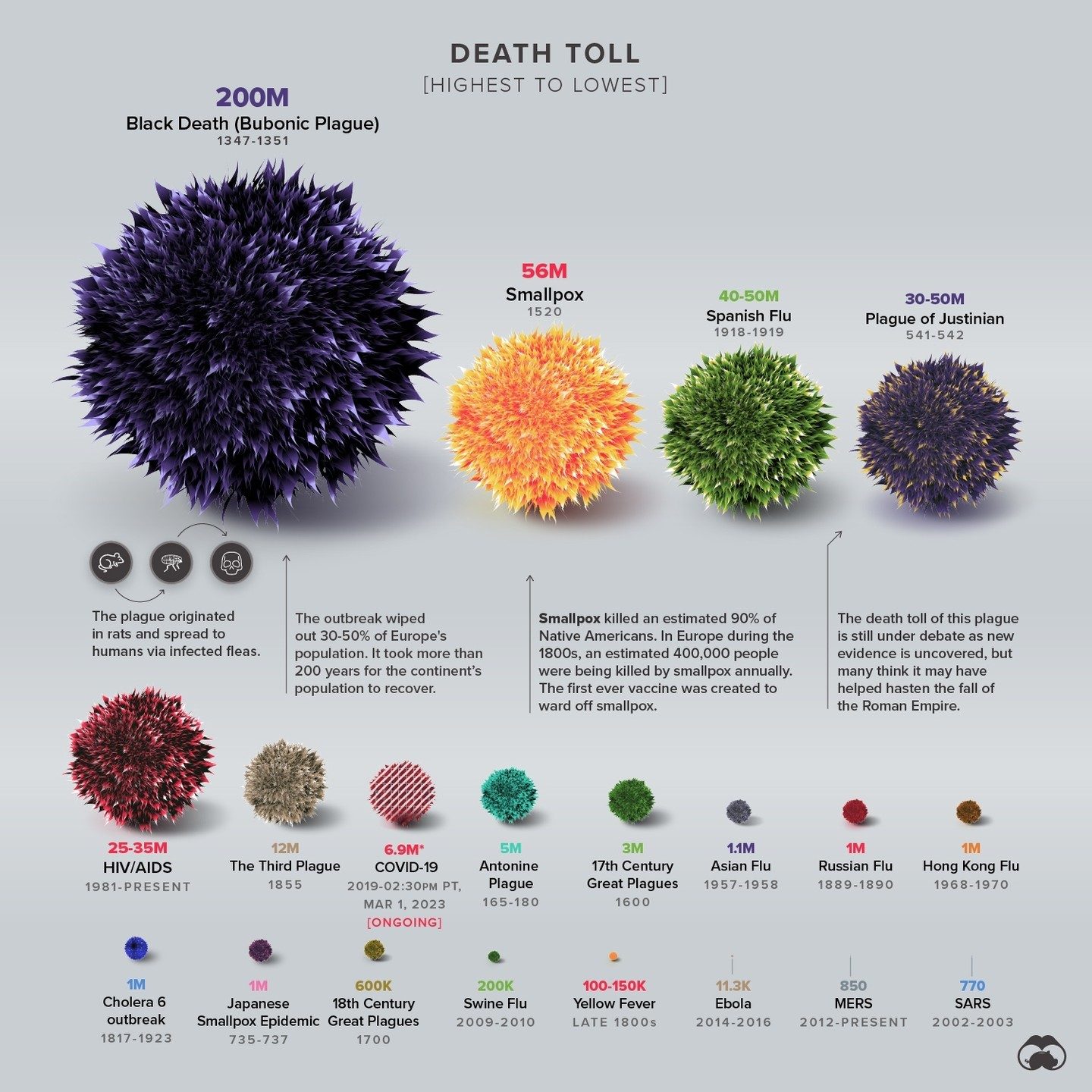
Comparing Pandemic Death Toll: Historical Context and COVID-19
Context / Why this matters
Pandemics have shaped human history, and understanding their impact provides crucial context for current and future health crises. As of March 11, 2023, the world marks the third anniversary of the World Health Organization (WHO) declaring COVID-19 a global pandemic. This milestone offers an opportunity to compare COVID-19 with some of the most devastating pandemics in history, from the Antonine Plague to the Black Death and beyond.
Main discussion
The Black Death: Unmatched Fatality
The Black Death, which ravaged Europe and Asia from 1347 to 1351, stands as the deadliest pandemic in recorded history. Estimates suggest it claimed 200 million lives, representing approximately 51% of the global population at the time. This catastrophic event not only decimated populations but also fundamentally altered societal structures, economic systems, and cultural norms. The sheer scale of its impact provides a stark contrast to more recent pandemics, including COVID-19.
The Plague of Justinian: Early Pandemic Devastation
Another significant historical pandemic is the Plague of Justinian, which struck the Byzantine Empire from 541 to 542. This pandemic, caused by the same bacterium that would later cause the Black Death, resulted in an estimated 40 million deaths. This figure represents about 19.1% of the world population at the time, underscoring the devastating impact of early pandemics on densely populated areas.
Smallpox: A Relentless Killer
Smallpox, a highly contagious and often fatal virus, has ravaged populations for centuries. Throughout the 16th century, smallpox outbreaks resulted in approximately 56 million deaths, accounting for 12.1% of the global population. The virus continued to be a significant public health threat until its eradication in 1980 through widespread vaccination efforts. Smallpox serves as a reminder of the power of vaccines and the importance of global health initiatives in combating infectious diseases.
The Spanish Flu: Modern Pandemic Impact
The Spanish Flu, which swept the world from 1918 to 1919, remains one of the most impactful pandemics of the modern era. Estimates suggest it caused around 45 million deaths, or 2.5% of the global population. The pandemic's timing, coinciding with the end of World War I, exacerbated its global spread and devastating impact. The Spanish Flu highlights the importance of understanding how global events and public health measures influence the spread and impact of infectious diseases.
COVID-19: A Global Pandemic in Context
COVID-19, which emerged in late 2019 and was declared a global pandemic by the WHO in March 2020, has had a profound impact on global health and society. As of early 2023, the pandemic has resulted in approximately 6.9 million deaths, representing 0.09% of the global population. While this figure is significantly lower than those of historical pandemics, the scale of modern global interconnectedness and the rapid spread of the virus have caused unprecedented disruptions to daily life, economies, and healthcare systems.
Practical Tips
Understanding Pandemic Comparisons
When comparing historical pandemics, it's essential to consider the following factors to draw meaningful insights:
-
Population Size and Density: The global population and urbanization levels have increased dramatically over time. Lower population densities in earlier eras mean that a smaller absolute number of deaths could represent a higher percentage of the population.
-
Medical Advancements: Developments in medicine and public health have significantly improved our ability to treat and prevent infectious diseases. Vaccines, antibiotics, and improved sanitation have reduced the impact of many diseases.
-
Global Connectivity: Modern transportation and global trade networks facilitate the rapid spread of infectious diseases. This connectivity also enables the rapid dissemination of public health information and resources, which can mitigate the impact of pandemics.
-
Data Accuracy: Historical data on pandemics can be unreliable due to limited record-keeping and documentation. Modern data collection methods provide more accurate and comprehensive information, allowing for better understanding and response to current pandemics.
Public Health Lessons from History
Historical pandemics offer valuable lessons for public health responses:
-
Importance of Vaccination: The eradication of smallpox and the control of other diseases highlight the effectiveness of vaccination programs. Investing in vaccine development and distribution remains a critical strategy for managing pandemics.
-
Public Health Infrastructure: Strong public health infrastructure, including surveillance systems and rapid response teams, is essential for early detection and containment of outbreaks.
-
Public Awareness and Education: Educating the public about disease prevention, hygiene practices, and the importance of following public health guidelines can significantly reduce the spread of infectious diseases.
Important Takeaways
-
Historical Context Matters: Understanding the impact of historical pandemics provides context for evaluating the severity and response to current pandemics like COVID-19.
-
Medical and Public Health Advances: Modern medical advancements and public health measures have significantly improved our ability to manage and mitigate the impact of infectious diseases.
-
Global Connectivity: The interconnectedness of the world facilitates the rapid spread of diseases but also enables swift dissemination of public health information and resources.
-
Importance of Data: Accurate and comprehensive data are crucial for understanding the impact of pandemics and developing effective public health responses.
Conclusion
Comparing the death tolls of historical pandemics with COVID-19 provides valuable insights into the evolving nature of infectious diseases and our response to them. While COVID-19 has had a profound impact on global health and society, historical pandemics like the Black Death, the Plague of Justinian, and the Spanish Flu offer critical lessons on the importance of public health infrastructure, vaccination, and data accuracy. Understanding these historical contexts can inform future strategies for managing and mitigating the impact of pandemics, ensuring a more resilient and prepared global community.
Watch the Reel
Questions readers ask
What was the death toll of the Black Death and how does it compare to COVID-19?
The Black Death, occurring from 1347 to 1351, had an estimated death toll of 200 million people, which was about 51% of the world's population. In contrast, as of March 11, 2023, the global death toll of the COVID-19 pandemic has been reported to be in the millions, which, while significant, is much less than the Black Death. A direct comparison should consider the global population size at the time.
How many people died from the Plague of Justinian and what is its significance in history?
The Plague of Justinian, which struck in the 6th century, is estimated to have killed 25-50 million people. This pandemic is significant because it marked one of the first major outbreaks of bubonic plague and had a profound impact on the Byzantine Empire and the medieval world. The pandemic lasted for over a century, from 541 to 750 AD, and is considered one of the deadliest pandemics in history along with others.
What was the death toll from the Smallpox pandemic, and how does it compare to other pandemics?
The Smallpox pandemic, which spanned centuries, is estimated to have caused the deaths of 300-500 million people. This makes it one of the most lethal pandemics in history, comparable only to the Black Death. The impact of Smallpox was felt worldwide, and it was eventually eradicated through vaccination efforts in the late 20th century, making it a unique case in pandemic history.
How does the death toll of historical flu pandemics compare to COVID-19?
Historical flu pandemics, such as the 1918 Spanish Flu, have had significant death tolls. The Spanish Flu, for example, is estimated to have killed 50-100 million people. In comparison, while COVID-19 has caused millions of deaths, it has not yet reached the same scale as the Spanish Flu. However, the impact of COVID-19 is still unfolding, and its long-term effects are yet to be fully understood.
What is the significance of comparing the COVID-19 pandemic to historical pandemics?
Comparing the COVID-19 pandemic to historical pandemics provides a broader perspective on the current health crisis. It helps us understand the magnitude of COVID-19's impact, the potential long-term effects, and how societies have responded to and recovered from similar crises in the past. These comparisons can offer insights into public health strategies and preparedness for future health emergencies.
Related deep dives
Similar reads based on topic and creator.




Recent articles
Fresh deep dives from the latest Reels we unpacked.




Comments
Be the first to comment.