The Truth About Salt: A Deep Dive into Sodium and Health
For decades, we have been advised to limit our salt intake, but recent studies suggest that this advice might be misguided. Sodium, the primary component of salt, plays a critical role in various bodily functions, and new research indicates that higher sodium intake may actually be associated with increased life expectancy and reduced mortality. Let's explore the science behind these findings and understand why salt might not be the enemy we've been led to believe.
Sodium: The Powerhouse Electrolyte
Sodium is an essential mineral that plays a crucial role in maintaining proper blood volume, hydration, nerve signaling, and muscle function. It also aids in moving nutrients into cells, making it vital for overall health.
Why Sodium is Essential
- Blood Volume and Hydration: Sodium helps regulate blood volume and hydration levels, which are critical for maintaining proper blood pressure and fluid balance.
- Nerve Signaling and Muscle Function: Sodium is vital for nerve transmission and muscle contraction, ensuring that our body's communication and movement systems function correctly.
- Nutrient Absorption: Sodium facilitates the absorption of essential nutrients, supporting overall health and well-being.
The Body's Compensation Mechanism
When sodium intake is insufficient, the body compensates by raising stress hormones and activating systems designed to conserve sodium and maintain blood pressure. This compensatory mechanism is why low sodium intake can be detrimental to health.
The Salt Study Findings
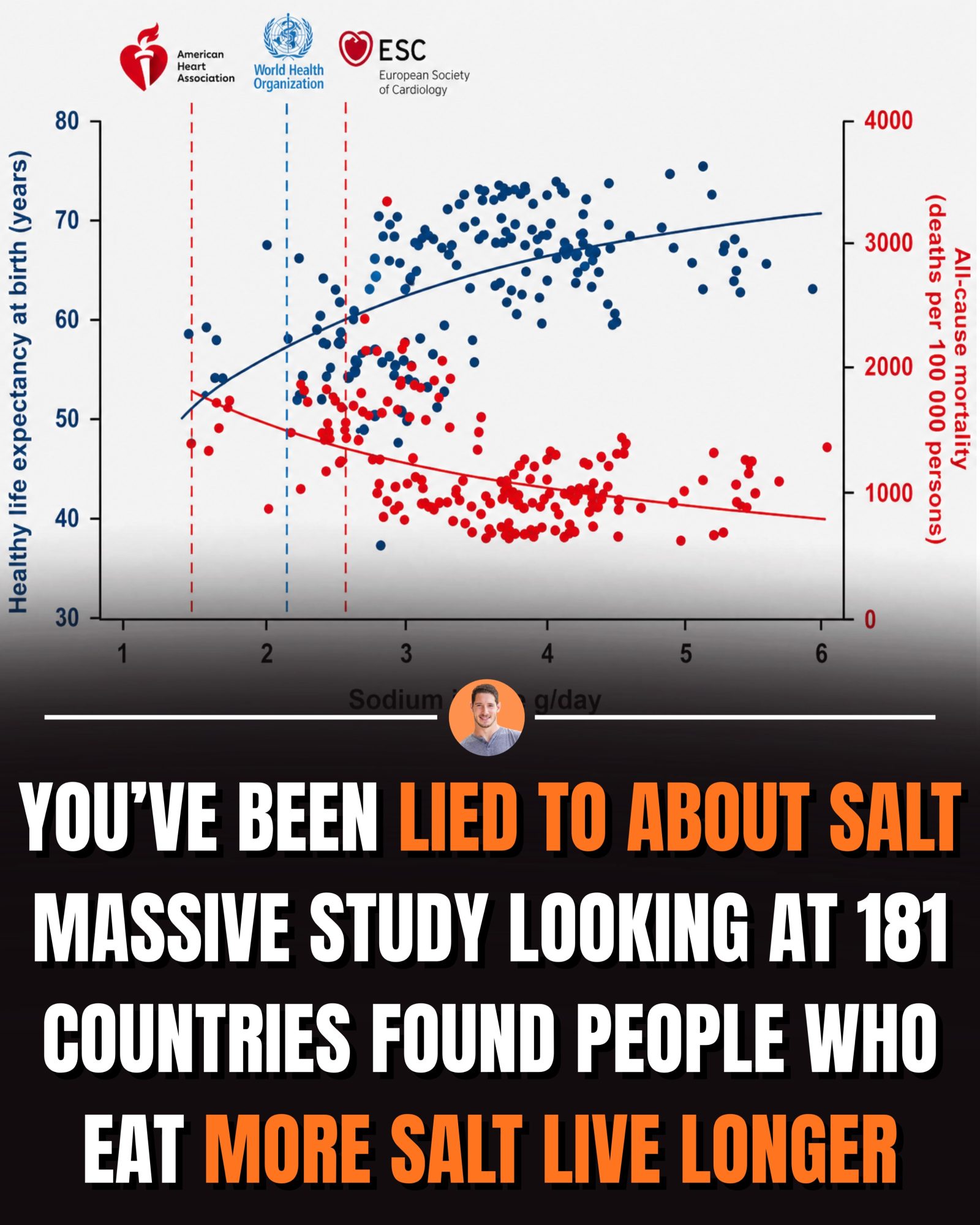
Recent studies have challenged the conventional wisdom about sodium and health. A comprehensive analysis of 181 countries revealed that individuals who consume more salt tend to live longer. This finding is supported by various research papers cited in respected journals, including the European Heart Journal and the American Journal of Medicine.
Key Findings
-
Increased Life Expectancy: Higher sodium intake was associated with longer life expectancy and lower mortality. Specifically, every 1 gram of extra sodium per day was linked to:
- 2.6 additional healthy years of life expectancy at birth.
- 1.3 additional healthy years of life expectancy at age 60.
- A 131 deaths per 100,000 reduction in all-cause mortality.
-
Cardiovascular Benefits: The study demonstrated that sodium intake far exceeding recommended amounts was associated with lower mortality and cardiovascular risk. This contradicts the long-held belief that high sodium intake is detrimental to cardiovascular health.
Understanding the Dangers of Low Sodium Intake
Low sodium intake, contrary to popular belief, has been linked to higher cardiovascular and all-cause mortality. Another notable study, following 7,154 U.S. adults over 13.7 years, found that:
- Sodium Intake Below 2,300 mg/day: This threshold is the US Dietary Guidelines recommendation, but it was associated with:
- 37% higher cardiovascular mortality.
- 28% higher all-cause mortality.
These findings underscore the importance of consuming adequate amounts of sodium to support overall health and longevity.
The Importance of Balanced Nutrition
While these studies highlight the benefits of higher sodium intake, it is crucial to consume sodium along with a balanced diet. Incorporating a variety of nutrient-dense foods ensures that you receive the full spectrum of essential nutrients, supporting overall health and metabolic function.
Optimal Sodium Sources
-
Whole Foods: Focus on consuming whole foods rich in sodium, such as:
- Celery and Beets: These vegetables are naturally high in sodium and provide a range of other essential nutrients.
- Bone Broth: Rich in sodium and other electrolytes, bone broth supports hydration and overall health.
- Sea Vegetables: Including seaweed and nori, which are high in sodium and provide minerals like iodine.
-
Balanced Diet: Include a variety of fruits, vegetables, lean proteins, and healthy fats to ensure you are getting a well-rounded intake of nutrients.
Practical Tips for Optimal Sodium Intake
Adjust Your Diet
- Increase Whole Foods: Incorporate more whole, unprocessed foods into your diet, which naturally contain higher amounts of sodium.
- Limit Processed Foods: Reduce your intake of processed and packaged foods, which often contain excessive amounts of sodium and other harmful additives.
Monitor Your Intake
- Hydration: Ensure you are adequately hydrated, as sodium intake and hydration are interconnected. Proper hydration supports the body's ability to retain and use sodium effectively.
- Listen to Your Body: Pay attention to your body's signals and adjust your sodium intake accordingly. If you feel fatigued, experience muscle cramps, or have low blood pressure, it may indicate that you need to increase your sodium intake.
Consult a Professional
- Healthcare Provider: Always consult with a healthcare provider or a registered dietitian before making significant dietary changes. They can provide personalized recommendations based on your health needs and medical history.
Important Takeaways
The recent studies on sodium and health present a compelling case for rethinking our approach to salt intake. Key takeaways include:
- Sodium is an essential mineral for proper blood volume, hydration, nerve signaling, muscle function, and nutrient absorption.
- Higher sodium intake is associated with increased life expectancy and lower mortality, challenging the conventional wisdom about sodium and health.
- Low sodium intake has been linked to higher cardiovascular and all-cause mortality, emphasizing the importance of consuming adequate amounts of sodium.
- It is crucial to consume sodium alongside a balanced diet, ensuring a well-rounded intake of essential nutrients.
Conclusion
The relationship between sodium and health is complex and multifaceted. Recent studies suggest that higher sodium intake may be beneficial, but it is essential to approach this topic with nuance and a focus on overall health. By incorporating adequate amounts of sodium through whole foods and maintaining a balanced diet, you can support your body's natural functions and promote longevity. Always consult a healthcare provider for personalized recommendations tailored to your specific needs.
Watch the Reel
Questions readers ask
Does high sodium intake cause health problems?
High sodium intake can lead to health issues for some individuals, such as those with certain medical conditions like hypertension. However, recent studies have suggested that moderate to high sodium intake in otherwise healthy individuals is not as detrimental as initially believed. It may even have some benefits for longevity and mortality rates.
What are the benefits of higher sodium intake?
Higher sodium intake has been linked to various health benefits, including improved hydration, better nerve function, and enhanced nutrient absorption. Recent studies also suggest that it may contribute to increased life expectancy and lower mortality rates in healthy adults.
Is a low sodium diet recommended for everyone?
A low sodium diet is not necessarily recommended for everyone. While it may be beneficial for individuals with specific health conditions, recent research indicates that a moderate to high sodium intake is not harmful, and may even be advantageous for healthy adults.
How does sodium intake affect energy balance?
Sodium intake plays a role in energy balance by helping to maintain proper hydration and supporting muscle function. Adequate sodium levels can aid in the body's ability to utilize energy efficiently, which is crucial for overall metabolic health.
What is the relationship between sodium intake and metabolic health?
Sodium intake is closely linked to metabolic health. Sodium helps regulate blood volume, hydration, and nutrient absorption, all of which are essential for maintaining a healthy metabolism. Ensuring adequate sodium intake can support overall metabolic function and energy balance.
Should I limit my sodium intake to extend my life?
Recent research suggests that limiting sodium intake may not be necessary for extending life. In fact, moderate to high sodium intake has been associated with increased longevity and lower mortality rates in healthy individuals. However, individual health conditions should be considered when determining personal sodium intake recommendations.
Recent articles
Fresh deep dives from the latest Reels we unpacked.




Comments
Be the first to comment.